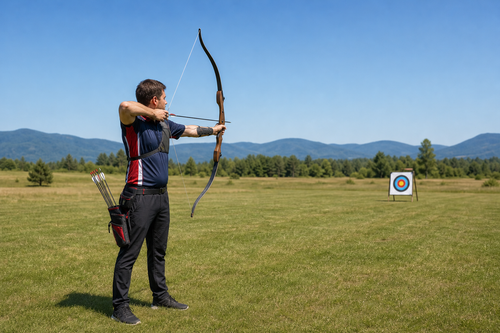
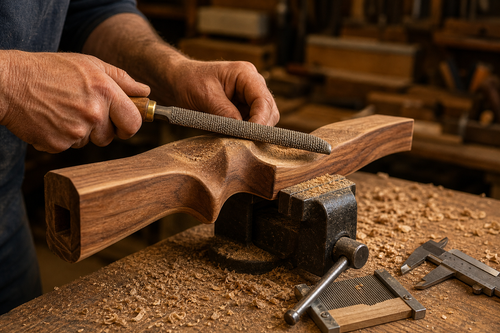
At first glance, a flatbow and a longbow look like close cousins — both are unruly traditional bows without cams, pulleys, or sights. But the design differences between them are significant enough to affect how they shoot, how they store energy, and who they suit best. This guide breaks down what actually separates the two styles.
Quick Answer
A flatbow uses wide, flat limbs that are roughly equal in width from the handle to the tip. A longbow uses narrower, deeper limbs that form a characteristic D-shape in cross-section. The flatbow is generally more forgiving for newer archers and tends to be shorter for a given draw weight. The longbow has a longer, more slender profile and is closely associated with historical European and English archery traditions. Neither is objectively better — each rewards a different build, experience level, and shooting style.
Main Differences Between a Flatbow and a Longbow
Understanding what separates these two bow styles starts with the limbs, because that's where energy is stored and released.
Limb Shape and Cross-Section
- Flatbow limbs are wide and flat — often described as ribbon-like. The wide surface area lets them store energy efficiently without needing great length.
- Longbow limbs are narrow and deep, with a rounded or D-shaped cross-section. This shape requires more overall bow length to flex safely under draw.
Bow Length
Because flatbow limbs are wider, they can be shorter while still handling the same draw weight without excessive stress on the wood. A typical flatbow might measure 60 to 66 inches. Longbows are traditionally longer — often 68 inches or more — partly to accommodate the narrower limb design and reduce the chance of limb breakage or string contact during the shot.
Brace Height and Arrow Paradox
Flatbows typically use a higher brace height, which shortens the power stroke but adds consistency and forgiveness. The wide limbs also reduce the degree of arrow paradox — the flex an arrow goes through as it clears the bow — meaning flatbows can often shoot stiffer-spined arrows more reliably. Longbows, with their narrower profile and grip, require arrows to flex more dramatically around the bow, making spine selection particularly important.
Grip and Handle
Most traditional longbows feature a relatively narrow handle section that may or may not have a defined grip shelf. Many instinctive or traditional longbow archers shoot off the knuckle or use a glove to arrow off the hand. Flatbows more commonly have a cut-past-center arrow shelf, which improves arrow flight and simplifies setup — another factor that tends to favor newer archers.
Performance and Use Cases
Energy Storage and Speed
Because flatbow limbs are wider, they can store a comparable amount of energy to a longbow while being physically shorter. In practice, this means a flatbow of equivalent draw weight often delivers similar arrow speed to a longbow, sometimes slightly faster depending on limb design and materials. Neither design is dramatically faster than the other at the same draw weight — the differences are more about feel and consistency than raw speed.
Noise and Vibration
Both bow types are quieter than compound bows by nature, but individual limb materials, bow design, and string choice all influence noise levels. Longbows with heavy, all-wood construction can produce a satisfying, mellow shot cycle. Modern flatbows made from laminated materials tend to be smooth-shooting with minimal hand shock.
Target Archery
Both styles are used in target archery, including recognized traditional disciplines. The longbow has a long association with field and clout archery, and many competitive divisions specifically cater to longbow archers. Flatbows fit naturally into traditional recurve-adjacent classes in some governing bodies, so it's worth checking which category applies to your competitive format.
Instinctive Shooting and Roving
Both bow types are well-suited to instinctive shooting — the method where you aim by feel and experience rather than using a sight. The longer sight radius of a longbow is sometimes said to help with consistent head and eye alignment. The forgiveness of a flatbow's wide limbs can smooth out small technical inconsistencies, which matters during roving or field shooting where shot angles and footing vary.
How the Differences Play Out in Practice
A flatbow's wide, forgiving limbs are why it's commonly recommended for complete beginners, shorter archers, or anyone who wants a compact bow that's simpler to set up and store — and it has deep roots in Native American and American frontier archery traditions. A longbow's narrower, D-shaped limbs carry a stronger historical identity tied to English, European, and medieval archery, and more dedicated divisions in traditional competition, but they demand more precise arrow spine matching and more consistent form to shoot well. Draw weight behaves the same on both: traditional bows have no let-off, so the weight you hold is the weight you feel at full draw, and starting too heavy is a common way beginners develop poor form habits on either bow. Whichever style you shoot, the accessories you carry matter too — Legend Archery carries a range of archery accessories suited to traditional archers looking after their gear.
Frequently Asked Questions
What's actually different between a flatbow and a longbow?
The core difference is limb shape. A flatbow has wide, flat limbs; a longbow has narrow, deep limbs with a D-shaped cross-section. This affects bow length, arrow flight, brace height, and how forgiving each bow feels at the shot.
Which one is better for someone just starting out?
Most traditional archery coaches suggest a flatbow for complete beginners. The wider limbs, higher brace height, and typical cut-shelf design make it more forgiving of technique errors — which helps newer archers build confidence and correct form without fighting the bow.
Which is more suitable for target archery competitions?
It depends on the organizing body and division. Longbows have more dedicated competitive divisions in many traditional archery associations, particularly those with historical alignment. Check the specific rules of the competition or club you plan to join, as bow eligibility can vary.
What's a common misunderstanding about these two bow styles?
The most frequent misunderstanding is treating them as identical bows with only cosmetic differences. They genuinely perform differently and reward different approaches. It's also easy to overlook how physical characteristics — particularly height and draw length — interact with bow length, or to settle on a draw weight before confirming you can hold it comfortably through a full practice session.
Conclusion
The flatbow vs longbow comparison comes down to design priorities: forgiveness and compact handling versus tradition, length, and technique-driven performance. Knowing your draw length, your competitive goals if any, and how much time you want to invest in developing form explains more about which style suits you than looks ever will. Either bow rewards time spent with it — the right one simply starts where you are now.