Skip to content
 cust@legendarchery.com
 302 503 5767
 Westfield IN 46074


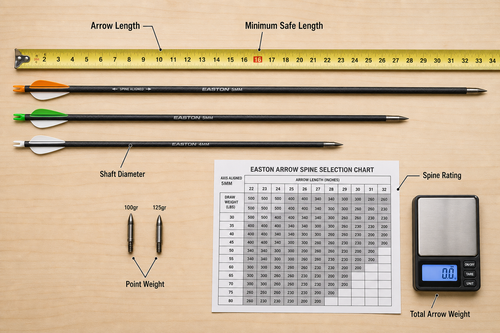
Arrow spine is one of the most misunderstood specifications in archery. When you release a bowstring, your arrow doesn't fly perfectly straight — it bends, recovers, and stabilizes in flight. How well it does that depends almost entirely on whether the shaft stiffness matches your bow's draw weight, draw length, and arrow length. Choose the wrong spine and you'll fight groups that drift, fishtail, or fall apart at longer distances.
What Arrow Spine Actually Means
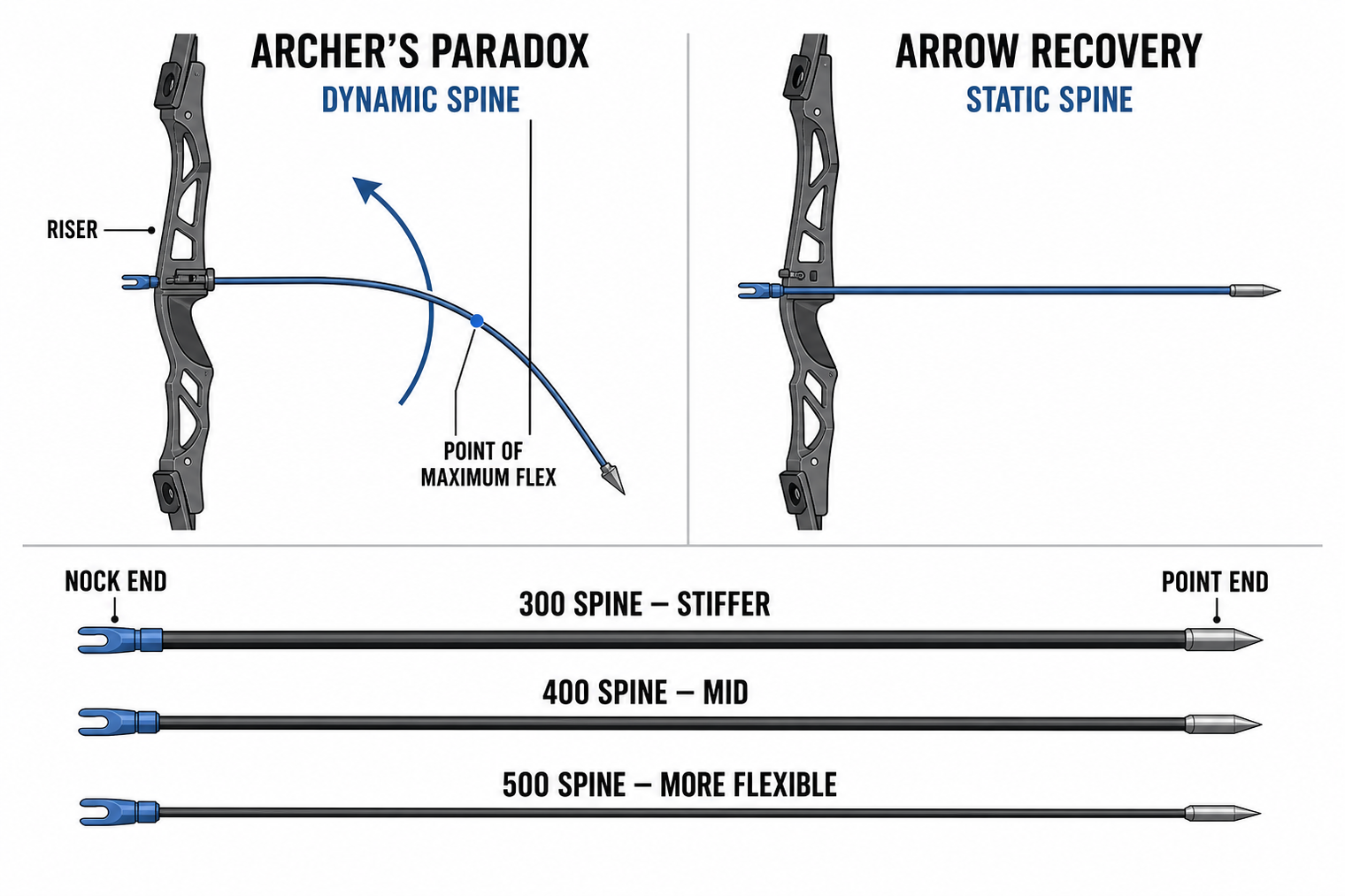
Spine refers to the resistance of an arrow shaft to bending. It's measured by placing a standardized weight at the center of a shaft supported at both ends and recording how much it deflects. A shaft that deflects less is stiffer — it has a higher spine number in some systems and a lower one in others, which trips up a lot of beginners.
The two most common standards you'll encounter are:
- AMO/ATA Standard Spine — Used by most manufacturers. A lower number means a stiffer shaft. A 300-spine arrow is significantly stiffer than a 500-spine arrow.
- Easton Deflection System — Measures actual deflection in inches. A higher number here means a weaker, more flexible shaft.
This static measurement tells you how a shaft behaves on a testing rig. But how it behaves when shot from your specific bow is what matters — that's called dynamic spine.
[product-tabs]
Static Spine vs. Dynamic Spine
Dynamic spine is the effective stiffness of an arrow during the actual shot cycle. Several variables shift it in real conditions:
- Draw weight — Higher poundage increases the force on the arrow at release, making the shaft behave weaker (more flex).
- Arrow length — A longer shaft flexes more. Cut an inch off and it behaves stiffer.
- Point weight — Heavier tips increase dynamic flex. A 125-grain point makes the same shaft behave weaker than a 75-grain point.
- Release style — A mechanical release on a compound bow creates a cleaner release, reducing paradox. Fingers off a recurve introduce more side pressure, requiring a weaker dynamic spine to clear the riser properly.
- Bow type and riser geometry — Center-shot or near-center-shot bows affect how much the arrow needs to flex around the riser.
This is why two archers with the same draw weight can need different spine ratings depending on their arrow length, point preference, and shooting style.
How to Select the Right Spine for Your Setup
Spine charts are your starting point, not the final answer. Most manufacturers and archery retailers publish them based on draw weight and arrow length. Here's how to use them practically:
- Measure your actual draw length, then add one to two inches for your arrow length (so the point clears the rest at full draw).
- Use your bow's peak draw weight — for recurve bows, use the weight at your draw length, not the marked limb weight.
- Look up those two values on the manufacturer's spine chart to get a starting recommendation.
- Adjust for point weight: if you plan to shoot heavy broadheads or long-range field points above 100 grains, move one spine step stiffer than the chart suggests.
- For recurve and traditional shooters using fingers, move one step weaker than the chart to account for greater arrow paradox at release.
Once you have a spine recommendation, test with fletched bare-shaft tuning before committing to a full dozen. A bare shaft that hits high and right (right-handed archer) indicates the arrow is too stiff. Low and left suggests too weak.
Spine Considerations by Bow Type
Recurve and Traditional Bows
These bows typically shoot off the shelf or over a plunger button, meaning the arrow must physically bend around the riser during the shot. The archer's paradox is not a flaw — it's the expected flex cycle that allows the arrow to clear the riser and straighten in flight. A well-matched spine means the shaft bends just enough to clear cleanly and recovers before it reaches the target.
Traditional archers shooting off the shelf need to be especially careful. There's no adjustable rest or button to compensate for poor spine match, so the shaft characteristics carry more responsibility for tuning.
Compound Bows
Compound bows use a mechanical or drop-away rest, which reduces contact during the shot. This, combined with the cleaner release from a mechanical trigger, means compound archers can often use stiffer shafts with less paradox impact. That said, spine still matters significantly at longer distances where small tuning errors become visible grouping issues.
Common Spine Selection Mistakes
Even experienced archers make these errors when building or switching setups:
- Using draw weight alone. Ignoring arrow length is one of the most common errors. An arrow that's two inches longer than average will behave noticeably weaker than the chart assumes.
- Forgetting point weight. Switching from 75-grain to 125-grain points without adjusting spine is a fast way to lose consistency.
- Assuming all 400-spine arrows are the same. Spine ratings vary by manufacturer tolerances, shaft material (carbon, aluminum, wood), and wall thickness. A carbon shaft rated 400 from one brand may not match identically to another's 400.
- Skipping bare-shaft testing. Spine charts get you close, but they can't account for your specific bow's limb timing, brace height, or cam lean. Bare-shaft testing reveals what charts can't.
- Over-stiffening for broadhead use. Some archers over-correct for broadhead shooting by jumping too many spine steps stiffer, which creates its own tuning problems. One step is usually enough.
- Not re-checking spine after equipment changes. Changing limbs, draw length modules, or even string material can shift your dynamic spine requirement.
Arrow Components That Interact With Spine
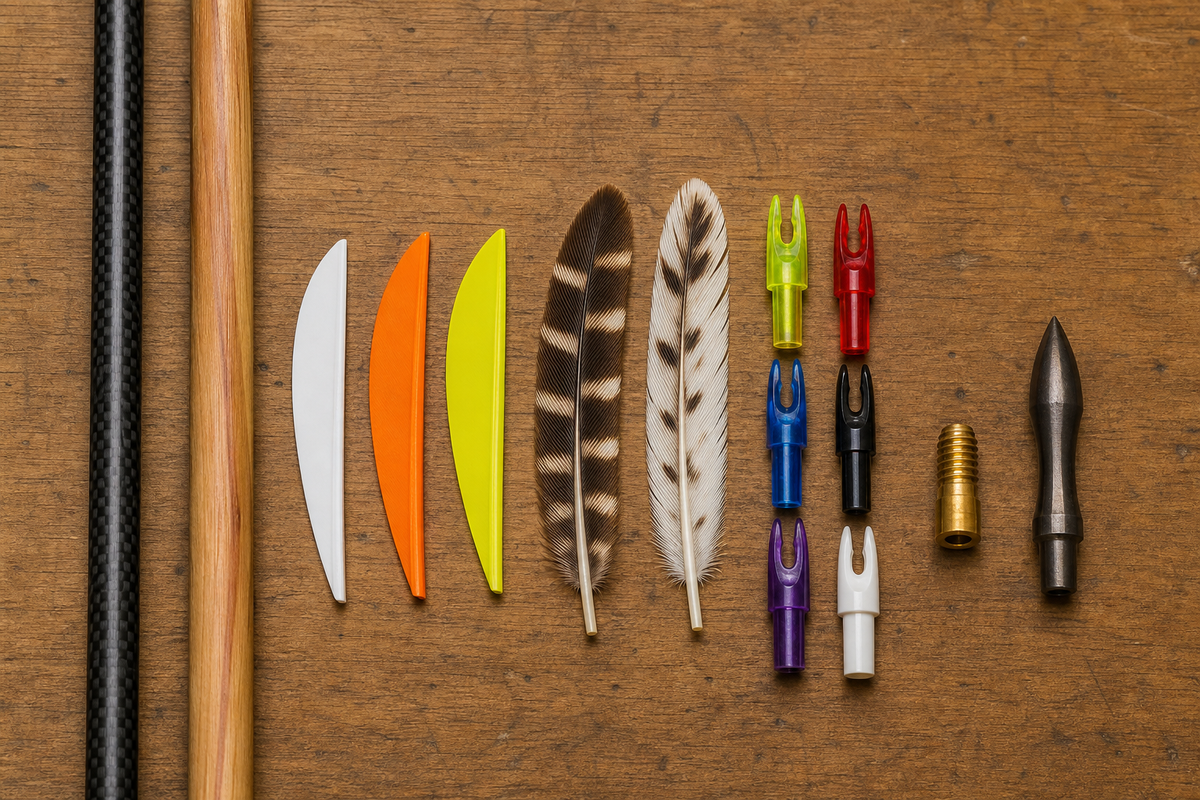
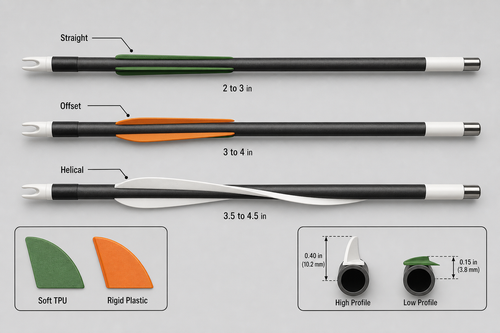
Spine doesn't work in isolation. The other components on your arrow affect how the shaft behaves in flight. Fletching size and stiffness influence stabilization speed — larger vanes or feathers correct flight faster but add drag. If your spine is slightly off, larger fletching can mask tuning issues at short range while they resurface at distance.
The nock fit also plays a role. A nock that's too loose or too tight changes how cleanly the string releases the arrow, which directly affects how the shaft begins its flex cycle. For more on this, the Legend Archery guide on arrow nocks covers fit, types, and compatibility in detail.
Similarly, your choice of arrow feathers versus plastic vanes changes the stiffness and weight distribution along the shaft, both of which influence how dynamic spine plays out in real shots.
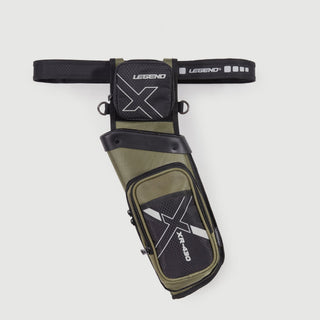
If you're transporting or storing a matched set of well-tuned arrows, keeping them protected and organized matters too. An arrow quiver that holds your shafts securely prevents tip and fletching damage that can subtly change arrow flight over time.
Frequently Asked Questions
How do I know if my arrow spine is wrong?
The clearest sign is inconsistent groups where arrows drift in a consistent direction — often left or right — especially as distance increases. Fishtailing in flight, contact marks on your rest or riser, and poor results from a specific archer while others shoot well from the same bow are also strong indicators. Bare-shaft testing is the most reliable diagnostic method.
Does spine matter more for recurve or compound bows?
Both benefit from proper spine matching, but the consequences of mismatch are generally more visible in recurve and traditional shooting. The greater paradox involved in a finger release off a recurve makes spine selection a higher-stakes decision. Compound bows are more forgiving due to mechanical releases and adjustable rests, but correct spine still improves precision at distance.
Can I use the same arrows if I increase my draw weight?
Possibly, but you'll need to check. Increasing draw weight makes your existing shafts behave dynamically weaker. If you increase by five pounds or less and your arrows were already on the stiffer end of the recommended range, you may be fine. A larger jump almost always requires a spine reassessment.
Why do arrow spine charts differ between manufacturers?
Each manufacturer designs their chart around their own shaft tolerances, materials, and the assumptions built into their testing. Charts also differ in whether they assume a mechanical or finger release, and what point weight they use as a baseline. Always use the chart from the manufacturer of the arrows you're buying, and treat it as a starting point for testing rather than a final answer.
Choosing With Confidence
Arrow spine is the foundation of a well-tuned setup. Get it right and the rest of your tuning process becomes much simpler. When buying new arrows, bring your accurate draw weight, draw length, planned arrow length, and intended point weight. Cross-reference the manufacturer's chart, apply the adjustments for your release style and bow type, and plan to verify with bare-shaft testing before settling on a full set. That process is short but worth every step.