Skip to content
 cust@legendarchery.com
 302 503 5767
 Westfield IN 46074


Most archers spend time obsessing over broadheads, arrows, and bow tuning — but the nock sitting at the back of every arrow quietly influences every shot you take. Getting nocks right is not complicated, but there are a few fundamentals that are easy to overlook, especially when you are just getting started.
Why Arrow Nocks Matter More Than They Look
A nock is the small plastic piece that clips onto your bowstring and holds the arrow in place before and during the shot. Its job sounds simple, but the way it fits, the type you choose, and how it sits on the shaft all have a direct effect on how consistently your arrows fly.
When a nock is too loose, the arrow can fall off the string mid-draw or behave unpredictably at the shot. When it is too tight, it can delay the arrow's release and cause erratic flight. Neither scenario is good for accuracy, and both are completely avoidable once you know what to look for.
[product-tabs]
1. Nock Fit Is Everything
The fit between the nock throat and the bowstring is one of the most important — and most overlooked — factors in consistent arrow flight. A properly fitted nock should hold the arrow in place on a slight downward angle without falling off, but release cleanly and without resistance when the string is drawn and released.
The most reliable test is simple: hold the bow horizontally with the arrow nocked, then give the string a gentle tap. The arrow should stay put. Now lift the bow vertically — the arrow should still hold without you gripping it. If it falls off easily, the nock is too loose. If you feel any resistance or hear a pop when you remove the arrow by hand, it may be too tight.
- Too loose: Arrow can fall off during draw, inconsistent arrow position at full draw, poor groupings.
- Too tight: The string pushes the arrow forward slightly before it releases cleanly, which can affect spine reaction and flight.
- Just right: Holds with light friction, releases cleanly, repeatable every time.
Nock fit also depends on your string diameter and the serving material used. If you change your string or have your bow restrung, always re-check your nock fit — what worked before may not work the same way with a new string.
2. Not All Nock Types Are the Same
Walk into any archery shop and you will find several different nock styles. Understanding the differences helps you make the right choice for your setup and shooting style.
Snap Nocks (Index Nocks)
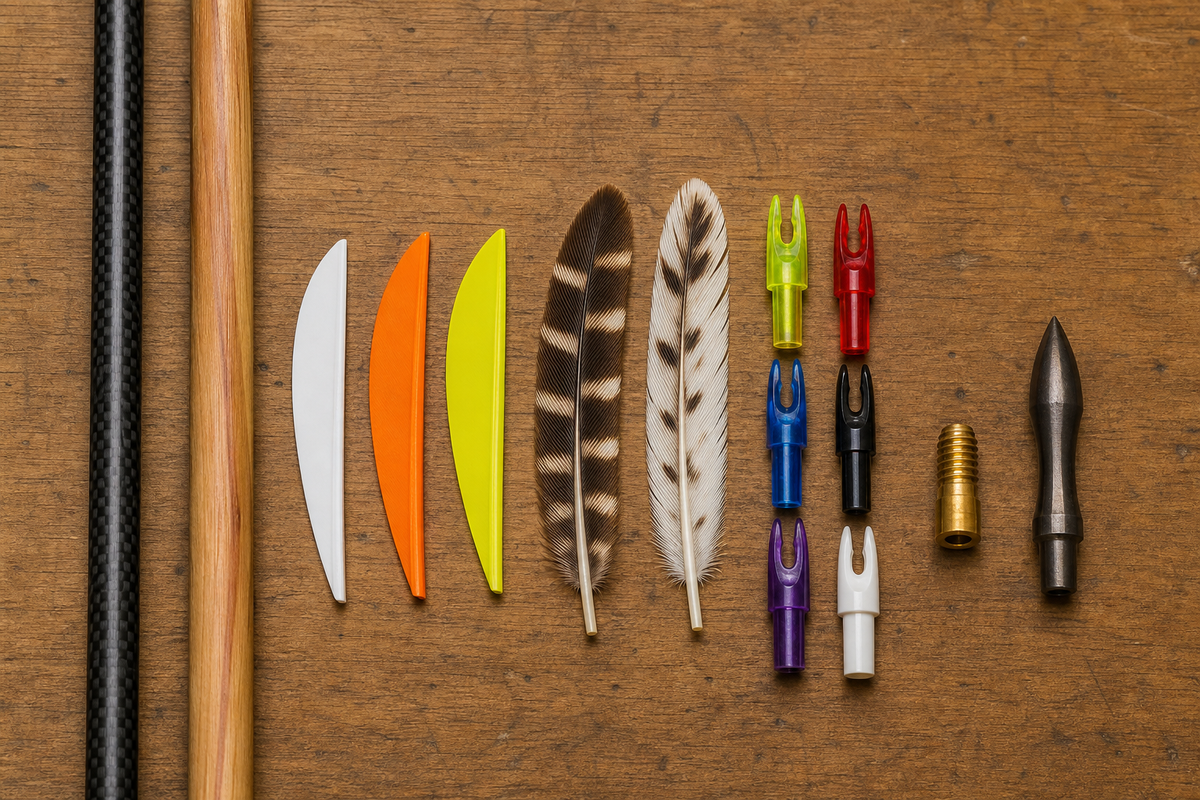
These are the most common type used in target and recreational archery. They snap onto the string and have a small index vane or flat spot that helps you orient the arrow the same way every time. Consistency of arrow orientation matters because it ensures your fletching clears the rest the same way on each shot. For most archers shooting a recurve or a compound with a whisker biscuit or blade rest, snap nocks are reliable and easy to use.
Press Fit Nocks (Pin Nocks)
Press fit nocks, sometimes called pin nocks or push-in nocks, sit inside the arrow shaft rather than over it. They are commonly used in higher-end carbon arrows and are popular in competitive archery. One key advantage is that the nock can rotate independently of the shaft, which means you can adjust arrow orientation without rotating the entire arrow — useful for fine-tuning clearance on your rest.
They also tend to be more consistent in weight and fit, which matters when you are shooting at high level and want every arrow to behave identically.
Lighted Nocks
Lighted nocks contain a small LED that activates on the shot. They are popular in bowhunting because they allow you to track the arrow's flight path and find it in low-light conditions. They are heavier than standard nocks, which changes your arrow's dynamic spine slightly, so it is worth testing them during practice before relying on them in the field.
If you use lighted nocks for hunting and standard nocks for practice, bear in mind that the weight difference can cause a small but measurable shift in point of impact. Ideally, practice with the same nocks you intend to hunt with.
Conventional Over-Nocks
Traditional archers often use simple over-nocks without an index. These work well with off-the-shelf or finger-shooting setups and are less concerned with precise orientation since bare-shaft shooting technique and instinctive aiming adjust for natural variation.
3. Nock Alignment Affects Your Arrow at Every Shot
Even if your nock fits perfectly and is the right type for your setup, alignment still matters. Specifically, there are two alignment considerations worth knowing: the cock vane orientation relative to the nock groove, and the nock point position on the string.
Cock Vane Orientation
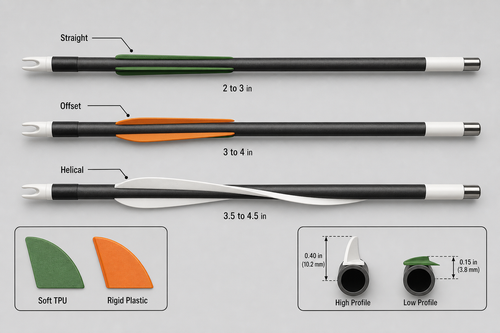
Most arrows have three vanes or feathers — one is a different colour (the cock vane or index fletching) and sits perpendicular to the nock slot. This is a visual reference to help you nock the arrow the same way every time. On a recurve with a side-mounted rest, the cock vane typically points away from the riser. On a compound with a drop-away rest, orientation can vary depending on your setup.
Always nock your arrow the same way. Even small inconsistencies in orientation can cause the fletching to contact the rest slightly differently, which shows up as fliers in your groups over time. If you want to learn more about how your fletching interacts with the rest and the air, the arrow feathers guide at Legend Archery covers this in useful detail.
Nock Point Position
The nock point — the brass crimp or tied serving on your bowstring where the arrow nocks — determines the angle at which the arrow sits at rest. Most setups start with the nock point set so the arrow sits level or very slightly high (often around 1/8 inch above level). Moving it up or down changes the angle of the arrow on the rest, which affects how it leaves the bow.
If you are experiencing arrow porpoising (up-and-down oscillation in flight), nock point position is often one of the first things to check and adjust.
Common Mistakes Archers Make With Nocks
- Mixing nock types or brands: Even if they fit the same shaft, different nocks can have small weight variations that affect point of impact. Keep your nocks consistent across a set of arrows.
- Ignoring worn or cracked nocks: Nocks are plastic and they do wear out or crack, especially after hard impacts or dry-fire incidents. Inspect them regularly — a cracked nock can fail at the shot.
- Not re-checking fit after a string change: New strings and different serving diameters change how your nock fits. Always verify fit when you change strings.
- Assuming all arrows in a dozen are identical: Even matched arrows can have slightly different nock orientations from the factory. Take time to orient every arrow correctly and mark them if needed.
- Over-tightening brass nock points: A brass nock point crimped too hard can damage the string's serving. Crimp firmly but not so hard that it cuts into the material.
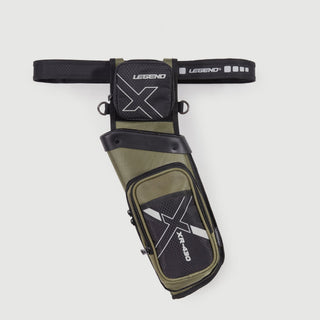
If you are handling a lot of arrows at the range or in the field, keeping them organised helps you inspect and manage nocks properly. A well-designed arrow quiver makes it easier to keep arrows protected and accessible without repeatedly dropping or banging the nocks against hard surfaces.
Frequently Asked Questions
Does nock weight actually affect arrow flight?
Yes, it can. Nocks are at the back end of the arrow, and any weight change there affects the arrow's dynamic spine and how it oscillates after the shot. The effect is small with standard nocks, but it becomes relevant when switching between standard and lighted nocks, or when building a matched set for competition.
How do I know if my nock is the right size for my arrow shaft?
Nock sizes are designed to match specific arrow shaft outside diameters. Most manufacturers list the compatible shaft diameter on the nock packaging. When in doubt, bring your arrows to an archery shop and test the fit physically — the snap or friction should feel consistent and neither sloppy nor forced.
Why do my arrows keep falling off the string between shots?
This is almost always a nock fit issue. The nock throat is too wide for your string diameter, or the string serving has worn down. Try a nock with a tighter throat, or have your string's serving rebuilt to restore the correct diameter.
Should I replace nocks after a hard hit or pass-through?
Yes. Any time an arrow takes a hard impact — hitting a hard target face, another arrow, or a solid object — inspect the nock carefully. Even hairline cracks are enough reason to replace it. A cracked nock that fails at full draw is a safety issue, not just an accuracy one.
Keeping It Simple
Nocks are inexpensive and easy to overlook, but they sit at a critical junction in your entire arrow system. Getting the fit right, choosing the correct type for your shooting style, and maintaining consistent alignment are habits that pay off in tighter groups and more reliable performance. Check them regularly, replace them when in doubt, and treat them as a genuine part of your tuning process rather than an afterthought.