Skip to content
 cust@legendarchery.com
 302 503 5767
 Westfield IN 46074


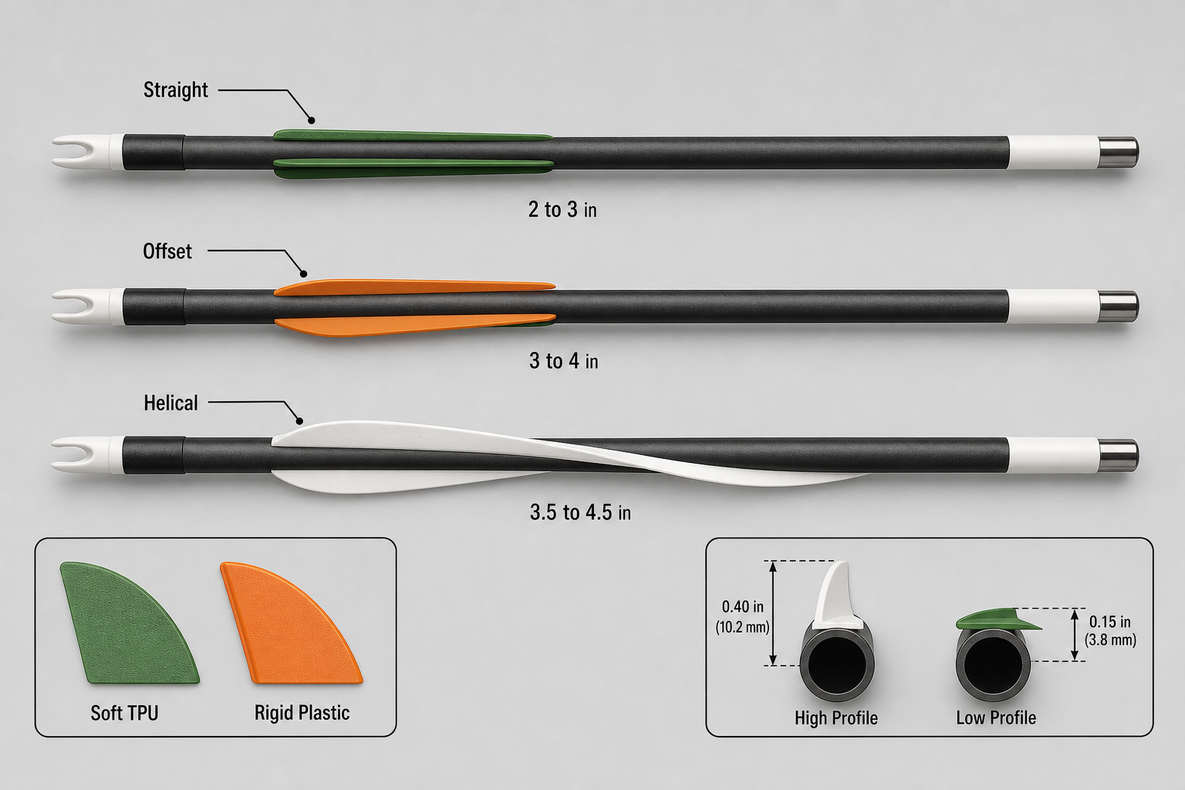
Most accuracy problems with a compound bow are not the bow — they are the arrow. And within the arrow, vanes are one of the most frequently misjudged variables. Selecting the right arrow vanes for compound bows comes down to understanding a handful of clear factors: vane size, material, offset or helical angle, and how your intended use case shapes every one of those decisions. Get this right and your fletching becomes an asset rather than a liability.
What Arrow Vanes Actually Do
Vanes serve one primary function: they stabilise arrow flight by creating drag at the rear of the shaft. That drag corrects any wobble or oscillation introduced at the moment of release. The faster your bow shoots, the sooner that stabilisation needs to kick in — and the more precise your vane choice becomes.
On a compound bow, arrow speeds are typically higher than on a recurve, which means the arrow experiences more paradox and flex at the shot. Vanes need to counteract that efficiently without creating too much drag that bleeds speed unnecessarily. The balance between stabilisation and aerodynamic efficiency is the central trade-off in every vane decision you make.
Vane Size: Longer and Taller Is Not Always Better
It is a common assumption that bigger vanes stabilise better. That is partially true, but the relationship is more nuanced.
- Longer vanes (4 inches and above) provide stronger correction over a longer distance, making them well suited to heavier arrows, large aggressive fixed-blade broadheads that plane hard, or instinctive shooting where perfect form is not guaranteed every shot.
- Shorter vanes (2 to 3 inches) produce less drag and work well with mechanicals or field points where the arrow is already inherently stable at release.
- Vane height (how tall the vane stands off the shaft) affects the leverage it has on the arrow. Higher-profile vanes correct flight faster but increase wind drift, which matters at longer target distances.
For most compound bow hunters shooting inside 60 metres with broadheads, a 2 to 3 inch vane is the modern standard — 2-inch Blazer-style vanes are the common default, with only large, aggressive fixed-blade broadheads generally calling for going up toward 4 inches. Target archers at longer distances often prefer low-profile vanes that sacrifice some immediate correction for consistency in variable wind conditions.
Vane Material: Soft TPU vs Rigid Plastic
Modern vanes are manufactured in two broad material categories, and the difference matters more than most beginners expect.
- Thermoplastic polyurethane (TPU) vanes are flexible and durable. They absorb contact with rest arms and launcher blades without tearing. If you shoot a drop-away rest or whisker biscuit, a softer vane material reduces the chance of deflection at the shot. They are also more forgiving if arrows contact each other in a quiver.
- Rigid plastic or vinyl vanes hold their shape more precisely, which some archers feel contributes to tighter group consistency, particularly in calm indoor conditions. However, they can crack in very cold weather and are less forgiving of contact during flight.
For outdoor hunting use, soft TPU vanes are generally the more practical choice. For indoor 3D or target archery with a well-tuned arrow rest, rigid vanes can offer a performance edge. When browsing arrow vanes, check material specifications carefully — many product listings clearly state whether a vane is soft or semi-rigid.
Helical, Offset, or Straight: Understanding Spin
How your vanes are attached to the shaft — their angular orientation — has a significant effect on how the arrow behaves in flight.
- Straight fletching applies no spin to the arrow. This produces the flattest trajectory and least drag, but also the least correction. It is rarely the best choice for broadhead shooting.
- Offset fletching positions the vane at a slight angle (typically 1 to 3 degrees) relative to the shaft. This induces gentle spin that improves stability without the drag penalty of full helical. A good all-round option for compound shooters who want a balance between speed retention and flight correction.
- Helical fletching wraps the vane around the shaft in a gentle curve. This creates the most spin and the strongest stabilisation effect. It is the preferred approach when shooting fixed blade broadheads, as their larger surface area makes the arrow more susceptible to planing — a condition where the arrowhead catches air and causes erratic flight.
If you are unsure where to start, a left or right helical at 3 to 5 degrees is a reliable default for most compound hunting setups. The direction of helical (left or right) does not significantly affect accuracy as long as all vanes on a given arrow are consistent.
Matching Vanes to Your Arrow Rest and Clearance
Even the best vane choice will underperform if there is contact between the vane and the arrow rest at the shot. This is one of the most overlooked aspects of fletching selection.
To check for clearance issues, apply a light dusting of powder or foot spray to your vanes, shoot one arrow, and inspect both the vanes and the rest for transfer marks. Any contact you detect is a tuning problem — it may mean you need to rotate your nock to move the index vane to a position that avoids the rest, or it may indicate a rest height or centreshot adjustment is needed.
Vane profile height plays directly into this. A taller vane on a poorly tuned rest will contact more aggressively than a low-profile vane. This is why tuning and vane selection work together rather than independently.
Hunting vs Target: Different Priorities
The context you shoot in should shape your vane selection more than any single specification.
- Hunting setups prioritise broadhead compatibility, durability, and reliable flight at realistic hunting distances. Larger helical vanes in a durable TPU material are the standard. Colour is often chosen for visibility in low light — bright green, orange, or white are common.
- 3D archery involves a mix of distances and angles. Moderate offset vanes with good speed retention work well. Many 3D archers use 2- or 3-fletch configurations rather than the traditional 3-vane setup to reduce drag.
- Indoor target archery at fixed distances often uses short, low-profile vanes where consistency of flight matters more than aggressive correction.
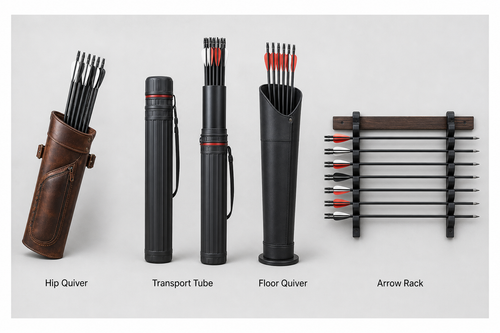
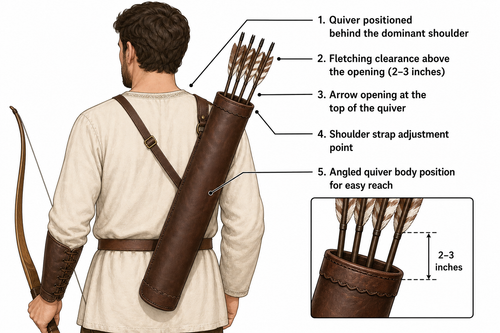
Having the right arrow storage also plays a role in protecting your vanes between sessions. A well-fitted arrow quiver keeps fletched arrows separated and prevents the kind of vane compression that gradually deforms soft vanes over time.
Common Mistakes When Choosing Arrow Vanes
- Choosing vanes based on appearance rather than application. Vane colour and shape are secondary to material, size, and offset angle for your specific use case.
- Using the same vane setup for broadheads and field points. Field points are more forgiving. Broadheads expose every flight inconsistency — vanes that perform fine with tips may fail with heads.
- Ignoring rest clearance. Vanes that contact the rest mid-shot will produce inconsistent flight regardless of how well they are fletched.
- Reflectching with the wrong adhesive or technique. Even a good vane applied with poor glue contact or incorrect helical angle will detach or steer incorrectly under the stress of a high-speed compound release.
- Over-fetching for distance. Adding more vane surface area than needed for your distances and point type creates unnecessary drag. Know your actual shooting envelope before defaulting to the largest available vane.
Frequently Asked Questions
Do I need different vanes if I switch from field points to broadheads?
Almost always, yes. Fixed blade broadheads create aerodynamic lift that field points do not. Larger vanes with a helical offset provide the spin and correction needed to counteract that effect and keep the arrow flying straight.
How do I know if my vanes are causing my arrows to fly erratically?
Shoot a bare shaft (no vanes) alongside a fletched arrow at close range. If the bare shaft groups reasonably well but the fletched arrow does not, vane contact with the rest or incorrect offset is a likely cause. If both fly erratically, the issue is likely arrow spine or tune rather than the vanes themselves.
Can I refletch my own arrows at home?
Yes. A fletching jig, appropriate adhesive, and patience are the primary requirements. The most common error is rushing the cure time between vanes, which leads to poor bond strength and vane detachment at speed.
Is three vanes always better than two?
Three vanes offer more surface area for correction and are the standard for most applications. Two-vane setups are used by some 3D and field archers who prioritise speed, but they sacrifice some margin for error in form and release. For a compound bow hunting setup, three vanes remain the most reliable configuration.
Putting It Together
Selecting the right arrow vanes for compound bows is a decision made at the intersection of your bow's speed, your arrow's spine, your point type, and your shooting context. There is no single best vane — only vanes that are better or worse matched to your specific setup. Work through the factors in this guide methodically, confirm your rest clearance, and adjust based on what your groups tell you. That process, more than any single product recommendation, is what separates archers who struggle with inconsistency from those who do not.