Skip to content
 cust@legendarchery.com
 302 503 5767
 Westfield IN 46074


Arrow fletchings are one of the most overlooked components in an archer's setup — yet they directly affect how your arrow flies, how quickly it stabilises, and how accurately it hits the target. Whether you're shooting a recurve, compound, or traditional longbow, understanding arrow fletchings will help you make smarter choices when buying arrows or building your own.
What Arrow Fletchings Actually Do
Fletchings are the fins attached near the rear of an arrow shaft. Their job is to create drag and, in most configurations, spin. Together, these forces counteract the natural wobble an arrow experiences the moment it leaves the bow — a movement called the archer's paradox. Without fletchings, most arrows would tumble unpredictably before reaching the target.
The way a fletching works depends on three things: its material, its size, and the angle at which it's attached to the shaft. Each variable involves a trade-off between stability and speed.
[product-tabs]
Feathers vs Vanes: Choosing the Right Material
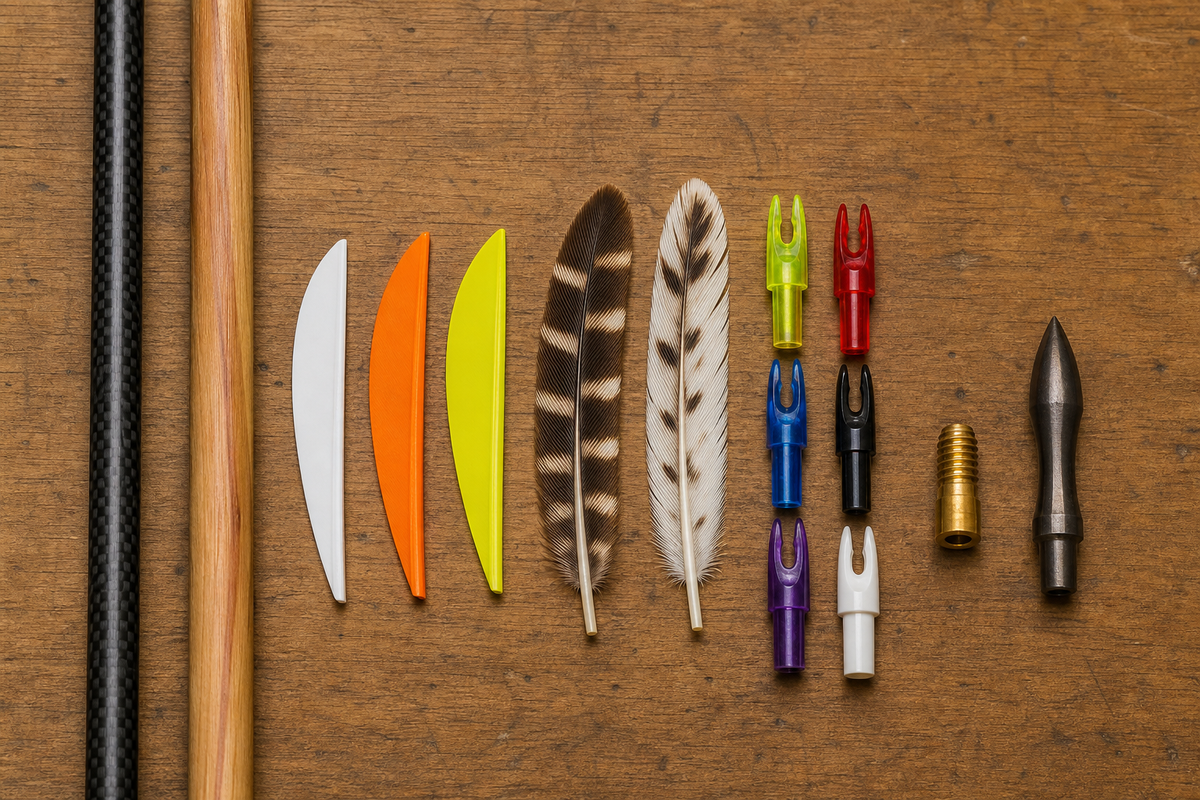
The two main fletching materials are natural feathers and plastic vanes. Each suits different shooting styles and environments.
Natural Feathers
Turkey feathers are the traditional choice, particularly popular with barebow and traditional archers. Feathers are lightweight, compress easily when passing through an arrow rest, and self-correct quickly after release. For shooters using a shelf rest or shooting off the hand, feathers are often the better option because they create less contact disturbance.
The main drawback is weather sensitivity. Feathers absorb moisture and can lose their shape and performance in wet or humid conditions. They also wear faster than synthetic alternatives.
If you're exploring natural feather options, the arrow feathers guide at Legend Archery covers the key types and their characteristics in more detail.
Plastic Vanes
Synthetic vanes are the dominant choice for compound archers and anyone shooting in variable weather. They're durable, consistent, and unaffected by moisture. Vanes can be moulded into different shapes and stiffnesses, giving manufacturers precise control over how much drag and spin they produce.
Stiffer vanes offer more aggressive correction but generate more drag, slowing the arrow down. Softer vanes are more forgiving and retain more speed, but they're better suited to well-tuned setups where the arrow doesn't need heavy correction.
Size and Profile: Stability vs Speed
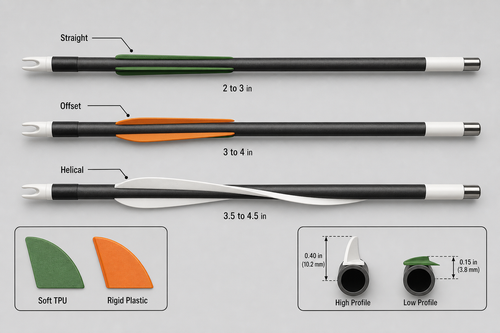
Fletching size is measured by height (how tall the fin is) and length (how far along the shaft it runs). Larger fletchings produce more drag and spin, stabilising the arrow faster — but at the cost of speed and some trajectory flatness at longer distances.
- Short, low-profile vanes (2 to 2.5 inches): Favoured by competitive compound archers for speed and flat trajectory. These work well when the bow is tuned precisely and the arrow requires minimal correction.
- Mid-size fletchings (3 to 4 inches): The most versatile option. Suitable for field archery, 3D shooting, and most recurve setups. A good starting point for most archers.
- Large feathers or vanes (4 to 5 inches): Common in traditional archery and indoor target shooting. They stabilise heavy or wide-diameter arrows effectively, especially at shorter distances where speed loss is less critical.
Fletching Orientation: Straight, Offset, and Helical
The angle at which a fletching is attached to the shaft controls how much the arrow spins in flight. This is often where beginners get confused.
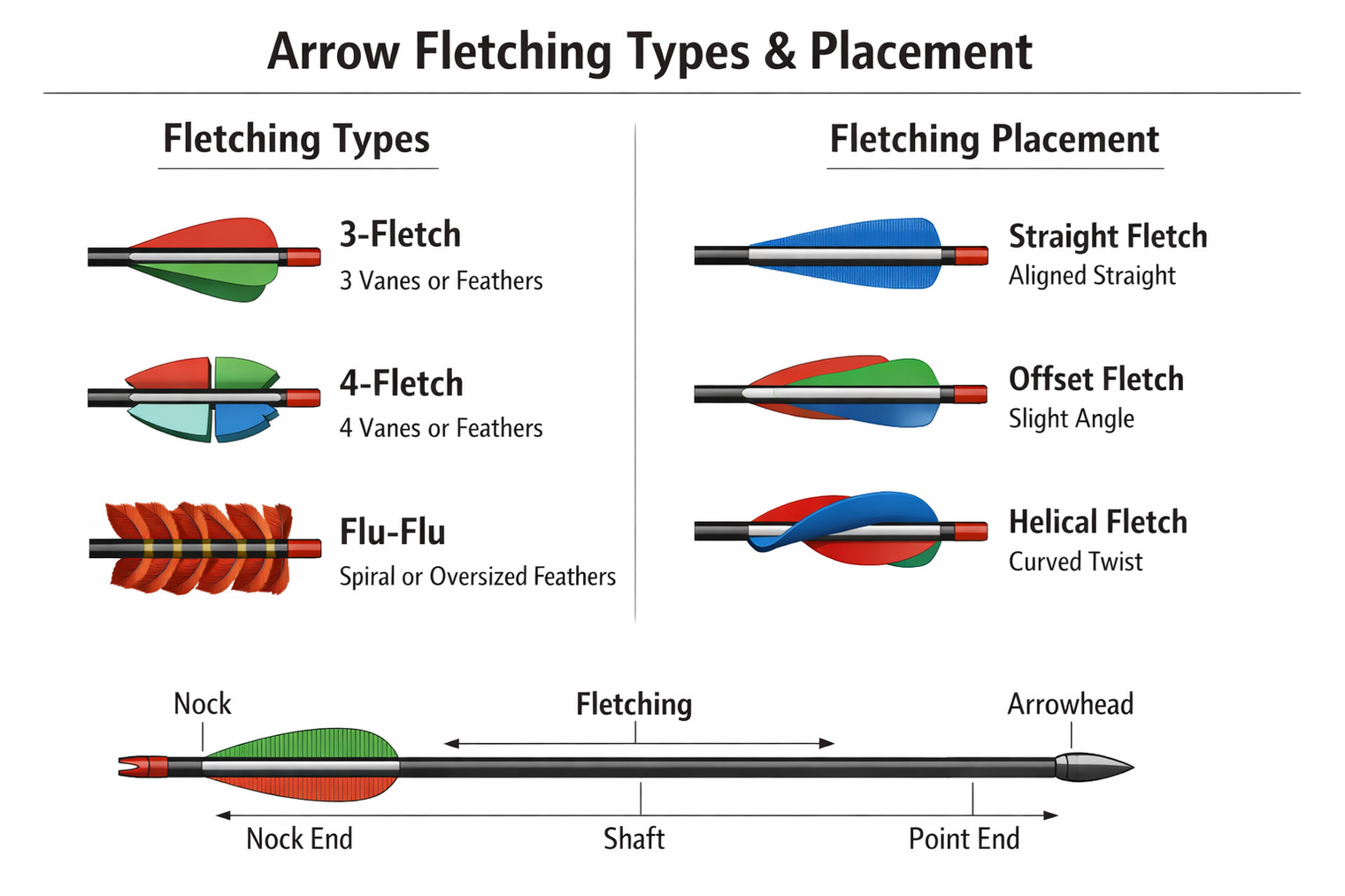
Straight Fletching
Straight fletchings are aligned parallel to the arrow shaft. They produce the least spin and the least drag, giving you more raw speed. However, they offer the weakest stabilisation, which means your bow needs to be well-tuned and your form consistent for them to work reliably.
Offset Fletching
A slight angular offset — typically between 1 and 3 degrees — causes the arrow to rotate during flight without the aggressive profile of a full helical. This is a practical middle ground that suits a wide range of setups, including many recurve and compound configurations.
Helical Fletching
Helical fletchings are twisted along their length, producing the highest spin rate. This gives excellent stability, particularly for broadhead-tipped hunting arrows where accurate flight matters most. The trade-off is increased drag and slightly reduced velocity. Helical fletchings are generally not recommended for arrows with mechanical broadheads that have large fixed blades, as the added spin can amplify any blade-plane issues.
Matching Fletchings to Your Bow and Purpose
There's no single correct setup. The right fletching depends on what you're shooting, how far, and with what tip.
- Target recurve: Medium feathers or vanes with a slight offset. Feathers suit shelf-rest shooting well. Vanes work reliably on most modern rests.
- Compound target: Short, low-profile vanes with minimal offset or helical. Prioritise speed and consistency at known distances.
- 3D and field archery: Mid-size vanes with offset or helical. You need to handle varying distances and conditions reliably.
- Traditional longbow or barebow: Longer natural feathers, typically 4 to 5 inches. They self-correct better and handle contact with the bow more gracefully.
- Hunting with fixed broadheads: Larger helical vanes for maximum stabilisation. Broadheads create more drag and require stronger correction than field points.
When choosing arrows pre-fletched from a supplier, pay attention to what fletching configuration comes standard. Many archers eventually re-fletch their arrows to better suit their bow after gaining experience.
Common Mistakes Beginners Make with Fletchings
Most fletching-related problems come down to a few predictable errors:
- Using small vanes on a poorly tuned bow: Low-profile vanes require a well-tuned setup to function correctly. If your rest, nock height, or draw weight are off, a larger fletching will mask the problem better while you sort out tuning.
- Ignoring rest clearance: If your vanes clip the arrow rest or riser during the shot, you'll see inconsistent groupings regardless of how accurate your form is. Run a clearance test using foot powder spray before trusting your setup.
- Mixing fletching types on the same arrow: Replacing one damaged vane with a different type, size, or stiffness changes how that arrow flies compared to the others in your quiver. Always replace the full set.
- Choosing fletchings purely on aesthetics: Bright colours are useful for spotting arrows in grass or foliage, but the colour shouldn't override the functional choice of size and profile.
- Neglecting fletching condition: Bent, peeling, or cracked vanes degrade arrow flight significantly. Inspect your fletchings regularly, especially after retrieving arrows from hard surfaces or dense targets.
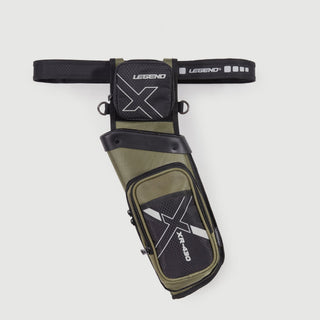
Storing your arrows correctly helps protect fletchings between sessions. A well-designed arrow quiver keeps your arrows separated so vanes don't press against each other and deform over time.
Frequently Asked Questions
What's the difference between vanes and feathers for a beginner?
Feathers are lighter and compress easily, making them forgiving for traditional or barebow setups. Vanes are more durable and weather-resistant, which makes them the practical default for most modern recurve and compound archers. If you're unsure, start with mid-size synthetic vanes and adjust from there as your shooting style develops.
Do fletchings actually affect accuracy, or is it mostly about form?
Both matter, but fletchings play a direct role in how quickly and completely your arrow stabilises after leaving the bow. Poor fletching selection — wrong size for your arrow weight, no clearance from the rest, or worn vanes — will create inconsistency that no amount of good form can fully compensate for.
How often should I replace or re-fletch my arrows?
There's no fixed interval — it depends on how often you shoot and the surfaces you're shooting into. Inspect your vanes or feathers after every session. If you notice peeling edges, visible cracks, or a vane that no longer sits flush to the shaft, replace it before your next shoot. A single damaged fletching on one arrow will make that arrow behave differently from the rest of your set.
Can I use feathers on a compound bow?
Yes, though it's less common. Feathers can work on compound bows, particularly with a full-capture rest or whisker biscuit that doesn't cause clearance issues. The main limitation is that feathers degrade faster than vanes under the higher energy of a compound release and in wet conditions.
Conclusion
Arrow fletchings are a functional component that directly shapes how your arrow behaves from the moment it leaves the string. Choosing the right material, size, and orientation for your bow type and shooting purpose is a practical decision — not just a technical detail for experienced archers. Start with a forgiving mid-size setup, confirm your rest clearance, and refine from there as your shooting develops.
For archers building their kit from the ground up, keeping your arrows protected and organised matters just as much as how they're fletched. Browse Legend Archery's range of arrow quivers to find a carry solution that suits your shooting style.