Skip to content
 cust@legendarchery.com
 302 503 5767
 Westfield IN 46074


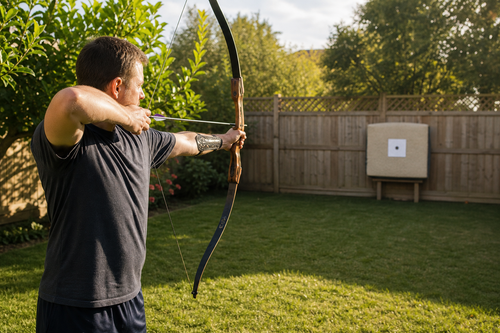
The phrase these shoes are made for shooting is not just a catchy idea — it reflects a genuine principle that experienced archers understand well. Your feet connect you to the ground on every single shot. The shoes you stand in affect your balance, your body alignment, and ultimately how consistently you can repeat a clean release. It is one of the most overlooked variables in beginner and intermediate archery, and getting it right costs far less than a new sight or a set of carbon arrows.
Why Footwear Actually Matters on the Shooting Line
Archery is a precision sport built on repeatable movement. Every variable that shifts between shots introduces inconsistency. Most archers spend considerable time and money on their bow setup, their arrows, and their accessories — yet they will walk onto the shooting line wearing thick-soled running shoes or soft hiking boots without a second thought.
Here is the problem with that approach:
- Cushioned running shoes compress unevenly under load. When you draw and anchor, your body weight shifts slightly. A thick, compressible sole responds differently depending on how hard you are pressing and which part of the foot bears more weight. This creates micro-changes in your stance height and tilt that you cannot feel but your arrows will reveal.
- Elevated heels tilt your posture forward. Most athletic shoes are built with a heel drop — meaning the heel sits higher than the toe. In archery, this pushes your hips forward and can subtly rotate your upper body, affecting your draw shoulder and string alignment.
- Soft soles reduce proprioceptive feedback. Your nervous system uses the soles of your feet to understand where your body is in space. Thick foam between your foot and the floor muffles that signal, making it harder to find and return to the same foot pressure distribution shot after shot.
None of this means a beginner cannot shoot well in trainers. It means that as you pursue consistency, your footwear becomes a real variable worth addressing.
Core Principles of Shooting-Ready Footwear
You do not need a specialist archery shoe sold through a pro shop. What you need is footwear that matches a clear set of functional principles.
A Flat, Firm Sole
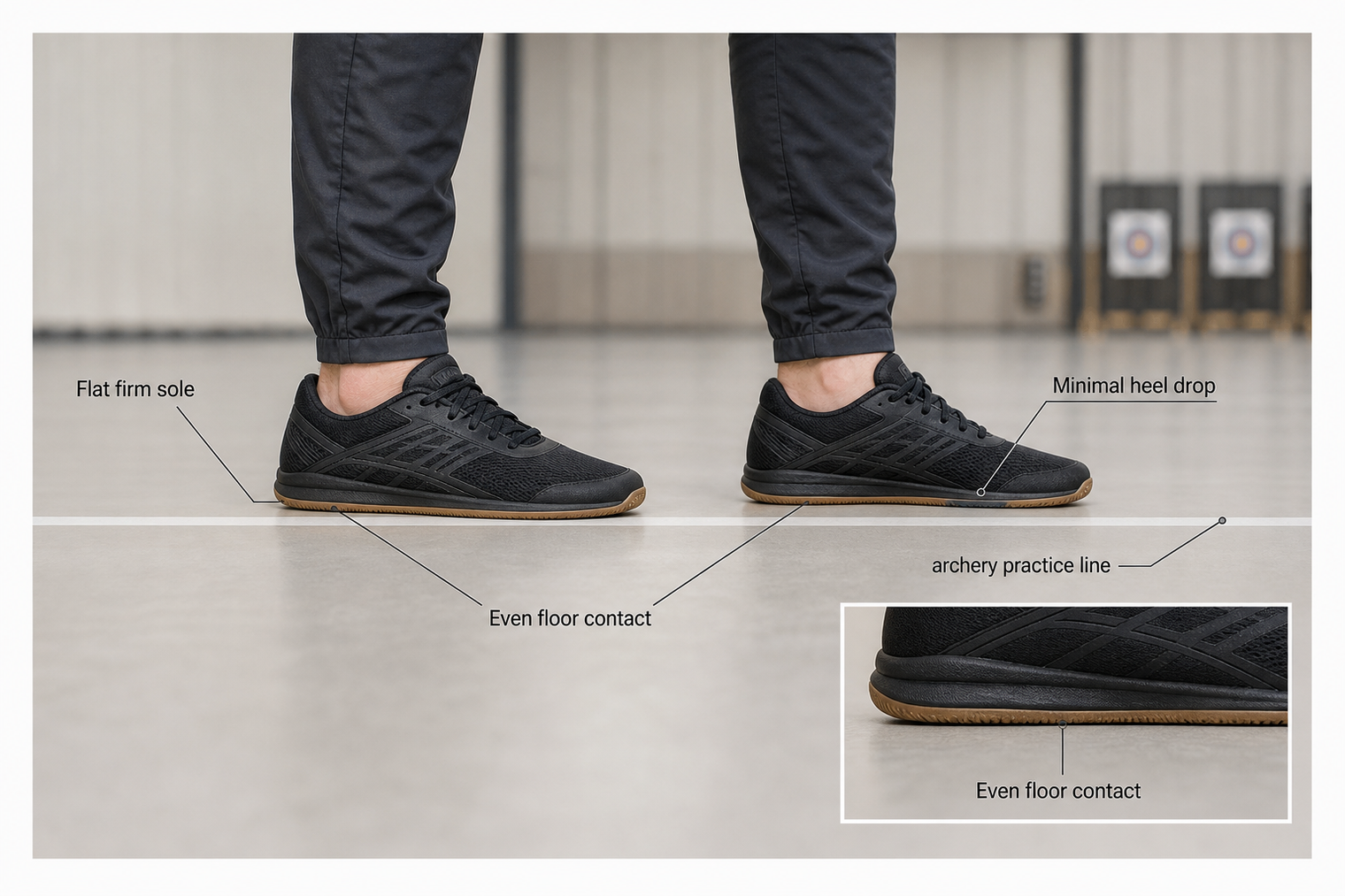
The single most important characteristic is a flat sole with minimal heel drop and firm, non-compressible material underfoot. Martial arts shoes, minimalist training shoes, and some court sport shoes often meet this requirement well. The goal is to feel the floor and maintain the same contact point every time you step to the line.
Consistent Fit Across Sessions
Your shoes should fit the same way each time you wear them. Laces tied to the same tension, the same sock thickness, the same feel underfoot. Inconsistency here is subtle but real — especially in long training sessions or multi-day competitions where your feet may swell slightly.
Ankle Stability Without Restriction
For target archery on flat ground, a low-profile shoe with modest ankle support is ideal. You are not navigating uneven terrain, so you do not need a high boot. However, some ankle structure prevents unwanted lateral roll that could shift your weight distribution between shots.
Surface-Appropriate Grip
Indoor archery venues often have smooth or slightly slick floors. Outdoor events can involve grass, gravel, or slightly uneven ground. Match your sole's grip to the surface you most commonly shoot on. A sole that slips on indoor matting will cause your back foot to creep between shots without you noticing.
Practical Guidance: Choosing the Right Shoe for Your Archery Context
Indoor Target Archery
This is where footwear standards matter most because conditions are controlled and your only variable is you. Look for a flat-soled court shoe or a dedicated wrestling or gymnastics shoe. These are designed for stable, planted movement on smooth surfaces. Many serious target archers use shoes in the 4mm heel-drop range or less.
Outdoor Field and Target Archery
Outdoor shooting introduces terrain variation. A shoe with a thin but grippy outsole works well — think trail running shoes with low drop, or lightweight hiking shoes with a firm midsole. You want grip and ground feel without the instability of a thick cushioned sole.
3D Archery and Roving Courses
Here, terrain is unpredictable. You may be standing on slopes, roots, or soft ground. In this context, a shoe with more support and grip becomes appropriate even if it sacrifices some of the flat-sole benefits. Prioritise not slipping or rolling an ankle on uneven ground over the marginal gains of a minimalist sole.
Whatever footwear you choose, pair it with the rest of your shooting kit thoughtfully. Just as your shooting gloves protect your draw hand while maintaining consistent finger placement, your shoes should protect your performance foundation — your stance — by giving you reliable, repeatable contact with the ground.
Common Mistakes Archers Make With Footwear
Even archers who understand the principle make these errors in practice:
- Switching shoes between training and competition. If you train in one pair and compete in another, you are changing a variable on the day it matters most. Dedicate a pair of shoes to archery and wear them consistently.
- Ignoring wear patterns. Worn-down soles develop uneven contact points. A shoe that was flat six months ago may now tilt your foot slightly outward on one side. Inspect your archery shoes regularly and replace them before the wear affects your shooting.
- Wearing thick wool socks with minimalist shoes. The benefit of a thin, firm sole is partially cancelled if your sock creates a soft, inconsistent layer between your foot and the shoe. Use a consistent, medium-weight sock that does not compress significantly.
- Overlooking foot position habits entirely. Footwear helps, but it does not substitute for deliberate foot placement. Even with ideal shoes, an archer who places their feet differently each time will struggle with consistency. Use a line marker or foot template during practice to build reliable foot placement habits.
- Choosing footwear for looks over function. Archery does not have a shoe aesthetic the way other sports do, and it is easy to default to whatever you find comfortable or stylish. Comfort is important, but a highly cushioned lifestyle shoe is not the same as a functionally flat training shoe even if both feel comfortable standing around.
Your footwear is part of a broader system. Just as protecting your eyes with quality shooting glasses reduces distraction and fatigue during long sessions, wearing the right shoes removes a variable that would otherwise quietly erode your shot-to-shot repeatability.
Building a Consistent Shooting Setup from the Ground Up
Think of your archery setup as a stack. At the very bottom is your footwear and foot placement. On top of that is your stance, your hip position, your torso alignment, your draw arm, and finally your sight picture and release. Every layer depends on the one below it. A slight shift at the base propagates upward through the entire system.
This is why experienced coaches often check a new student's shoes before they ever look at their bow hand or anchor point. If the foundation is unstable or inconsistent, correcting the upper layers is like adjusting a photograph that is already blurred at the source.
Developing a pre-shot routine that includes checking your foot position is a simple and effective habit. Before you raise your bow, look down once, confirm your feet are where you intend them to be, and feel your weight distribution across your soles. This takes two seconds and anchors your entire stance before the shot begins.
Frequently Asked Questions
What kind of shoes do serious target archers actually use?
Many competitive target archers use wrestling shoes, minimalist cross-training shoes, or court shoes designed for sports like squash or handball. The common thread is a flat, firm sole with little to no heel elevation. Some archers also use dedicated archery shoes available from specialist suppliers, but there is no single required product — the function matters more than the brand.
Does it really make a difference, or is this only for elite archers?
It makes a meaningful difference at any level where you are actively working on consistency. Beginners benefit most from building good habits early. Intermediate archers who have plateaued sometimes find that addressing footwear — alongside other equipment and technique factors — helps break through inconsistency they could not otherwise explain.
What are the biggest beginner mistakes around archery footwear?
The most common are using cushioned running shoes, wearing different shoes to training versus competition, and not pairing the right footwear with deliberate foot placement habits. Footwear is only one part of a consistent stance — the shoe helps, but the archer still needs to step to the line the same way every time.
Can I improve without buying new shoes right away?
Yes. Start by paying attention to your foot placement consistency and the feel of your current shoes underfoot. If you notice your weight shifting unevenly, or if your soles are worn or heavily cushioned, that is when to consider a change. You do not need to invest immediately — understanding the principle first is the more valuable step.
Closing Thoughts
The idea that these shoes are made for shooting is really about understanding your body as an integrated system. Every piece of your archery setup — from the nocking point on your bowstring to the ground beneath your feet — contributes to the shot. Addressing footwear is not a shortcut to better scores, but ignoring it is an unnecessary handicap. Start from the ground up, build consistent habits, and let every layer of your technique rest on a stable foundation.