Skip to content
 cust@legendarchery.com
 302 503 5767
 Westfield IN 46074


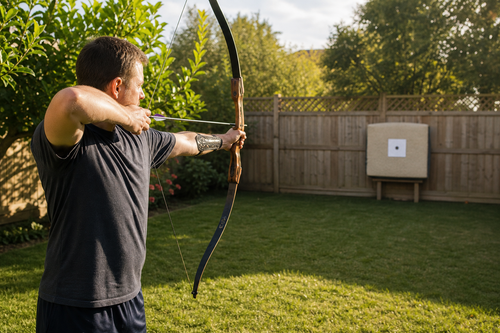
Expansion is the movement that triggers a clean, consistent release in recurve archery — and it is the part of shot execution that most archers either misunderstand or skip entirely. If your groups are inconsistent or your release feels like a deliberate grab, the problem is almost always in how you manage this final phase of the shot.
What Is Recurve Expansion Technique?
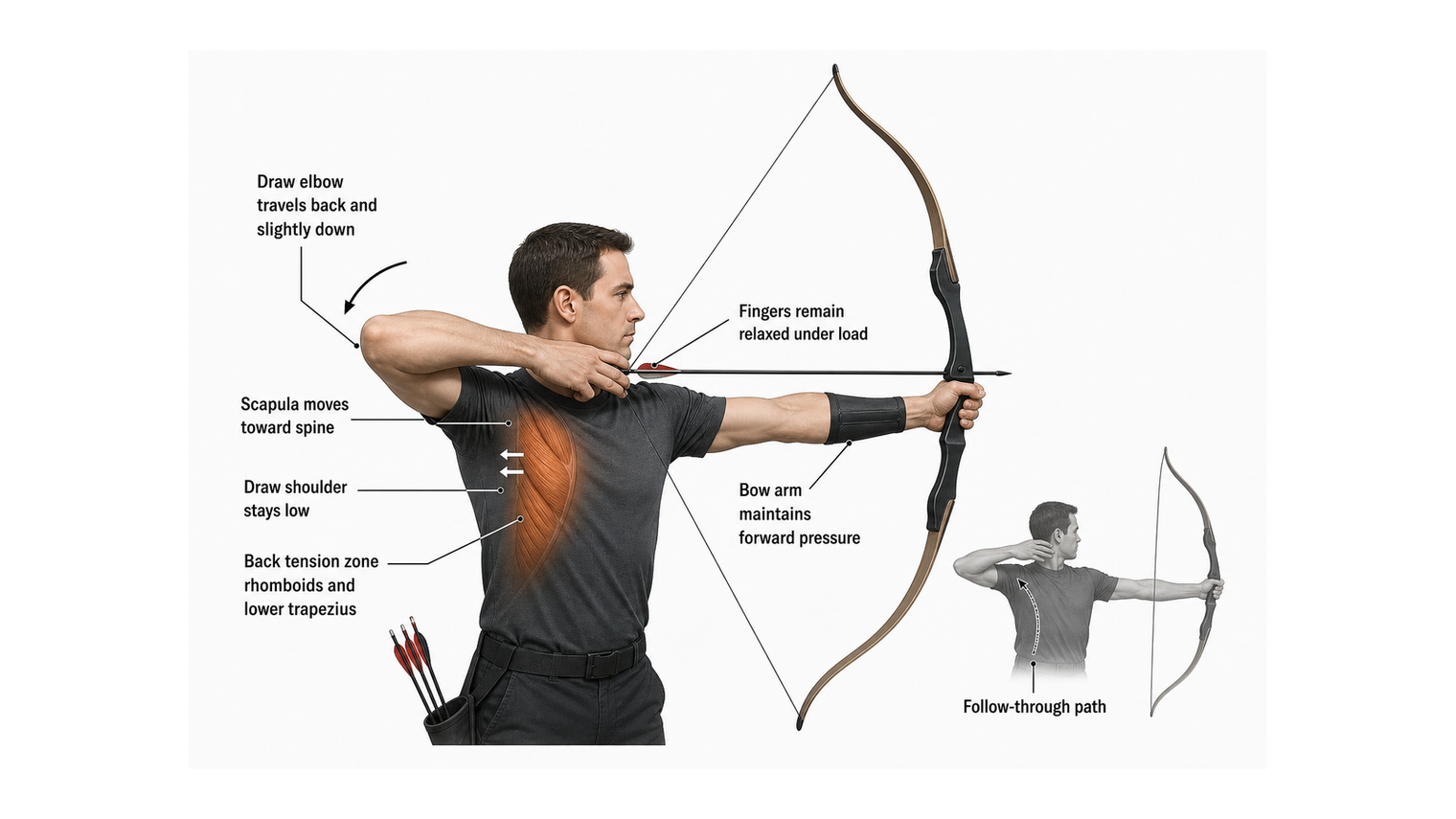
Expansion refers to the continued growth of tension in the draw-side muscles — primarily the rhomboids and lower trapezius — after you have reached full draw. Rather than holding static and then releasing, the archer applies gentle, sustained pressure that causes the draw elbow to travel backward and slightly downward. This movement loads the back correctly and creates the conditions for the string to leave the fingers without a deliberate hand action.
In simple terms: the hand does not release the string. The expansion causes the fingers to open as a consequence of the back moving. That distinction is fundamental to understanding why this approach produces better results than a consciously triggered release.
Why Expansion Matters for Accuracy
Recurve archers who rely on a hand-driven release introduce timing variation into every single shot. The brain decides when to let go, and that decision is never perfectly consistent. It is also affected by pressure, fatigue, and target panic — a condition that plagues archers who have trained themselves to fire the shot rather than allow it.
A properly executed expansion removes much of that conscious decision-making. Because the back is continuously loading, the release happens when the tension reaches a natural threshold. The arrow leaves at the same point in the muscular cycle, shot after shot, which is what produces tight groups at distance.
This is not about shooting harder or faster. It is about creating a repeatable internal condition rather than depending on a repeatable external action.
The Mechanics: What Is Actually Happening
To understand expansion properly, it helps to think of the draw arm and the bow arm as two ends of a system under tension. At full draw, the job is not to freeze that system — it is to keep loading it in a controlled direction.
- Draw shoulder: Should remain settled and low, not rising toward the ear. The scapula on the draw side moves toward the spine as expansion continues.
- Draw elbow: Moves in a shallow arc — back and slightly down. This is the external sign that back tension is active.
- Fingers and hand: Stay relaxed. The grip on the string is maintained only by the curl of the fingers under load. As the back takes over, the fingers open without instruction.
- Bow arm: Continues pushing toward the target throughout expansion, providing a counterforce that keeps the system balanced.
- Follow-through: After the release, the draw hand travels naturally toward the neck or shoulder. This is evidence of a genuine back-driven release, not a snatched or thrown hand.
These elements work together. You cannot isolate one and expect the others to self-correct.
How to Train Expansion Off the Range
Expansion is difficult to feel on a bow at first because there is too much else happening — aiming, judging distance, managing time at full draw. The most effective approach is to strip those elements away and train the movement in isolation.
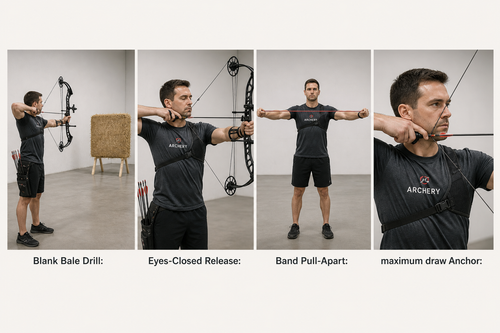
Resistance Band Work
A light resistance band anchored at shoulder height lets you practise the draw position and expansion motion without managing a bow. Hold the end of the band as you would a string, anchor, and then focus only on moving the elbow back. Do this slowly and with attention. The goal is to build proprioceptive awareness of what the back muscles feel like when they are doing the work.
Blank Bale Shooting
Shooting at a target from one to two metres away removes the aiming variable entirely. Close your eyes or use a blank bale and focus exclusively on the internal sequence: settle into anchor, begin expansion, allow the release. The proximity means a poor shot has no consequence. This makes it a safe environment to change deeply ingrained habits.
Blind Bale with the Hook Technique
Some coaches use a physical cue: imagine your draw hand is a hook, not a hand. The hook holds the string passively. The back moves the hook. This framing helps archers stop thinking about the hand as the active agent in the release.
Common Mistakes Archers Make
These errors appear at every level of the sport, from beginners to competitive recurve archers working through a plateau.
- Freezing at full draw: Holding static and waiting kills the expansion cycle. The back muscles cannot initiate movement from a dead hold. Shots fired from a freeze tend to be jerky and poorly timed.
- Collapsing the draw length: Allowing the draw elbow to move forward instead of back is a collapse. It usually means the archer has peaked in back tension and is now losing the load. Shots will hit low.
- Using the fingers to release: Deliberately opening or flicking the fingers causes the hand to move before the arrow clears the string. This creates horizontal deviation and is the root cause of many left-right consistency issues.
- Pulling with the arm, not the back: The bicep and shoulder are not the primary movers in expansion. Archers who draw with the arm arrive at full draw already fatigued in the wrong muscles and have no clean expansion available to them.
- Rushing through the anchor: Expansion needs a stable anchor to begin from. Skipping a solid anchor position means expansion has no fixed reference point, and the shot geometry changes each time.
- Neglecting follow-through: The follow-through is not a pose held for appearance. It is the result of a correctly completed expansion. If the follow-through looks inconsistent, the execution before it was also inconsistent.
Applying This to Your Current Setup
Equipment has a meaningful effect on how expansion feels and functions. A draw weight that is too heavy forces the archer to engage the arm and shoulder muscles to maintain the draw, which crowds out the back entirely. If you are struggling to find expansion, it is worth checking whether your draw weight is appropriate for your current strength and training volume.
Similarly, the fit of your bow — draw length in particular — affects whether back tension is accessible. A draw length that is too long over-extends the shoulder and locks out the expansion pathway. A draw length that is too short gives the back muscles no room to move through.
If you are exploring equipment options that suit your technique goals, Legend Archery's recurve bow range covers a broad selection across different draw weights and limb configurations. For archers who prefer a more instinctive approach, a traditional recurve bow can also be a useful training tool precisely because it strips back accessories and forces focus on the fundamentals of form.
Working with a Coach
Expansion is one of the hardest techniques to self-diagnose because the feedback is internal. A coach watching from the side can identify whether the draw elbow is actually moving, whether the draw shoulder is rising, and whether the follow-through is genuine or manufactured. Video review is another useful tool — film yourself from directly behind and watch the elbow path frame by frame after the release.
For archers who train with a club or group, comparing notes with more experienced recurve archers can accelerate the learning process significantly. Watching a well-executed shot in person, and feeling what it looks like in someone else's form, provides reference points that written descriptions cannot fully replicate.
Frequently Asked Questions
What exactly is expansion in recurve archery?
Expansion is the continued movement of the draw-side back muscles after reaching full draw. The draw elbow travels backward, loading the rhomboids and trapezius, which causes the fingers to open and the string to release without a deliberate hand action. It is the final active phase of shot execution before follow-through.
Why does my release still feel grabby even when I try to use back tension?
This usually means the fingers are still holding the string with more tension than the back is generating. If the back muscles are not strong enough yet, or if the draw weight is too high, the hand compensates by holding. Focus on lower draw weight work and resistance band drills until the back muscles are strong enough to lead the movement.
What mistakes do beginners make most often with expansion?
The most common beginner errors are freezing at anchor and then snatching the release, pulling with the bicep rather than engaging the back, and collapsing the draw length before the shot fires. All three produce inconsistent arrow placement and become harder to correct the longer they are reinforced.
How long does it take to develop a reliable expansion?
There is no fixed timeline, but most archers report that consistent expansion starts to feel natural after several weeks of deliberate blank bale practice combined with band work. It takes longer if you are correcting an existing habit than if you are learning from scratch. Patience with low draw weights during this period is important.
Final Thoughts
Recurve expansion technique is not a refinement for advanced archers only — it is a foundational skill that makes everything else in shot execution more consistent. Start with isolation drills, be honest about whether your draw weight supports the movement, and give the process time. Clean expansion is what separates a mechanically sound shot from one that relies on guesswork.