Skip to content
 cust@legendarchery.com
 302 503 5767
 Westfield IN 46074


Who This Guide Is For
If you're stepping up from a beginner setup or entering organized target archery for the first time, learning how to buy a target compound bow properly can save you hundreds of dollars and months of frustration. This guide is aimed at intermediate archers who understand basic form and want a bow that will perform reliably at 18 to 70 meters.
Why Getting This Right Matters
Target archery places very specific demands on equipment. Unlike a hunting compound, a target bow is optimized for accuracy, consistency, and shootability over long practice sessions. A bow that fits you incorrectly—even slightly—will fight your form rather than support it. The wrong draw length alone can collapse your back tension and flatten your groups. Getting the fit right from the start means you spend more time improving your scores and less time compensating for poor equipment choices.
[product-tabs]
What You Need Before You Start Shopping
Before you walk into a pro shop or browse online, gather the following information and measurements:
- Your draw length: The most critical measurement in compound archery. Have a coach or pro shop measure your draw length using a draw length arrow. Do not rely solely on the wingspan-divided-by-2.5 formula—it is a starting estimate, not a final answer.
- Your intended draw weight range: For indoor target (18m), 40–55 lbs is common. For outdoor field and 3D, many archers use 50–65 lbs. Know your current comfortable peak weight and where you want to be in six months.
- Your dominant eye: A left-eye dominant shooter using a right-handed bow will struggle at any level. Confirm your eye dominance before selecting hand orientation.
- Your budget: Set a realistic number that includes the bow plus a sight, stabilizer, arrow rest, wrist sling, and case. Entry-level target compounds start around $400–$600; mid-range options run $700–$1,200; elite competition bows go higher.
- Your competition format: World Archery (WA) outdoor, WA indoor, USA Archery, NFAA, or local club shoots may have different equipment rules. Check before you buy.
Step-by-Step Process for Choosing a Target Compound Bow
Step 1 – Lock In Your Draw Length
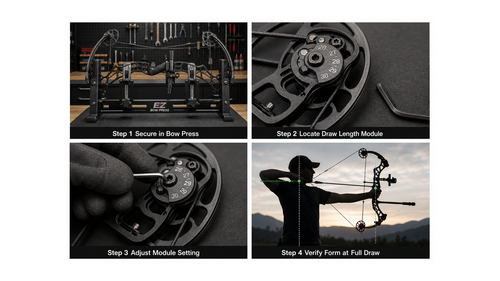
Ask a qualified coach or pro shop technician to measure you using a draw board or long draw arrow. A well-fitted draw length places the string hand at anchor with a slight bend in the elbow—never locked out. Most target bows offer draw length adjustment within a module system, but the range varies by cam. Confirm the bow you're considering covers your measurement with a bit of room to adjust as your form develops.
Step 2 – Choose the Right Axle-to-Axle Length
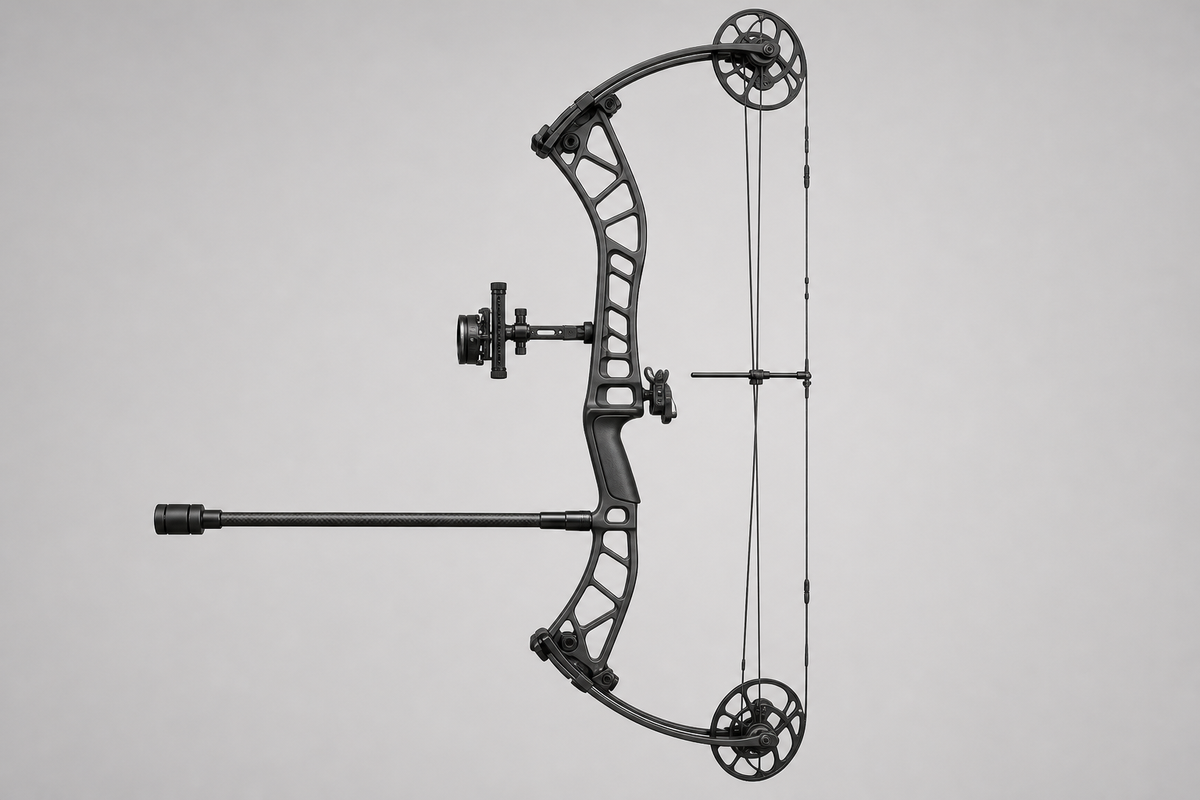
Axle-to-axle (ATA) length refers to the distance between the two axles that hold the cams. For target archery, longer ATA bows—typically 37 to 40 inches—are preferred because they create a more forgiving string angle at full draw, reduce string torque on the face, and make it easier to maintain consistent back tension. Shorter ATA bows are more maneuverable but demand a cleaner draw cycle. If you are new to target shooting, lean toward the longer end.
Step 3 – Evaluate Brace Height
Brace height is the distance from the throat of the grip to the string at rest. A longer brace height (7 inches or more) is more forgiving of minor form errors because the arrow leaves the string sooner in the power stroke. Shorter brace heights extract more speed but punish inconsistent release. For target archery where accuracy outranks raw speed, a brace height of 6.5 to 8 inches is a sensible range.
Step 4 – Assess the Grip and Riser Geometry
Grip pressure is one of the largest sources of horizontal error in compound archery. Target-oriented risers often feature a very narrow, low-wrist grip or an open-thumb-barrel design that reduces torque transfer from your hand to the bow. Pick up the bow in the shop and verify that the grip lets your bow hand stay relaxed without gripping or squeezing.
Step 5 – Consider Let-Off and Valley
Let-off is the percentage of peak draw weight you hold at full draw. Most target bows offer 75–90% let-off. Higher let-off reduces physical fatigue during long sessions and can improve holding steadiness. However, an extremely deep valley (the range of positions where the cam stays locked back) can mask timing issues in your draw cycle. Shoot a few cycles and notice how the cam feels at the back wall—it should be solid and predictable.
Step 6 – Plan Your Accessory Stack Before You Buy
A target bow is only part of the system. Budget and plan space for:
- A quality target sight with micro-adjustable windage and elevation
- A drop-away or blade rest matched to your arrow spine
- A front stabilizer (28–30 inches for outdoor; 10–12 inches for indoor) and side rods
- A D-loop, peep sight, and kisser button if you use one
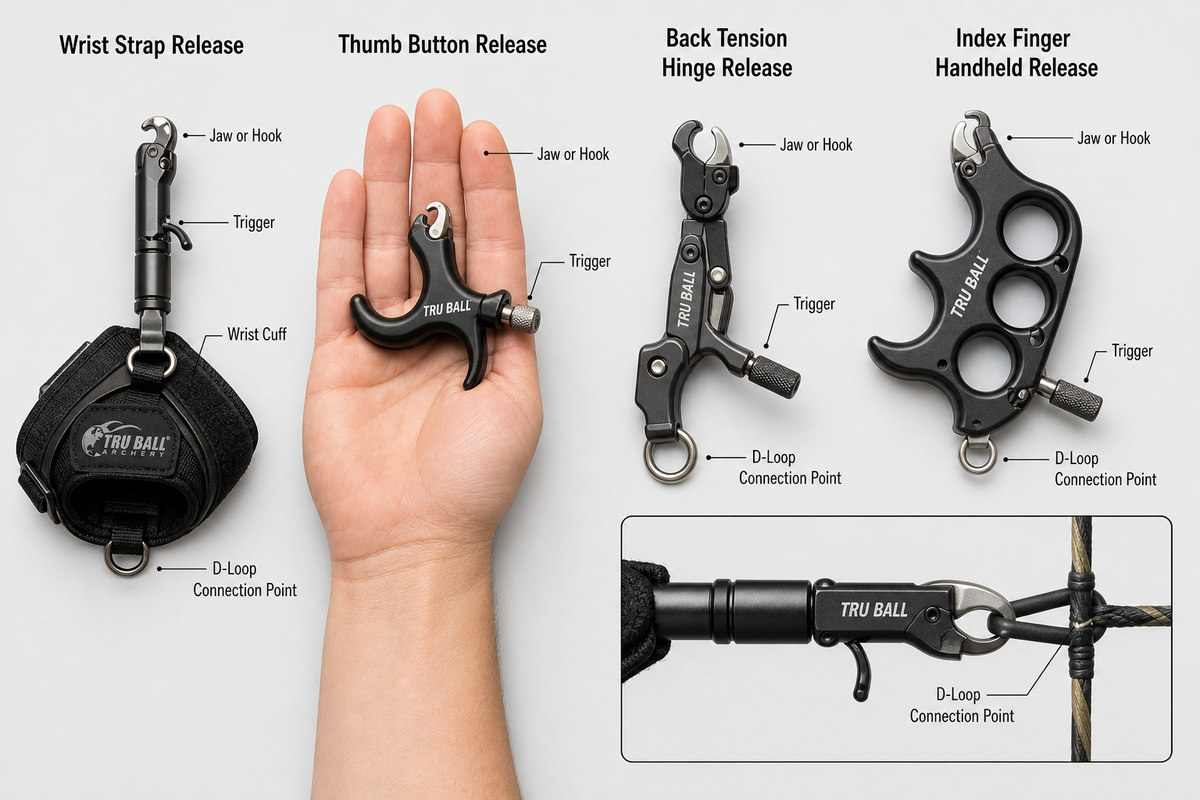
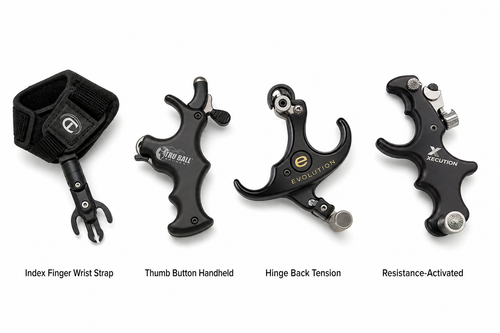
- A release aid suited to your style (wrist strap, back-tension, or thumb trigger)
- A protective case for storage and transport
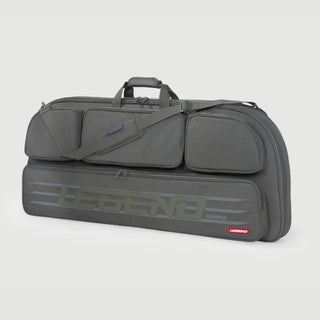
Once you've invested in a quality target setup, protecting it becomes a priority. A well-padded hard case keeps your bow safe during travel and competition. If you're looking for storage options, explore compound bow cases suited for target rigs of varying axle-to-axle lengths.
Step 7 – Shoot Before You Buy If Possible
Demo days, pro shop loaners, and archery club range visits are invaluable. Even 20 arrows through a bow will tell you whether the draw cycle feels smooth, whether the back wall is where you expect it, and whether the grip geometry suits your hand. Never purchase a target bow purely on paper specifications.
Common Mistakes to Avoid
- Buying too much draw weight too soon. Heavy draw weight undermines form. You can always increase weight as you strengthen. Start where you can hold comfortably for 60 arrows without muscle fatigue.
- Skipping a professional draw length measurement. Wingspan formulas are a starting point. A bow set half an inch too long or short will compound form errors over thousands of arrows.
- Choosing a bow for its looks or brand alone. Two bows at the same price point can feel completely different at anchor. Fit and feel matter more than aesthetics.
- Ignoring the total cost of ownership. A bare bow at $600 that needs $500 in accessories is a $1,100 investment. Map out the full system cost before committing.
- Neglecting post-purchase setup and tuning. A target compound requires paper tuning, walk-back tuning, and potentially a press for cam timing adjustments. Factor in the cost of professional setup if you don't own a bow press.
- Underestimating transport needs. Target bows with long ATA lengths and large stabilizer mounts need cases with the right internal dimensions. Squeezing the wrong bow into an undersized case damages limbs and cams.
How to Check That You Made the Right Choice
Once the bow is set up and you've shot your first sessions, use these checkpoints to confirm the fit is correct:
- At full draw, your draw elbow should be roughly in line with the arrow, not flared up or dropped excessively.
- The peep sight should align with your eye naturally without tilting your head. If you're craning your neck, draw length or peep height needs adjustment.
- After 60 arrows, your bow arm shoulder and draw arm shoulder should feel equally worked—not one-sided. Uneven fatigue often points to a draw length problem.
- Your groups should tighten as you warm up rather than falling apart. A consistent back wall and appropriate let-off support repeatable release mechanics.
- Your stabilizer system should dampen vibration without creating excessive forward torque on your wrist sling. If the bow is consistently diving or twisting post-shot, your stabilizer setup needs revisiting—not necessarily the bow itself.
Frequently Asked Questions
How do you actually figure out which compound bow is right for your draw length?
Get measured by a coach or pro shop technician using a draw board—not a formula. Then confirm the bow's cam module system covers your exact draw length with at least a half-inch of adjustment range in both directions. This gives you room to fine-tune as your form matures.
What mistakes catch first-time target bow buyers off guard?
The two most common are starting at too high a draw weight and forgetting to budget for accessories. Many archers buy the bow and then realize a quality sight, rest, and stabilizer add significant cost. Plan the full system before you commit to a bare bow price.
Do you need any tools to set up and tune a target compound bow?
A bow press is essential for changing modules, replacing strings, or adjusting cam timing. You'll also want an arrow squareness checker, a nocking pliers or D-loop tool, a draw board for verifying cam timing, and a quality chronograph to confirm consistent arrow speed. Many pro shops offer paid setup services if you don't own these tools yet.
How can you tell after buying whether the bow actually fits you correctly?
Shoot at close range (5–10 meters) without a sight and check where the arrows land relative to your point of aim. More importantly, watch your form on video. Consistent anchor, a straight draw elbow, and a natural peep alignment are stronger indicators of a correct fit than grouping size alone at this stage.
Conclusion
Buying a target compound bow is a structured decision, not an impulse purchase. Lock in your draw length, choose an appropriate axle-to-axle length and brace height, and plan your full accessory stack before you spend a dollar. Once your setup is dialed and shooting well, protect that investment with a properly sized case—browse compound bow cases to find an option matched to your rig's dimensions. Shoot smart, fit carefully, and your equipment will support your progress rather than limit it.