Skip to content
 cust@legendarchery.com
 302 503 5767
 Westfield IN 46074


Quick Answer
If you want a simpler setup that builds core shooting skills and is widely used in Olympic-style competition, a recurve is the stronger starting point. If you prefer mechanical assistance, higher arrow speeds, and a shorter draw-to-shoot cycle, a compound suits those goals. Neither is objectively better — they serve different archers with different ambitions.
Main Differences Between Compound and Recurve Bows
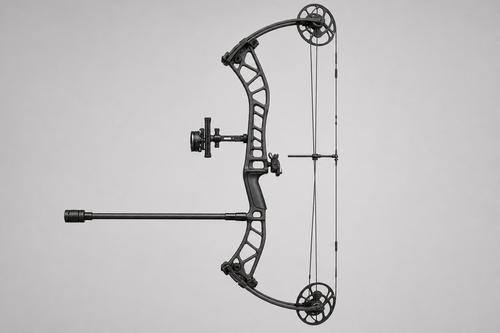
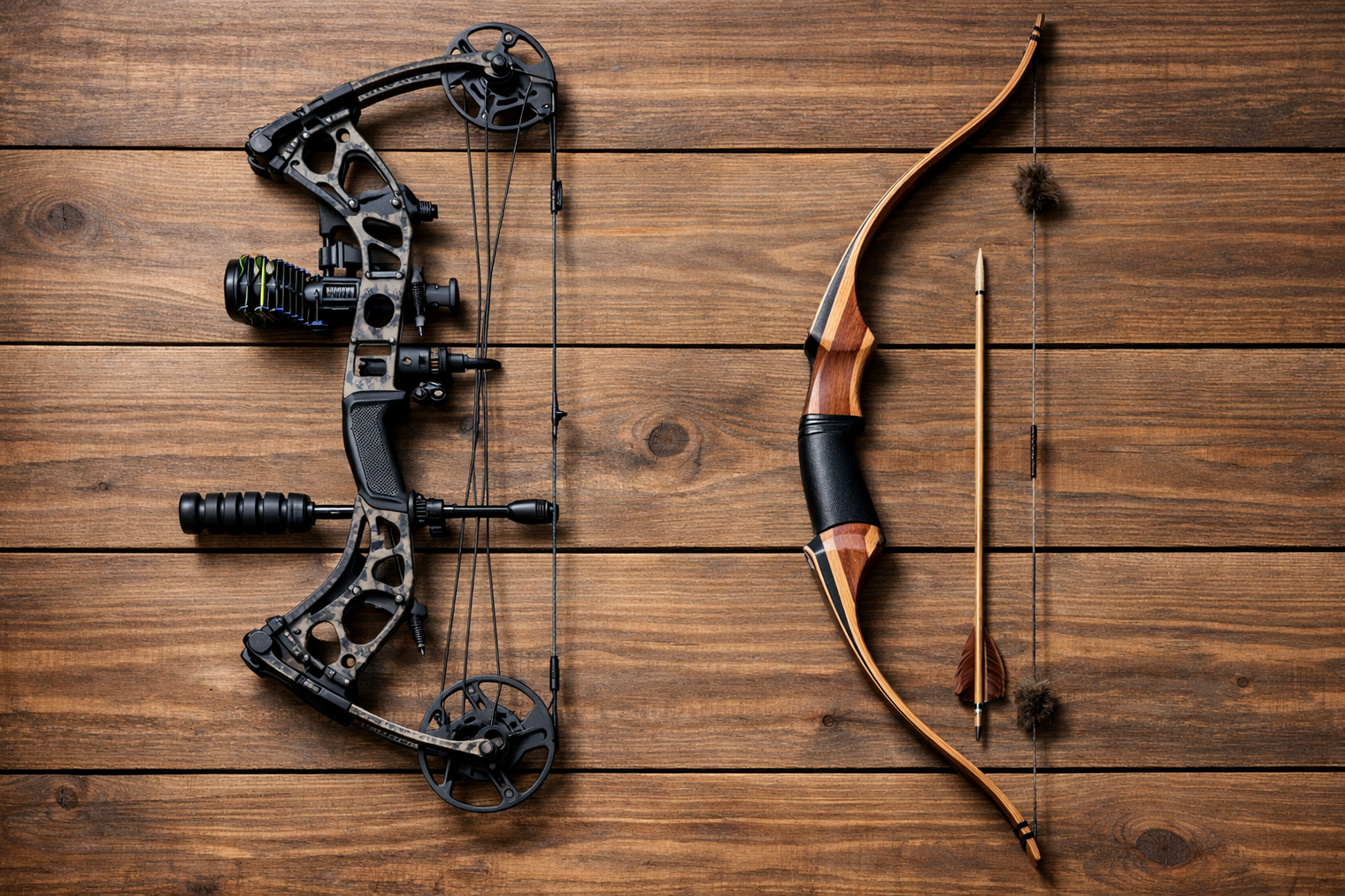
The most fundamental difference is mechanical. A compound bow uses a cam-and-cable system that reduces the holding weight at full draw — a feature called let-off. This means an archer can hold the bow drawn for longer without as much physical strain. A recurve bow stores and releases energy through limb flex alone, with no mechanical reduction at full draw. The holding weight equals the draw weight.
[product-tabs]
Beyond the cam system, here are the key structural and practical differences:
- Draw cycle: Compounds peak in draw weight mid-cycle then drop significantly at full draw. Recurves increase in resistance the entire draw.
- Size and portability: Recurves — particularly takedown recurve bows — break down into three pieces and travel easily. Compounds are generally heavier and bulkier.
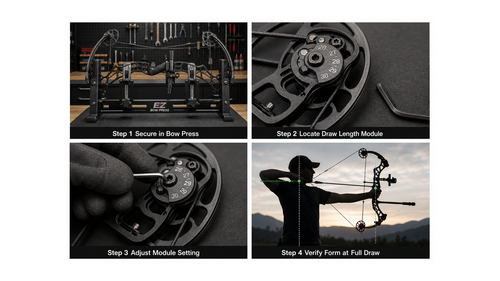
- Adjustability: Most modern compounds allow draw length and draw weight adjustment within a range. Recurve draw weight is adjusted by swapping limbs.
- Strings and maintenance: Compound strings operate under higher tension with cam contact points and typically require a bow press for restringing. Recurve strings — such as a Dacron bowstring for recurve bows — can be replaced without specialist tools in most cases.
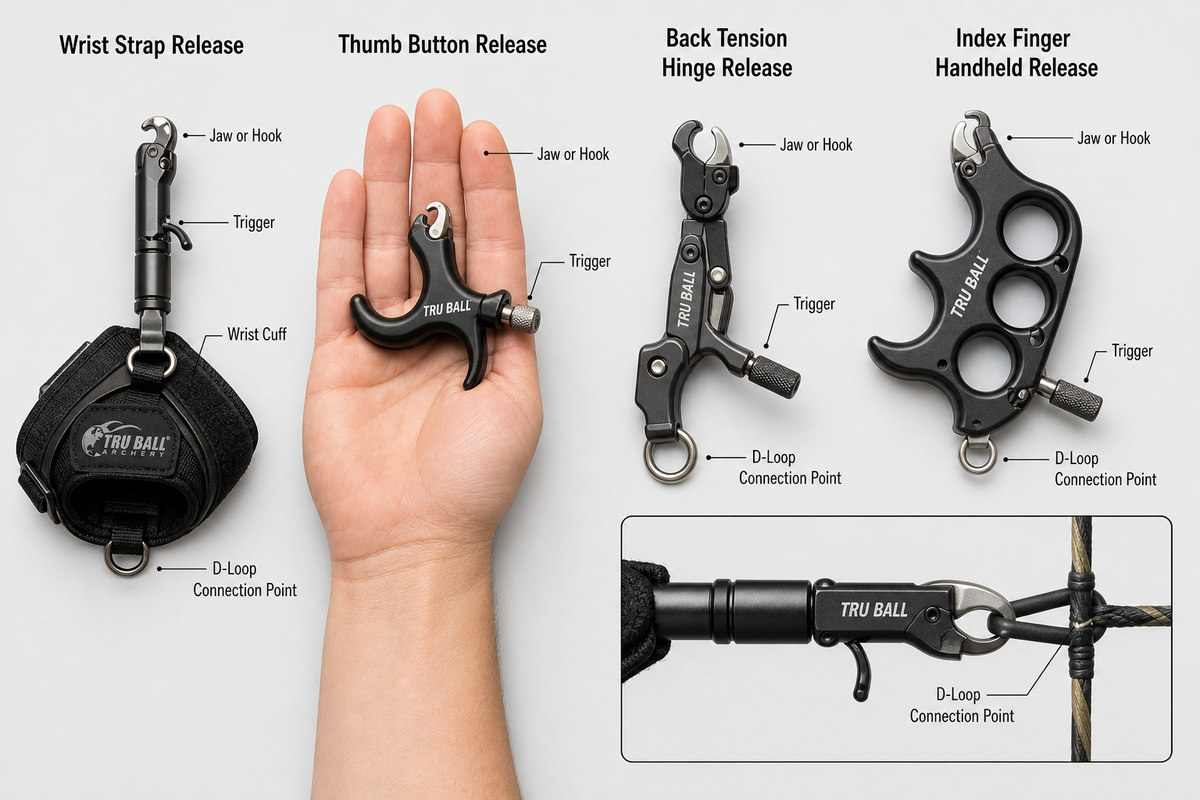
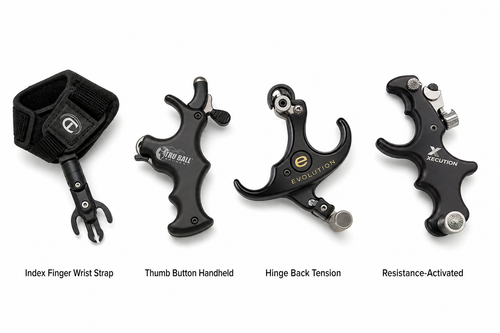
- Accessories and cost: Compounds are typically sold with more required accessories (peep sight, release aid, D-loop). Entry-level recurves can be shot with minimal add-ons.
Performance and Use Cases
Speed and Accuracy
Compound bows generally produce higher arrow speeds due to the energy stored in the cam system and the rigid riser design. This translates to a flatter arrow trajectory, which reduces the margin for error in distance estimation — relevant in field archery and bowhunting.
Recurve bows produce lower arrow speeds at equivalent draw weights, but that does not mean reduced accuracy. Olympic recurve archers compete at 70 metres with exceptional precision. The recurve format demands more from the archer's form and technique, which many coaches argue develops better long-term shooting foundations.
Hunting
Compounds dominate bowhunting in many regions, largely due to higher kinetic energy output, compact axle-to-axle lengths suited to tree stands, and the let-off advantage when waiting for a shot window. Traditional recurve hunting exists and has a dedicated following, but it requires significantly more practice to reach effective hunting distances reliably.
Target Archery and Competition
Both bow types have their own competitive divisions. Olympic archery uses recurve bows exclusively at the Games, making recurve the natural choice for anyone with Olympic aspirations. Compound target archery is also highly competitive at national and world levels, with dedicated divisions in World Archery events. If your goal is structured club competition, check which format your local club runs — many beginner programmes are recurve-based.
Traditional and Recreational Shooting
For archers drawn to the heritage side of the sport, the recurve — especially a traditional recurve bow — offers a connection to archery's roots without electronics or mechanical aids. Barebow recurve shooting, which strips away most sights and accessories, is also a growing competitive format.
Pros and Cons at a Glance
Recurve Bow
- Pros: Simpler mechanics, easier to maintain, lighter and more portable in takedown form, strong pathway to Olympic competition, lower entry cost
- Cons: Higher holding weight requires physical conditioning, slower arrow speeds, longer learning curve to reach consistent accuracy at distance
Compound Bow
- Pros: Let-off reduces holding effort, higher arrow speeds, highly adjustable, well-suited to hunting and 3D archery formats
- Cons: More complex and expensive to maintain, requires more accessories to shoot properly, heavier overall, less portable
Who Each Option Suits Best
There is no single right answer, but these profiles cover the majority of buyers:
- New archers joining a club: Most beginner programmes and club loaner equipment are recurve-based. Starting with a recurve gives you access to coaching frameworks designed around that format and keeps initial costs manageable.
- Archers with physical limitations: If joint issues, injury, or reduced upper body strength make holding a high draw weight difficult, the let-off on a compound may allow more comfortable practice sessions.
- Bowhunters: Compound is the practical choice for most hunters seeking reliable performance at field distances with ethical shot placement.
- Olympic-pathway archers: Recurve is the only option for Olympic-format competition. Starting on this platform from the beginning avoids a later transition.
- Archers who enjoy gear and tuning: Compound archery involves more mechanical fine-tuning. If you enjoy that side of the sport, compounds offer a deeper technical rabbit hole.
- Those who want simplicity and portability: A takedown recurve is hard to beat. It packs into a bag, travels easily, and can be upgraded incrementally as your shooting develops.
Common Buying Mistakes to Avoid
- Choosing based on appearance alone: Compounds look impressive. Recurves look elegant. Neither should be chosen purely on aesthetics — match the bow to your actual goals and available practice time.
- Buying too high a draw weight: Whether recurve or compound, starting too heavy creates bad habits and risks injury. Err on the side of lighter and build up.
- Skipping a trial session: If possible, shoot both formats before buying. Many clubs and ranges offer beginner taster sessions. Preference often becomes obvious after a few ends.
- Ignoring ongoing costs: A compound may appear reasonably priced until you add a release aid, peep sight, stabiliser, and professional setup. Factor in the full kit cost, not just the bow.
- Assuming one is harder than the other: Both have their learning curves. Recurve demands more physical consistency; compound demands more technical setup knowledge. Neither is a shortcut.
Frequently Asked Questions
What's the actual difference between a compound and a recurve bow?
The core difference is mechanical. A compound uses cams and cables to create let-off — reducing the holding weight at full draw. A recurve relies entirely on limb flex and the archer's physical strength throughout the draw. This affects everything from shooting technique to maintenance requirements and competition eligibility.
Which is better for a complete beginner?
Most beginners do well starting on a recurve, largely because entry-level kits are affordable, maintenance is straightforward, and most structured beginner courses are built around recurve format. That said, if you are joining a club that runs compound programmes, or have a specific reason to start on compound, that is entirely valid. The best bow for a beginner is the one supported by the coaching environment they are entering.
Which bow is better for target archery competitions?
It depends on the competition format. Olympic and World Archery outdoor events at the highest level use recurve. However, compound target archery is a full competitive discipline in its own right with World Championship events. Check the formats available in your region and national federation before deciding which pathway to follow.
What mistakes do people make when comparing these two bow types?
The most common mistake is treating the comparison as a universal ranking — as if one is objectively superior. Buyers also frequently underestimate ongoing costs for compound setups, choose draw weights that are too heavy for their current strength, and skip hands-on testing. Trying both before purchasing is always worthwhile if the opportunity exists.
Conclusion
The compounds vs recurve bows decision comes down to what you want from the sport. Define your goals — competition format, hunting, recreation, or skill development — and the right choice usually becomes clear. If you are still deciding, browsing a curated range of recurve bows alongside compound options side by side can help you assess what feels right for your situation.