Skip to content
 cust@legendarchery.com
 302 503 5767
 Westfield IN 46074



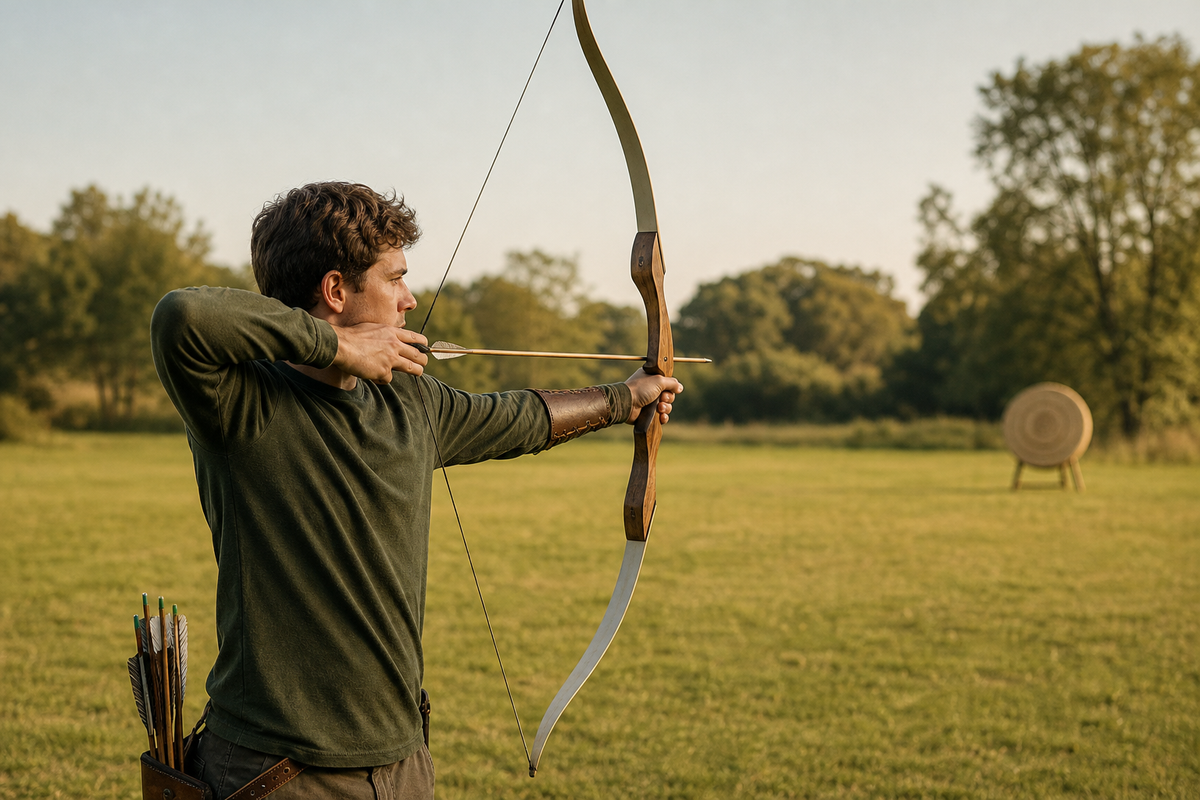
Shooting a bow without a sight sounds like instinct alone does the work — and in a sense, that's exactly the point. Instinctive aiming is a skill built through deliberate repetition, not guesswork. Whether you're shooting a traditional recurve bow or a barebow setup, this guide walks you through the process in plain, practical terms so you can start building that muscle memory from your very first session.
Why Shooting Without a Sight Matters
Most modern archers start with a bow sight because it gives them a reliable reference point. But sightless shooting — sometimes called barebow or instinctive archery — develops a deeper connection between your eye, your brain, and your bow hand. It forces you to refine anchor consistency, grip pressure, and natural point of aim in ways that sight shooting can mask.
Traditional archers and bowhunters who operate at close range often prefer this method because it's faster to acquire and requires no moving parts. It's also the foundation of Olympic barebow competition, which is a growing discipline worldwide.
What You Need Before You Start
You don't need much gear to practice instinctive aiming, but a few fundamentals matter:
- A properly tuned bow: Arrow flight must be consistent before any aiming method will work reliably. Nocking point, brace height, and tiller should all be set correctly — our recurve bow tuning guide covers the full setup process.
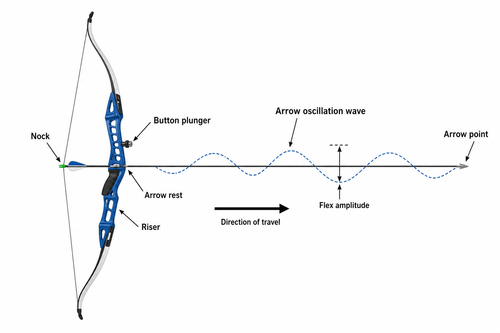
- Arrows matched to your draw weight and length: Spine stiffness affects how the arrow leaves the bow. Mismatched arrows introduce variables that have nothing to do with your aiming.
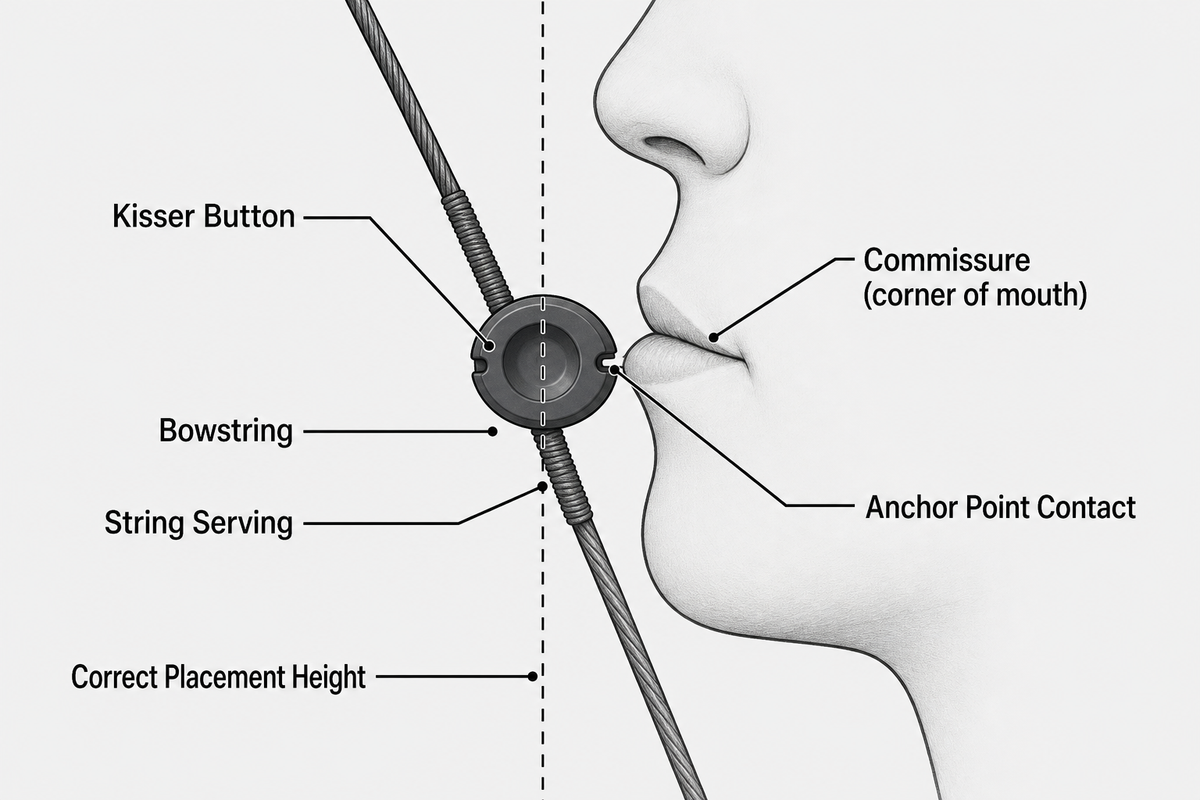
- A consistent anchor point: Whether you anchor at the corner of your mouth, under your chin, or beside your cheekbone, it must be the same every single shot.
- A close-range target to start: Begin at five to seven yards. This is not optional. The entire method depends on feedback loops, and you can only read feedback clearly at short distances first.
- Time and patience: Instinctive shooting typically takes weeks to months before it feels reliable. Set expectations accordingly.
Step-by-Step: How to Aim a Bow Without a Sight Instinctively
Step 1: Establish a Repeatable Shot Routine
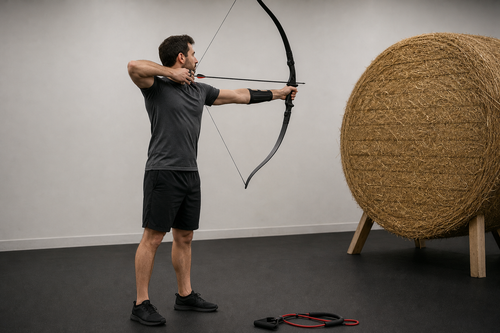
Every shot must follow the same sequence: stance, grip, nock, draw, anchor, aim, release, follow-through. Before you worry about where the arrow lands, lock in this sequence so it becomes automatic. Inconsistent shot routine is the single biggest enemy of instinctive accuracy.
Step 2: Fix Your Eye on the Target, Not the Arrow
This is where instinctive shooting differs most from gap shooting or point-of-aim methods. Your eyes should be locked on a specific spot on the target — not a general zone, but the sharpest, most defined point you can identify. Imagine you're trying to stare a hole through it. Your peripheral vision will register the bow, but your conscious focus must stay on the target.
Resist the urge to look at your arrow tip. This habit, called "peeking," pulls your head off anchor before the arrow clears the rest and destroys consistency.
Step 3: Let Your Subconscious Do the Math
Instinctive shooting works because the human brain is remarkably good at calculating trajectory when given consistent, repeated inputs. Think about throwing a ball — you don't calculate arc and release angle consciously. You just look at the target and throw. Archery without a sight works the same way, but it requires many more repetitions before the calculation becomes automatic.
At this stage, shoot a high volume of arrows at your close-range target without analyzing each shot mid-draw. Draw, anchor, focus on the spot, release. Note where the arrow lands after the shot, not during.
Step 4: Adjust Through Observation, Not Mid-Shot Correction
After a group of arrows, step back and read the pattern. If arrows consistently land low and left (for a right-handed archer), the brain needs more data to self-correct. Don't consciously try to aim higher or more right — that conscious interference tends to make things worse. Instead, trust the process, keep shooting, and let repetition retrain your natural calibration.
Only make a deliberate adjustment if a technical flaw is clearly responsible — for example, a collapsing draw elbow, a grip torque, or a shifted anchor point.
Step 5: Gradually Increase Distance
Once your groups tighten at close range — meaning most arrows fall within a reasonably consistent pattern — move back in small increments: two to three yards at a time. Don't jump from seven yards to twenty. Each distance requires your subconscious to recalibrate trajectory, and rushing this process resets your progress.
Many experienced barebow archers spend weeks at each distance before advancing. That's not slow — that's how the skill actually builds.
Step 6: Practice with Purpose, Not Just Volume
Mindless repetition of poor form reinforces poor form. Each session should include a warm-up at close range, focused shooting at your working distance, and a cool-down where you shoot a few slow, deliberate shots with full attention on anchor and release. Quality reps beat quantity every time.
Common Mistakes to Avoid
- Starting too far back: Distance before consistency is one of the most common errors. Stay close until your groups tighten.
- Watching the arrow in flight: This moves your head and collapses your follow-through. Keep your eye on the target until the arrow hits.
- Conscious aiming mid-draw: Trying to "guide" the arrow while at full draw interferes with the subconscious process. Commit to the target and release.
- Changing anchor points between shots: Even a few millimeters of anchor variation will scatter your arrows unpredictably.
- Skipping follow-through: The bow hand should stay up and the bow arm should remain extended until the arrow reaches the target. Dropping early is a form fault, not a style choice.
- Expecting quick results: Instinctive aiming is a long-term skill. Archers who quit after a few sessions never give the subconscious calibration time to develop.
How to Tell If You're Progressing
Progress in instinctive shooting is measured differently than in sight shooting. Here's what to look for:
- Group consistency improves before group location does: Your arrows may not be centered yet, but they start landing in tighter clusters. That's your subconscious beginning to calibrate.
- Your misses become predictable: Random, scattered misses mean form problems. If your arrows miss in a consistent direction, the underlying mechanics are working and only the calibration needs time.
- You stop thinking about the arrow: When shooting starts to feel more like looking and less like calculating, you're developing true instinctive flow.
- Accuracy at close range feels automatic: At your starting distance, shots should eventually feel easy and natural. That's your baseline, and it should grow with each distance increment.
Frequently Asked Questions
How long does it actually take to get accurate without a sight?
It varies significantly by individual, but most archers need at least four to eight weeks of consistent practice at close range before groupings become reliable. Moving to longer distances adds more time. Archers who practice three or more times per week typically progress faster than those who shoot infrequently.
Is instinctive shooting the same as gap shooting?
No. Gap shooting is a conscious method where you use the tip of your arrow as a reference point and deliberately position it a calculated distance below (or at) the target based on distance. True instinctive shooting involves no conscious reference point — your eye stays entirely on the target and your body does the calculation subconsciously. Both are legitimate barebow techniques, but they use different mental processes.
Do I need a special bow to shoot without a sight?
No specific bow type is required, but most archers learn this method on a traditional recurve or longbow. The key requirement is a bow that's properly tuned and matched to your draw length and weight. An untuned bow will undermine any aiming method, sighted or not.
Why do my arrows still scatter randomly even after a lot of practice?
Random, scattered groups usually point to a form issue rather than an aiming problem. Check your anchor point consistency first, then look at grip pressure, draw elbow position, and follow-through. Instinctive aiming can only work when the underlying mechanics are solid and repeatable.
Putting It All Together
Learning how to aim a bow without a sight instinctively is a commitment to a different kind of discipline — one that rewards patience and consistent practice over quick results. Start close, anchor precisely, fix your eye on the target, and let repetition do its work. Keep your sessions purposeful, address form faults early, and progress distance only when your groups genuinely justify it. The skill takes time to build, but once it's there, it's deeply reliable.