Skip to content
 cust@legendarchery.com
 302 503 5767
 Westfield IN 46074


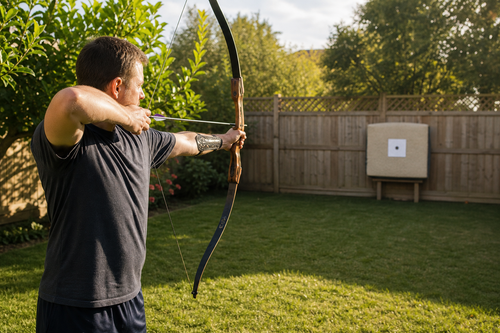
If your shots feel inconsistent, your anchor point keeps shifting, or your bow feels awkward at full draw, there is a good chance your draw length is off. Dialing in your draw length means finding the measurement that allows you to reach full draw naturally, anchor consistently, and execute the shot without strain. Get it right and everything else in your setup becomes easier to build on.
Why Draw Length Matters More Than Most Archers Realize
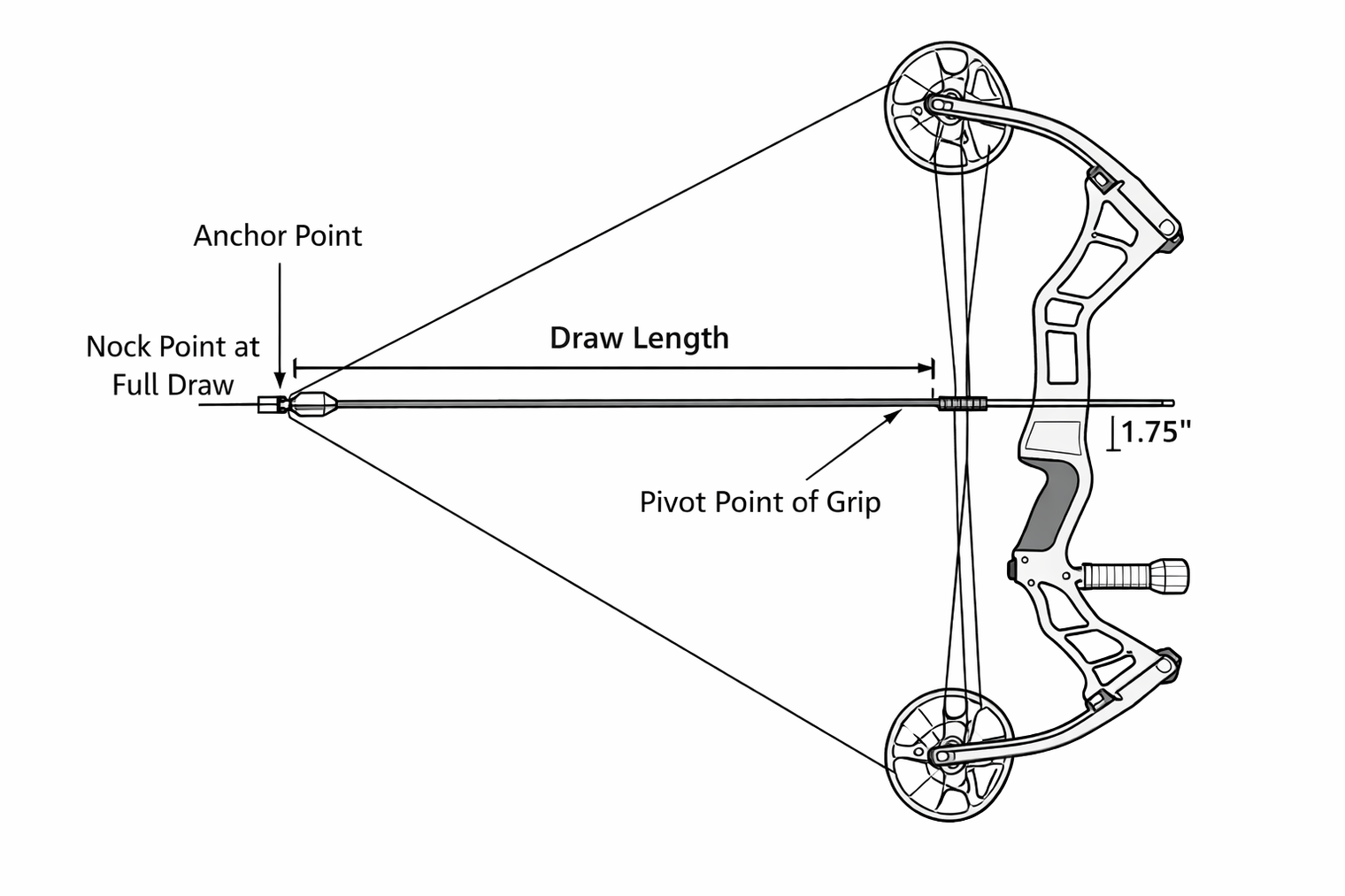
Draw length is not just a number on a spec sheet. It directly affects your posture, your anchor point, your peep sight alignment, and the timing of your release. A draw length that is too long forces you to lean back or overextend your bow arm, which collapses your form under pressure. One that is too short leaves you feeling cramped, reduces your power stroke, and makes a smooth back-tension release much harder to execute.
[product-tabs]
For compound archers especially, the bow is mechanically set to a specific draw length. Unlike a recurve where you can naturally adjust how far you pull back, a compound bow locks you into a defined range. That means if your setting is wrong, no amount of practice will fully compensate for it. Understanding your draw length before you buy a bow — or before you start tuning the one you have — is essential.
How to Measure Your Draw Length Accurately
There are a few common methods, and each has its place depending on what equipment you have access to.
The Wingspan Method
Stand against a wall with both arms extended straight out to your sides, fingers spread. Have someone measure fingertip to fingertip across your chest. Divide that number by 2.5. The result is a reasonable starting estimate of your draw length in inches. This method works well as a baseline, particularly when you are shopping for a first bow or need a quick reference before visiting a pro shop.
The Draw Check Method
A more accurate approach is to actually draw a bow — ideally under the supervision of an experienced coach or technician — and measure where your draw hand naturally anchors at full draw. This is sometimes called a draw check, and it accounts for individual differences in shoulder structure, arm length ratio, and anchor preference that the wingspan formula cannot capture.
Arrow Length as a Crosscheck
If you have been shooting for a while and your arrows were cut correctly for you, measuring from the throat of your nock to the end of the shaft gives you a practical reference point. Add about an inch to that measurement and you have a working estimate of your draw length. This is not a substitute for a proper fitting, but it helps confirm whether your current bow setting is in the right range.
Core Principles for Getting the Fit Right
Once you have a measurement, there are a few principles worth understanding before you start making adjustments.
- Anchor point first. Your draw length should be set so that your release hand comes to the same anchor point every single shot. If you find yourself hunting for your anchor, the draw length is probably not matched to your natural skeletal position.
- Slight bend in the bow arm. At full draw, your bow arm elbow should have a very slight bend or be fully extended without locking. A draw length that is too long will push your bow shoulder forward and rotate the elbow inward, which creates torque and increases string slap.
- Relaxed back, not pulled shoulders. Proper draw length allows you to engage your back muscles — specifically your rhomboids and rear deltoid — rather than pulling entirely with your arm. If you feel like you are reaching at full draw, shorten it. If your elbow is cramped behind your head, lengthen it.
- Peep sight alignment. On a compound bow with a peep sight, draw length affects where the peep sits relative to your eye. If you have to tilt your head or strain to look through it cleanly, that is a sign your draw length needs adjustment before you tune anything else.
Adjusting Draw Length on Different Bow Types
Compound Bows
Most modern compound bows use rotating modules or draw stop systems that allow adjustments in half-inch increments. Some entry-level and mid-range bows offer a wider adjustment range — sometimes four inches or more — which makes them practical choices for growing archers or buyers who are between sizes. When shopping, pay attention to the listed adjustment range and confirm whether changes require a bow press or can be made with basic tools. This is worth asking about directly at a pro shop or checking in the bow's documentation.
Recurve Bows
Recurve bows do not have a fixed draw length in the same mechanical sense. You can draw a recurve to whatever length feels natural. However, that does not mean draw length is irrelevant — quite the opposite. A recurve archer still needs to know their draw length to select the correct arrow spine and to set up their clicker correctly if they use one. Consistency at your natural draw length is what you are training toward.
Traditional and Longbows
Like recurves, traditional bows are drawn to your natural anchor. Draw length here primarily informs arrow selection and helps you choose a bow with the right AMO length for your stature and shooting style. A bow that is physically too short for a long draw can be strained and becomes less safe over time.
Common Mistakes When Setting Draw Length
These are the errors that show up most often, especially among newer archers buying their first compound bow.
- Setting it too long to feel more powerful. A longer draw does not automatically mean more power or speed. What it usually means is compromised form, shoulder strain, and inconsistent shots. Match your draw length to your body, not to an idea of what looks impressive.
- Measuring only once, standing incorrectly. The wingspan method is a starting point, not a final answer. If you measured yourself with slouched posture or slightly bent arms, your number will be off. Always verify with a physical draw check.
- Ignoring the effect of clothing and gear. In cold weather or when wearing heavy layers, your effective reach changes slightly. Some archers dial in a setting at the pro shop in a t-shirt, then find their form feels different when they are wearing a hunting jacket. Factor this in if you are setting up a hunting bow.
- Changing draw length without re-tuning. Draw length affects the timing of your cams, your peep height, your D-loop position, and your arrow rest contact point. Any time you change it meaningfully — even by half an inch — you need to re-check the rest of your setup before shooting groups.
- Assuming the factory setting is correct. New bows often come set to a middle-ground or default draw length. That setting may or may not match you. Always verify before you start shooting.
Practical Advice for Buyers
If you are shopping for a new bow and trying to decide which model fits your draw length, here are a few things to keep in mind.
Look for bows with an adjustment range that includes at least a full inch on either side of your measured draw length. This gives you room to fine-tune after you have shot the bow a few times and settled into your form. It also means the bow will still fit you if your form evolves or your measurement was slightly off.
When comparing models, also consider how draw length adjustments interact with draw weight. On some bows, changing the draw length slightly affects peak draw weight as well. Understanding how these two variables interact helps you avoid surprises after purchase.
If you have never been professionally measured, visiting a pro shop before buying online is worth the time. A knowledgeable technician can confirm your measurement, let you draw a few different bows, and help you identify any form habits — like creeping forward or anchoring inconsistently — that might affect the setting you need.
Frequently Asked Questions
What exactly does it mean to dial in your draw length?
It means finding and setting the draw length that matches your physical dimensions and shooting form precisely — so that you reach full draw naturally, anchor in the same spot every time, and do not have to compensate with your posture or bow arm. It is less about a single measurement and more about verifying that your bow is mechanically configured to match how your body actually draws.
How much does draw length affect accuracy?
Significantly. Even a half-inch difference in the wrong direction can shift your anchor point, move your peep sight out of alignment, or change the way your release fires through the shot. Accuracy problems that seem like they are caused by bad form are often rooted in a draw length that is slightly off.
Can I change my draw length myself or do I need a pro shop?
It depends on the bow. Some compounds allow draw length changes with a simple Allen key and no bow press. Others require a press to rotate or swap modules safely. If you are not sure, check your bow's manual or ask a technician. Attempting a module swap without a press on the wrong bow can damage the bow or create a safety issue.
Should my draw length change as I improve as an archer?
It can. Beginners often draw slightly short because their form is still developing and their back muscles are not yet trained to reach full extension correctly. As your form matures, you may find that a small adjustment — typically lengthening by a quarter to a half inch — feels more natural and supports better back engagement. This is normal and worth reassessing after your first season of consistent shooting.
Final Thoughts
Draw length is one of the few setup variables that no amount of tuning elsewhere can fix if it is wrong. Before you invest time in paper tuning, broadhead flight, or sight adjustments, make sure your draw length is set correctly for your body and your form. It is the foundation everything else is built on — and getting it right from the start saves a significant amount of frustration down the range.