Skip to content
 cust@legendarchery.com
 302 503 5767
 Westfield IN 46074


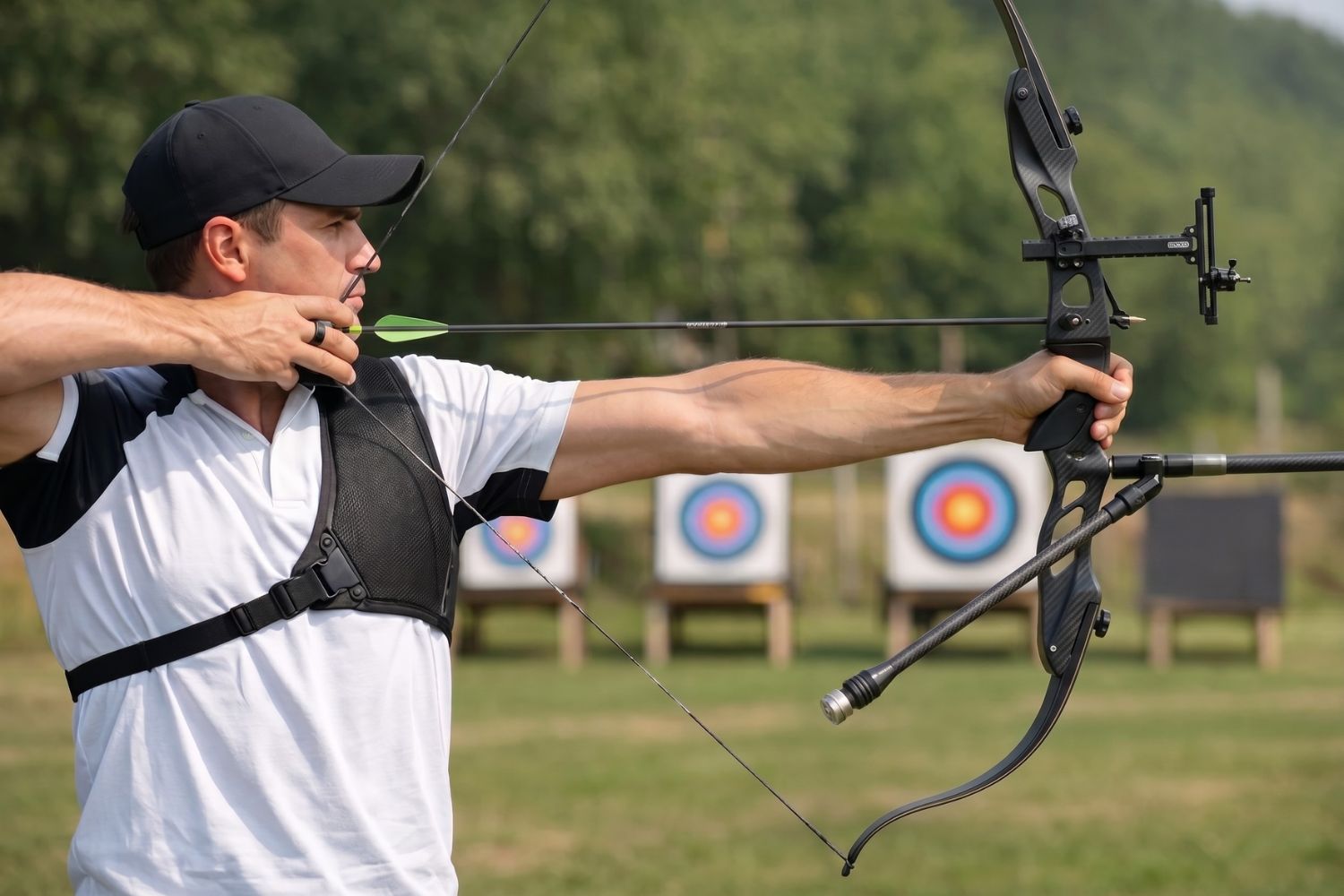
If your arrows are grouping inconsistently despite clean releases, the bow arm is often the first place to look. Developing a strong bow arm for straight shooting is less about raw muscle and more about learning correct skeletal alignment, practising deliberate positioning, and eliminating the small habits that introduce unwanted movement at the critical moment of the shot.
Why the Bow Arm Matters More Than Most Archers Realise
The bow arm is your anchor point on the front end of the shot. While a lot of coaching attention goes to the draw hand, back tension, and release, the bow arm is doing quiet but important work throughout the entire shot cycle. It holds the bow on target, absorbs the limb's forward drive at the shot, and guides where the arrow leaves the bow.
Even minor instability in the bow arm — a flinch, a raised shoulder, a bent elbow at full draw — can send an arrow several centimetres off at twenty metres. At longer distances, those same errors multiply quickly. Archers shooting a recurve bow are particularly exposed to bow arm errors because there is no let-off or wall to mask inconsistency the way a compound bow can.
The good news is that bow arm problems are correctable. Most of them come from identifiable mechanical causes, not talent or physical limitation.
Core Principles of a Reliable Bow Arm
Skeletal Support Over Muscular Tension
The strongest bow arm is not the most flexed one. In fact, gripping the bow tightly or muscling it into position creates tremors and fatigue that translate directly into group spread. The goal is to use the skeleton — the bones of the arm and shoulder — to carry the load, with muscles acting as stabilisers rather than engines.
To achieve this, the bow arm elbow should be rotated slightly outward (away from the string) rather than pointing up or directly inward. This rotation drops the soft inner-elbow tissue out of the string's path and locks the arm into a more structurally supported position. From there, the limb acts almost like a post rather than a lever, which reduces the muscular effort needed to hold steady.
Shoulder Position and Its Effect on Alignment
The bow shoulder — the shoulder on the same side as the bow hand — should sit down and slightly forward, not raised toward the ear. A raised shoulder introduces tension in the neck and upper trap muscles, which shortens the effective draw length and tends to collapse the anchor point inconsistently.
Practise this: before raising the bow, consciously roll the bow shoulder slightly down and forward. Hold that position as you raise the bow, draw, and shoot. Over time this becomes automatic, but initially it requires active attention on every shot.
Hand Pressure and the Bow Grip
Where and how the bow hand contacts the grip has a direct impact on arrow flight. A death grip — wrapping fingers tightly around the grip — causes torque. The bow rotates slightly in the hand at the shot, and that rotation sends the arrow off its intended line.
Most experienced coaches teach a low-wrist or neutral-wrist grip where the pressure falls across the thumb pad and the base of the index finger, with the remaining fingers relaxed or lightly curled. This allows the bow to move forward freely at the shot without being torqued by a clenching hand.
If you are shooting without a finger sling, moving to one is worthwhile. A finger sling lets you relax the bow hand entirely, knowing the bow will not drop, which removes grip tension at the root.
Follow-Through Starts in the Bow Arm
Follow-through is not something that happens after the arrow leaves — it is the result of what you were doing during the shot. A bow arm that holds its position through the clicker drop or release, rather than swinging down or sideways, is a sign that the form was stable. Archers who anticipate the shot often dip the bow arm just before release, which affects arrow departure angle even though the movement happens in fractions of a second.
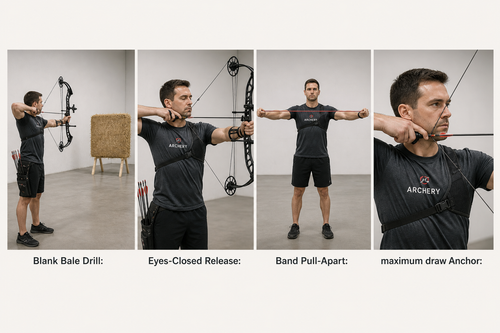
Training yourself to hold the bow on target until the arrow has visibly left the bow is one of the most effective habits you can build. Blank bale work — shooting at close range without a target — is a useful drill for this because it removes result anxiety and lets you focus entirely on what the bow arm is doing.
Practical Exercises for Building Bow Arm Stability
- Mirror shooting: Stand side-on to a mirror and draw without an arrow. Observe whether your bow shoulder stays low, your elbow is rotated, and your hand stays relaxed. This gives real-time feedback that a coach cannot always provide during every shot.
- Resistance band drills: Use a light resistance band to simulate drawing. Focus entirely on the bow arm's position rather than the pull side. This isolates the bow arm without the distraction of a loaded bow.
- Blank bale follow-through holds: Shoot at a bale from two to three metres. After each shot, hold the bow arm in position for a count of three before lowering. This trains the muscle memory of maintaining position through the shot.
- Draw weight management: If your bow draw weight is too high for your current strength and technique, the bow arm will compensate with tension and instability. Shooting a lower draw weight consistently is more productive than struggling through a heavier draw. This is a principle worth considering whether you are shooting a modern recurve or a traditional recurve bow.
- Lighter bow sessions: Periodically shooting a lighter bow to ingrain clean mechanics before returning to your main setup is a technique used by competitive archers during form correction phases.
Common Bow Arm Mistakes and What Causes Them
- Locking the elbow hyperextended: Some archers hyper-extend the bow arm elbow, locking it back hard. This puts the joint under strain and often causes string slap on the inner arm. Elbow rotation is the fix — rotating the elbow slightly outward naturally softens the hyperextension without bending the arm.
- Dropping the bow arm at the shot: This usually comes from anticipating the shot. It is often paired with flinching on the draw hand side. Blank bale drills and clicker discipline help here.
- Raising the bow shoulder during draw: Almost always caused by using too much draw weight relative to current back strength, or by rushing through the setup. Slowing down the raise and draw cycle gives the shoulder time to find its correct position.
- Wrist torque from grip tension: If you are consistently hitting left or right of where you aim (for a right-handed archer), and everything else is correct, grip torque is worth examining. A sling, or simply consciously relaxing the fingers on every shot, can reveal how much torque has been influencing your groups.
- Inconsistent elbow rotation: The elbow rotation angle changes from shot to shot, especially under fatigue. This is why grouping can be tight at the start of a session and spread out later. Routine check-ins during a session — pausing to reset before each end — help maintain consistency.
Frequently Asked Questions
What actually is the bow arm, and how much does it affect where the arrow goes?
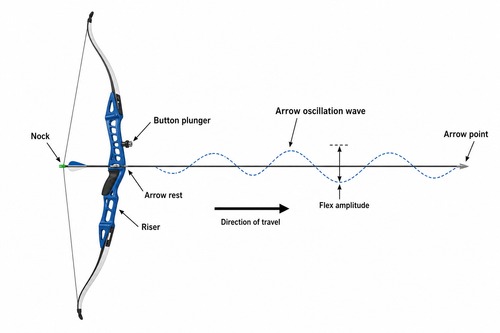
The bow arm is the arm holding the bow — the non-drawing arm. It affects arrow flight in several ways: through the shoulder position it creates, the angle of the grip against the bow handle, and how stable the bow is at the moment the arrow passes the riser. Even a few millimetres of movement at the bow at that moment can shift arrow impact noticeably at distance.
Why does my bow arm feel shaky even though I feel strong enough to hold the draw weight?
Shakiness in the bow arm is rarely about raw strength. It is more commonly caused by muscular tension — gripping too hard, raising the shoulder, or trying to hold the bow in position through effort rather than alignment. Working on skeletal support (elbow rotation, shoulder-down position, relaxed hand) usually reduces shaking more than physical training alone would.
What are the most common bow arm mistakes beginners make?
The most frequent ones are: gripping the bow too tightly, letting the bow shoulder ride up during the draw, and dropping the bow arm at the moment of release. All three are form habits that form early and become ingrained quickly, which is why it is worth addressing them with deliberate drills before they become automatic. Shooting with shooting gloves can also help beginners focus on hand and wrist positioning without friction discomfort distracting them.
How long does it take to build a consistent bow arm?
There is no fixed timeline, but most archers see meaningful improvement within four to eight weeks of focused practice if they are specifically targeting bow arm mechanics. Progress is faster when form drills (like blank bale work and mirror practice) are part of each session rather than just shooting for score.
Building the Habit Over Time
Developing a strong bow arm for straight shooting is ultimately a process of replacing unconscious compensation with deliberate, repeatable structure. The mechanics are straightforward once you understand them — elbow rotated, shoulder down, grip relaxed, position held through the shot. The challenge is making those mechanics automatic under the pressure of actual shooting.
Short, focused practice sessions with attention on form outperform long volume sessions where bad habits are repeated at scale. If you are working on your bow arm, give it a dedicated block in each practice session before moving to full-distance shooting.