Skip to content
 cust@legendarchery.com
 302 503 5767
 Westfield IN 46074


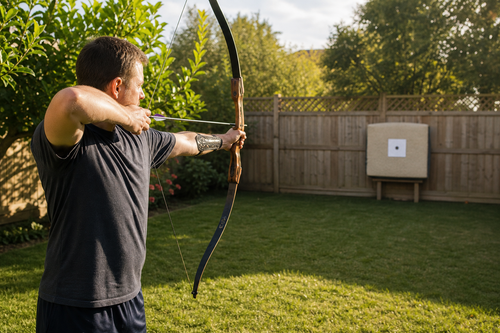
If you've walked away from a shooting session with a red welt on your forearm, you're not alone. String slap is one of the most common complaints in archery, especially for beginners — but it's almost always a form problem, not a equipment problem. Fix the root cause and the pain disappears entirely.
Why the Bowstring Keeps Hitting Your Arm
The string travels a very predictable path when you release. If any part of your bow arm is in that path, contact is inevitable. The question is why your arm ended up there in the first place. There are a few reliable culprits:
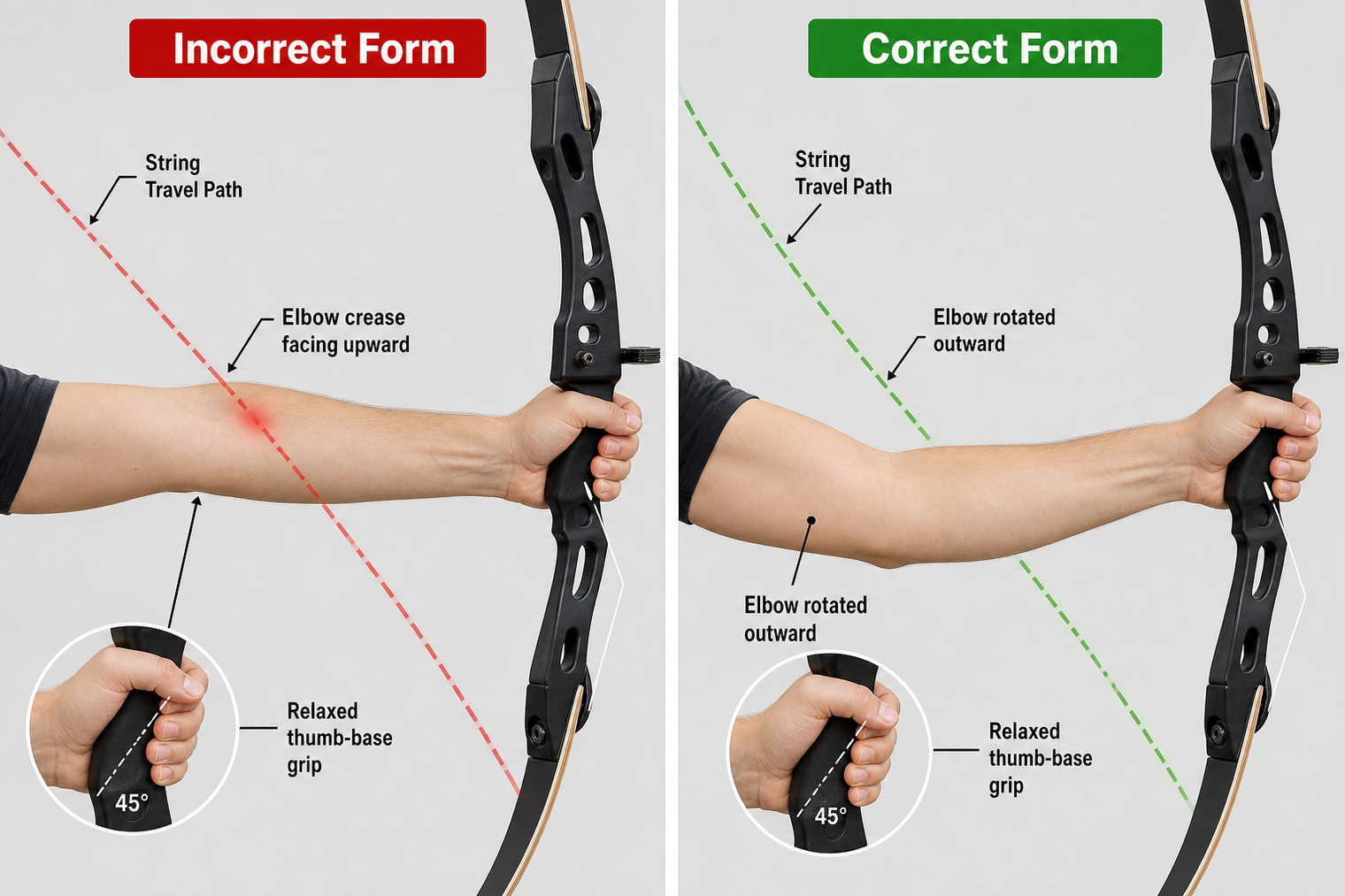
- Elbow not rotated out of the way. This is the number one cause. If your bow arm elbow is facing upward or inward rather than rotated to the side, the soft inner forearm sits directly in the string's path.
- Gripping the bow too tightly. A death grip causes the wrist to collapse inward, moving the forearm closer to the string plane.
- Standing too square to the target. A more open stance can inadvertently push the bow arm closer to the string.
- Draw length too long. When your draw length exceeds what your body can comfortably handle, the bow arm tends to collapse or rotate forward under load.
- String too long or brace height too low. A low brace height means the string travels further before leaving the bow, increasing the chance of contact.
The Elbow Rotation Fix: What It Actually Looks Like
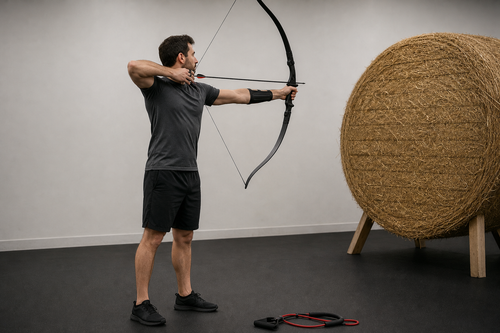
Rotating your elbow is the single most effective adjustment most archers can make. Here's how to check and correct it:
- Raise your bow arm as if you're about to draw, but don't pick up the bow yet.
- Look at the crease of your elbow. If it's facing the ceiling, your forearm is directly in the string's path.
- Rotate your entire arm slightly — think of turning the elbow crease toward the floor or toward the outside. The bones in your forearm shift and the soft tissue naturally moves away from the string.
- Now pick up the bow and maintain that rotation throughout the draw and release.
This adjustment feels awkward at first, but it becomes automatic within a few practice sessions. Most archers who make this one change notice an immediate reduction in string contact.
Grip Pressure and Wrist Position
A tense grip is a subtle but significant cause of arm strikes. When you squeeze the handle, your wrist rolls inward, which tilts the top of your forearm toward the string. The fix is a relaxed, open hand where the pressure is concentrated at the base of the thumb — what coaches often call the "pressure point" or low wrist grip.
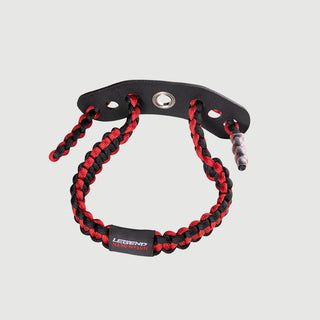
Your knuckles should be at roughly a 45-degree angle when viewed from the front. The fingers can curl loosely around the grip or be extended forward — neither should be gripping with force. After the shot, the bow should drop forward naturally if you're not squeezing. Using a wrist sling allows you to let go completely without dropping the bow, which removes any subconscious urge to grip tight.
Stance, Anchor, and Draw Length
Your body's overall geometry matters too. A slight closed or neutral stance is generally easier to manage for string clearance than a very open stance, which can push the shoulder and arm forward. Experiment with foot position while watching your bow arm alignment in a mirror or on video.
Draw length is worth checking if you're newer to the sport or shooting a bow that was set up for someone else. When the draw length is correct, your bow arm should be comfortably extended at full draw without locking out or hyperextending the elbow. If you're straining to reach anchor or feel like the bow is collapsing into you, have a coach or shop check your draw length.
When to Use an Arm Guard
An arm guard is a practical piece of protective gear, and there's no shame in wearing one. It serves two purposes: it protects your skin when you're still working on form, and it keeps loose clothing pinned against your arm so fabric can't catch the string. What it doesn't do is fix your form. Wear it while you train, but keep working on the underlying technique so you eventually don't need it except for clothing management.
Arm guards come in various lengths. A shorter guard covers the critical strike zone just above the wrist; longer guards are useful if your string is making contact further up the forearm.
Equipment Checks Worth Making
Once your form is solid, a quick equipment review can close the gap on any remaining contact:
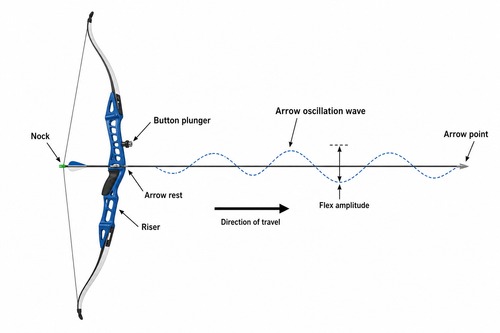
- Brace height: Check that your bow's brace height (the distance from the string to the pivot point of the grip) is within the manufacturer's recommended range. A higher brace height reduces the string's travel and can reduce the chance of late-stage contact.
- String condition: A worn or stretched string can affect brace height over time. If you shoot a recurve, a well-made Dacron bowstring for recurve bows holds its length well and is a reliable choice for most traditional and beginner setups.
- Limb alignment: Limbs that are twisted or misaligned can throw the string off-center, occasionally contributing to unusual contact patterns.
Common Mistakes That Keep the Problem Coming Back
- Treating the arm guard as the solution rather than a temporary aid. If you're relying on it every session without working on form, the problem will persist.
- Fixing elbow rotation but not grip pressure. These two issues often occur together. Solving one without the other gives partial results.
- Not filming your shots. String slap is hard to self-diagnose in real time. Even a short phone video from the side or front will reveal elbow position and grip tension clearly.
- Assuming it's a string or bow problem first. Equipment rarely causes arm strikes in isolation. Always check form before changing gear.
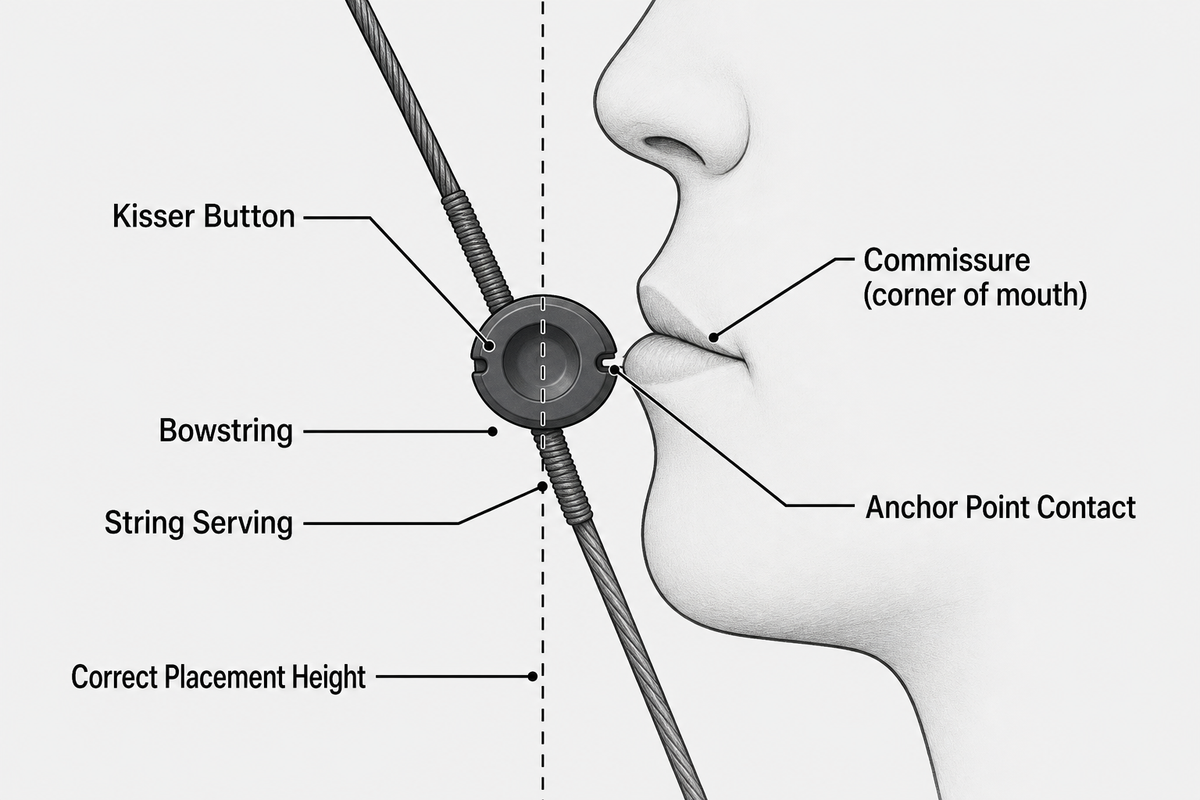
- Inconsistent anchor point. An anchor that moves around changes where the string releases relative to your body, making the problem appear intermittent and harder to diagnose.
Frequently Asked Questions
Why does the bowstring hit my arm even when I think my elbow is out of the way?
Elbow position can look correct from your own perspective but still be slightly off. The rotation needs to happen at the shoulder, not just a bend at the elbow joint. Have someone watch from directly in front or film yourself — what feels rotated is often still partially in the string's path until the movement becomes deeply ingrained muscle memory.
Does string slap mean I'm doing something seriously wrong?
Not seriously wrong — just something that's common for developing archers. Almost every beginner experiences it. It's one of the clearest feedback signals archery gives you, which actually makes it useful for coaching. Once you understand what's causing it, the fix is usually straightforward.
Can the wrong bow cause arm strikes even with good form?
In rare cases, yes. A bow with an unusually low brace height or a string that's significantly too long for the bow can increase the risk. But in the vast majority of cases, especially for archers still developing their technique, form is the primary factor. Rule out technique before blaming equipment.
How long does it take to stop getting hit after fixing your form?
Most archers notice a significant reduction within one or two sessions after making the elbow rotation correction. Full consistency takes longer because the new movement pattern needs to become automatic under the mental load of aiming and releasing. A few weeks of deliberate practice is a realistic timeline for most people.
Getting It Right From Here
String slap is almost always solvable with focused attention to elbow rotation, grip tension, and draw length. Work through the checklist in order — form first, then equipment — and use video feedback to track your progress. An arm guard keeps you comfortable while you train, but the real win is the moment you no longer need it.