Skip to content
 cust@legendarchery.com
 302 503 5767
 Westfield IN 46074


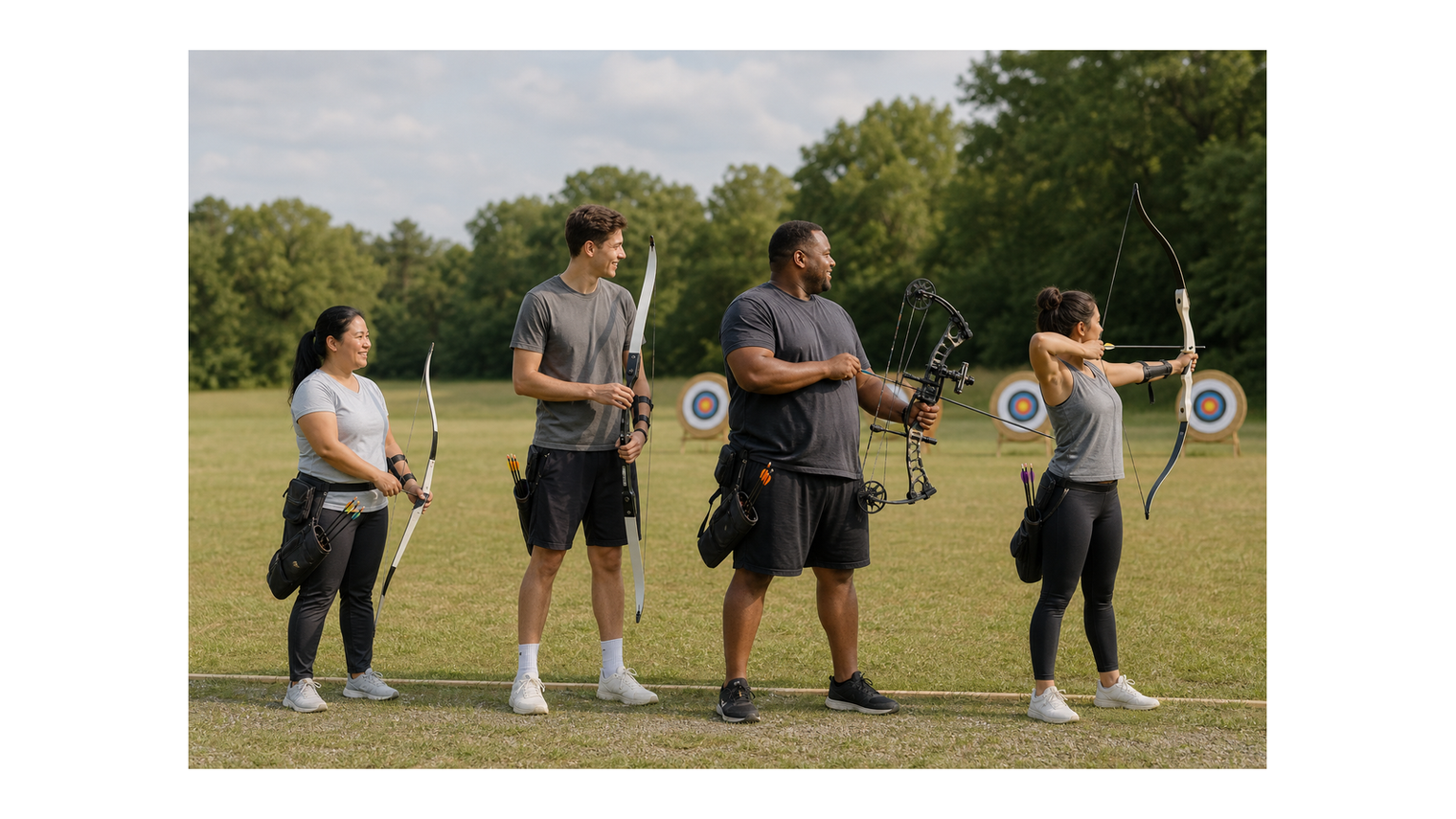
Many people assume archery belongs to athletes with a particular build — lean, strong-armed, or otherwise gifted physically. That assumption is wrong. Archery is a sport for all body types, and the mechanics of the bow itself explain exactly why. Whether you are tall, short, left-handed, broad-shouldered, or managing a physical limitation, the fundamentals of the sport adapt to you rather than the other way around.
Why Body Type Is Rarely the Limiting Factor
Unlike sports that demand explosive power or a narrow range of physical proportions, archery is built around controlled, repeatable movement. Success comes from consistency, form, and mental focus — qualities that have nothing to do with how tall you are or how much you weigh.
The sport has been practised for centuries across wildly different cultures and body sizes. Modern equipment has only made it more accessible. Draw weight, draw length, riser grip size, and arrow spine can all be adjusted independently to match the shooter rather than forcing the shooter to match the gear.
- Draw length is determined by your arm span and shoulder width, not your height or muscle mass.
- Draw weight starts as low as 15–20 lbs for beginners and can be scaled upward progressively as strength builds.
- Grip style can be modified for hand size, grip strength, or injury.
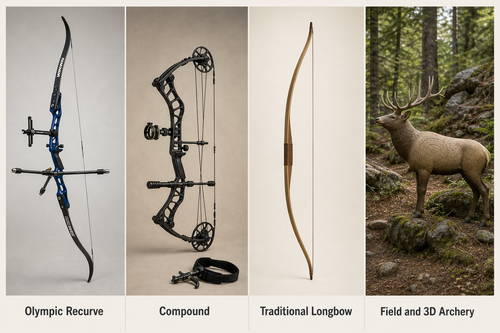
- Bow style — recurve, compound, or longbow — each places different demands on the body, giving beginners real options.
This adjustability is why archery appears at the Paralympic Games alongside the Olympic Games. Adaptive shooting positions, mouth tabs, and foot releases mean even archers without full use of their arms can compete.
How Equipment Is Fitted to You, Not the Other Way Around
Getting the right setup is where the inclusivity of archery becomes practical rather than theoretical. A bow that does not fit the archer is uncomfortable at best and inaccurate at worst — and that has nothing to do with body type being a barrier. It simply means the wrong gear was chosen.
Finding Your Draw Length
Draw length is calculated from your wingspan divided by 2.5. This means a shorter archer with a proportionate arm span will have a shorter draw length than a taller archer with longer arms — but neither has an inherent advantage. A properly fitted bow lets each person reach full draw in a natural, repeatable position without straining or overextending.
Choosing Draw Weight Realistically
This is where new archers most often go wrong. Many beginners — particularly those who feel they are strong — choose a draw weight that is too heavy. The result is poor form, fatigue, and discouragement. A bow that can be drawn smoothly and held steady at anchor is always the right starting point, regardless of how physically capable you feel off the range.
Starting light builds proper muscle memory. Draw weight can be increased over months as technique solidifies. Rushing this process does not make a better archer — it creates compensation habits that are hard to correct later.
Dominant Eye and Handedness
Archery accommodates both left- and right-eye dominant shooters, and these do not always align with hand dominance. A right-handed person with a dominant left eye may shoot a left-handed bow more naturally. Testing eye dominance before purchasing a bow saves a lot of frustration and wasted money.
Archery for Different Body Proportions
Here is where it becomes useful to get specific about common body type concerns beginners raise.
Shorter Archers
Shorter draw lengths are simply a measurement, not a disadvantage. Recurve and compound bows are made in configurations that accommodate shorter draws comfortably. Arrows must be matched to draw length to fly correctly — this is a fitting step, not a limitation.
Larger Body Frames
Archers with broader chests or larger arms sometimes experience string clearance issues — where the string contacts the forearm or chest on release. This is solved with a well-fitted arm guard, a slight inward rotation of the bow arm, and in some cases a string dampener or D-loop setup on a compound bow. These are standard technical adjustments, not workarounds for an unusual situation.
Archers with Limited Upper Body Strength
Compound bows with let-off — where the peak draw weight drops significantly at full draw — are particularly well suited to archers who find holding at full draw difficult. The mechanical advantage built into the cam system means you are holding a fraction of the peak weight while aiming. This genuinely levels the playing field between body types.
Adaptive and Seated Archery
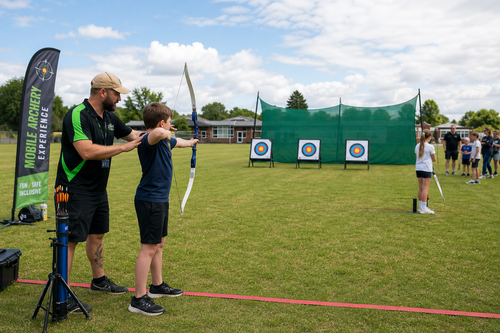
Archery has well-developed adaptive formats for seated shooters, one-armed archers, and those with limited mobility. Equipment such as bow stands, shooting slings, and specialised releases make the sport genuinely available rather than theoretically available. Many clubs worldwide have coaches trained specifically in adaptive archery.
Common Mistakes Beginners Make When Assuming Their Body Is the Problem
- Choosing too-high draw weight and attributing poor groups to physical weakness rather than form breakdown.
- Skipping a draw length measurement and buying a bow that does not fit, then wondering why the shot feels awkward.
- Ignoring eye dominance and shooting from the wrong side, creating alignment problems that seem physical but are actually optical.
- Comparing themselves to other archers on the range rather than focusing on their own progressive improvement.
- Assuming strength is the goal rather than understanding that relaxed, consistent form outperforms muscling through a shot every time.
If you are shopping for your first setup and want gear that genuinely fits your measurements and goals, Legend Archery's online shop offers a broad selection across bow styles, draw weights, and accessories suited to new and developing archers.
Building Strength and Technique Together
Archery does build functional strength over time — particularly in the rotator cuff, rhomboids, and back muscles used during the draw. But this strength develops as a result of shooting regularly with correct form, not as a prerequisite for starting. New archers should treat the first few months as pure technique work and trust that the physical capacity will follow.
Exercises like resistance band pulls that mimic the draw motion, shoulder stability drills, and core work all support archery performance — but none of them change whether someone of a particular body type can shoot. They simply help any archer shoot better over time.
If you need to expand your gear as your practice grows, exploring outdoor archery supplies is a natural next step once you have your base setup dialled in.
Frequently Asked Questions
Can I do archery if I don't have much upper body strength?
Yes. Start with a lower draw weight — something you can pull back and hold steadily without shaking or compensating. Strength builds naturally through regular practice. Many experienced archers shoot heavy draw weights not because they started strong, but because they built up gradually over time.
Does being tall or short affect accuracy?
Not directly. What matters is that your draw length is correctly matched to your bow. A shorter archer with a well-fitted setup will outshoot a taller archer using gear that doesn't match their draw length every time. Fitting is the variable, not height.
What mistakes do new archers make when picking their first bow?
The most common are choosing too-heavy a draw weight, not checking eye dominance before selecting a bow hand, and skipping a proper draw length measurement. These three fitting steps should happen before any purchase decision.
How do I know if archery is right for me physically?
The practical test is simple: if you can pull a suitable draw weight to anchor and hold it for a few seconds while maintaining reasonable form, you can shoot archery. Most people can do this with the right starting draw weight. A coach or pro shop fitting will confirm this quickly.
The Bottom Line
Archery rewards patience and precision above physical dominance. The equipment adjusts to the person, and the technique rewards consistency far more than raw strength. If you have been hesitating because you thought your body type might not suit the sport, the mechanics of the bow have already solved that problem for you. Get fitted properly, start at the right draw weight, and focus on form — everything else follows from there.