Skip to content
 cust@legendarchery.com
 302 503 5767
 Westfield IN 46074


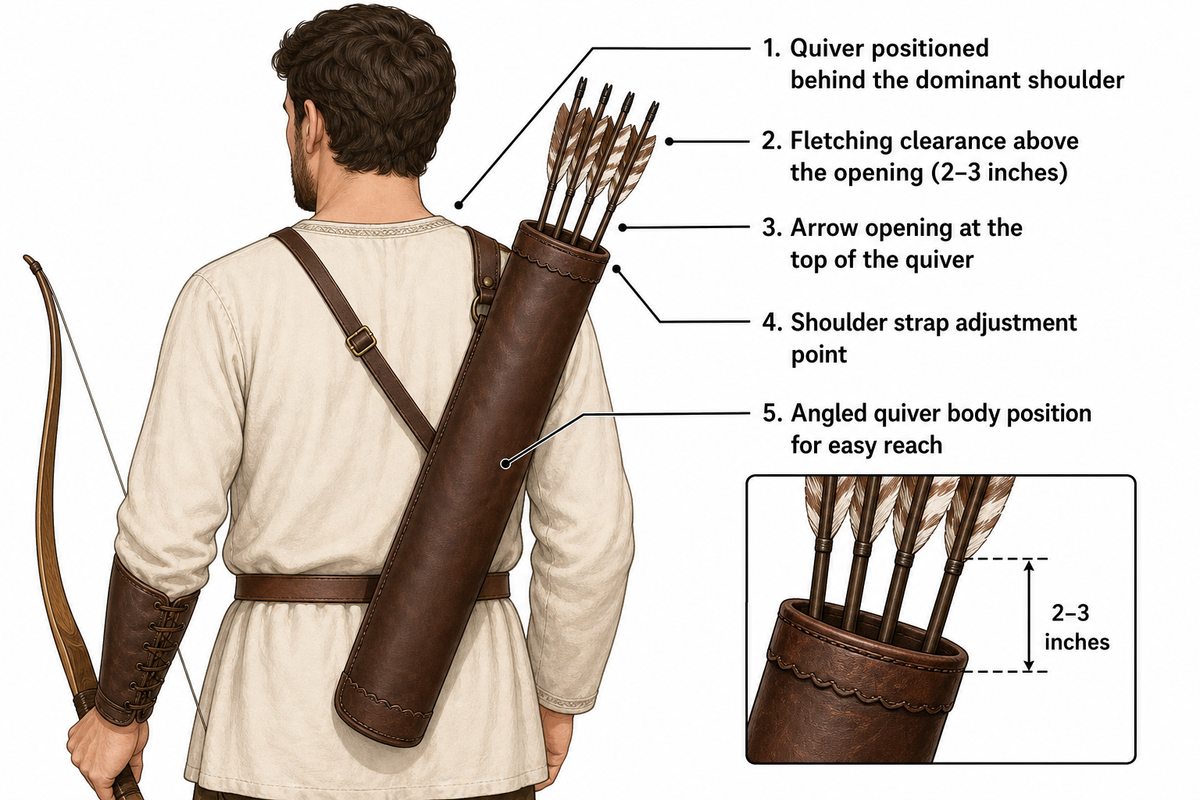
A back quiver looks simple — a tube you sling over your shoulder to carry arrows. But pick the wrong one and you'll be fighting your draw, losing arrows on the trail, or dealing with a rig that shifts every time you move. This guide breaks down what actually matters when choosing one, so you get something that works for your style and discipline from day one.
What Matters Before You Buy
Before comparing styles and features, get clear on three things: what you're shooting, where you're shooting it, and how many arrows you typically carry. These answers shape every other decision.
- Discipline: Traditional recurve and longbow shooting, 3D field courses, and roving all have different demands on access speed, arrow protection, and freedom of movement.
- Arrow length and diameter: Not every quiver is designed for modern carbon arrows. Some are cut for traditional wood shafts. If you're shooting skinny carbons with large fletches, check the tube diameter and divider design before buying.
- Arrow count: A weekend roving session and a full 3D course round require very different capacities. Carrying more than you need adds weight and bulk. Carrying too few means stopping to resupply.
- Body type and carry preference: Back quivers are worn, not mounted to the bow, so fit matters. Tall archers, shorter archers, and those with broader shoulders will all experience the same quiver differently.
Main Types and How They Differ
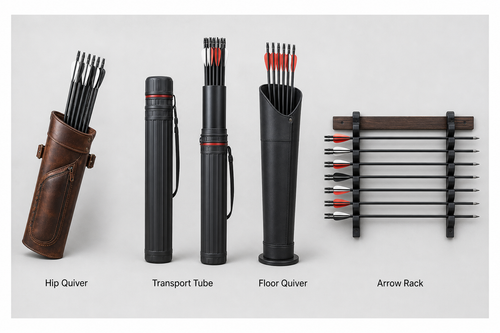
The quiver back category covers a few distinct designs. Understanding the differences saves you from a purchase you'll regret.
Tube-Style Back Quivers
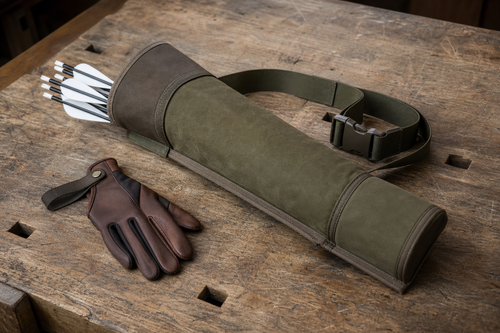
This is the classic design — a cylindrical tube, usually leather or synthetic, worn on the back with a single shoulder strap or crossed harness. Arrows sit point-down and are accessed by reaching over the shoulder. These are the most traditional-looking option and are popular with longbow and traditional recurve archers for aesthetics and functionality.
The trade-off: arrow access requires practice. Newer archers often struggle to draw cleanly, especially from a tube that sits too high or too low. They also offer limited arrow separation, which means fletchings can tangle if the quiver is overfilled.
Hip-Supported Back Quivers
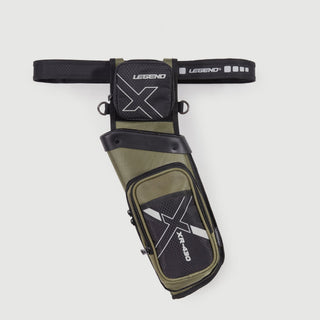
Some designs combine a shoulder strap with a hip attachment to stabilise the quiver during movement. This reduces sway and keeps arrows quieter on the draw. They suit field archers who cover uneven ground, where a free-swinging tube becomes a nuisance.
Divided or Compartmented Back Quivers
These include internal dividers or individual arrow tubes to separate shafts and protect fletching. More useful when carrying expensive arrows or arrows with delicate vanes. The added structure increases bulk slightly, but the protection can be worth it for competitive archers or those shooting premium shafts.
Youth and Compact Versions
Shorter tubes, lighter construction, and simplified harnesses make these practical for younger archers. A full-length adult quiver sits too low on a child's back and makes arrow access awkward or impossible. If you're fitting out a younger archer, a purpose-built youth quiver is a much better starting point than sizing down an adult model.
Buying Criteria and Trade-Offs
Here's how to evaluate any back quiver against your actual needs:
- Harness system: Single-strap designs are simpler but can slip and rotate during movement. Double or cross-body harnesses distribute weight better and hold position more reliably. If you're walking long distances, prioritise stability over simplicity.
- Material: Leather ages well, molds to shape over time, and has a traditional look that many archers value. Synthetic materials tend to be lighter, weather-resistant, and easier to clean. Neither is objectively better — it depends on how you use it and what environment you're shooting in.
- Arrow protection: Open-top tube quivers expose fletching to weather and snagging. Covered or hooded tops help in wet conditions or dense terrain. Consider where you're shooting before deciding this matters.
- Capacity: Most back quivers hold between 12 and 24 arrows. Bigger isn't always better. A quiver packed to capacity becomes heavy, noisy, and harder to draw from cleanly. Match capacity to your realistic shooting sessions, not the maximum.
- Adjustability: Strap length, tube angle, and quiver position all affect how naturally you can reach your arrows. Look for enough adjustment to position the top of the quiver close to your shoulder blade — not so high it restricts your draw, not so low it bounces against your lower back.
- Weight: An empty quiver feels light. A full one doesn't. Factor in loaded weight, especially if you're covering ground on a 3D course or roving round.
Which Type Suits Which Archer
No single design is universal. Here's a practical breakdown:
Traditional and Instinctive Archers
A classic leather or waxed canvas tube quiver fits naturally into this style. Aesthetics matter to many traditional archers, and these designs complement the look and feel of traditional shooting. Access speed improves quickly with practice.
Field and 3D Archers
Movement across varied terrain makes stability the priority. A hip-supported or harness-style back quiver that locks position under movement is worth the added complexity. Arrow protection also becomes more relevant when you're moving through brush. Browse the full range at Legend's arrow quiver collection to compare options suited for active field use.
Beginners
Start with something simple, adjustable, and durable. Beginners often change their form and stance significantly in the first months of shooting, so a highly adjustable harness gives you the flexibility to reposition as your technique develops. Legend's Back Quiver has easy-to-adjust straps and holds up to 24 arrows, which makes it a no-fuss starting point for archers new to back quiver carry.
Younger Archers
Youth-specific designs exist for good reason. Arrow access from an adult-length quiver on a child's back is genuinely difficult and can reinforce bad habits. Get the right size from the start.
How to Wear and Adjust a Back Quiver
Even the right quiver performs poorly if it's set up wrong. A few basics:
- Position the top of the quiver just below and behind your draw-side shoulder so arrows clear your ear and bow arm when you reach for them.
- The tube should angle slightly away from your spine — not hang straight down your back — so arrows don't clatter together when you move.
- Tighten straps enough that the quiver doesn't swing freely, but not so tight it compresses your shoulder or limits your draw shoulder's rotation.
- Do a test draw with an empty quiver before loading it. Identify if the position needs adjustment before adding the weight of arrows.
Mistakes Buyers Make
- Buying on looks alone. Traditional leather quivers are beautiful but may not fit modern arrow diameters well, especially if you're shooting standard carbon shafts. Always check internal dimensions.
- Ignoring arrow compatibility. Large-diameter wooden arrows and slim carbon shafts behave very differently inside the same tube. Mismatched fit leads to noise, tangling, or arrows that won't draw cleanly.
- Overfilling. Loading a quiver beyond its practical capacity causes fletching damage, difficult draws, and extra weight. Leave room for arrows to sit without pressing hard against each other.
- Skipping fit testing. Buying without trying or checking adjustability is the most common mistake. A quiver that fits a six-foot archer perfectly may position arrows at waist height on a shorter shooter. If ordering online, check the strap adjustment range against your own measurements.
- Underestimating harness quality. Cheap buckles and thin straps fail quickly under regular use. Inspect hardware quality before committing to a budget option.
- Choosing adult sizing for youth archers. Already covered above, but worth repeating — it's one of the most common buying errors in family archery purchases.
Frequently Asked Questions
What should I actually look for in a back quiver?
Start with harness stability, arrow compatibility with your shaft diameter, and adjustability. These three factors affect daily usability more than material or looks. After that, consider capacity, weight, and weather protection based on where you shoot.
Which features matter most in a back quiver?
For most archers: harness fit and stability first, arrow access angle second. If you're shooting in wet or brushy terrain, a hooded top and divided interior become more important. For target or range shooting on flat ground, these features matter less.
What mistakes do buyers make most often?
Choosing adult sizing for younger shooters, ignoring arrow diameter compatibility, and overfilling the quiver are the most common. Buying on aesthetics without checking adjustability comes close behind, particularly for archers purchasing their first back quiver.
Which type of back quiver is best for a beginner?
A mid-capacity synthetic quiver with a double-strap or cross-body harness gives beginners the best combination of stability and adjustability. Leather is fine too, but requires more break-in time. Avoid highly specialised designs — a versatile, well-fitting standard quiver suits the varied shooting a beginner does in their first year.
Conclusion
A well-chosen quiver back becomes invisible during a session — you reach for arrows without thinking, it stays in place, and it doesn't get in the way of your shot. Get the fit, harness, and arrow compatibility right first. Everything else is secondary. Take the time to match the design to your actual shooting, not just the style you like the look of.