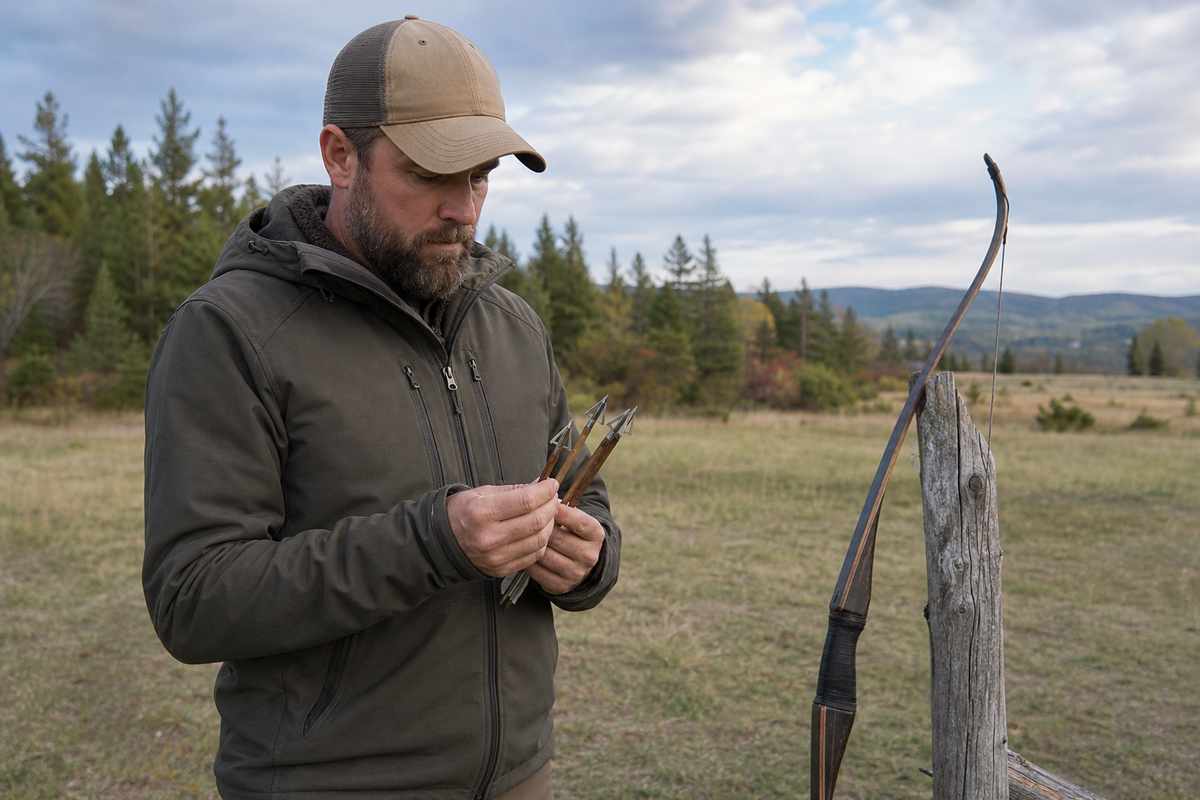
Not all broadhead edges are ground the same way, and that difference has real consequences downrange. A broadhead single bevel design grinds the cutting edge on only one side of the blade, much like a wood chisel, while a double bevel is sharpened symmetrically on both sides. That single distinction changes how the head flies, penetrates, and behaves inside an animal. Understanding it helps you make a more informed decision rather than defaulting to whatever everyone else at the range is shooting. For the fundamentals of broadhead design, grain weight, and cutting styles, see our broadhead glossary entry.
What Single Bevel Actually Means
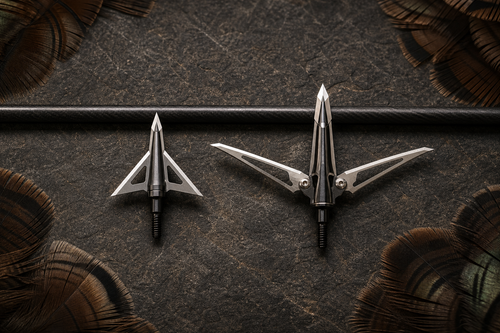
On a conventional double bevel broadhead, the blade tapers to a V-shaped edge — equal angle on each face. A single bevel head grinds that taper on one face only, leaving the opposite face flat or nearly flat. The result is a cutting edge that is asymmetrical in cross-section, similar to a Japanese chisel or a straight razor.
This geometry is not new. Primitive flint points were often knapped with a single bevel, and many traditional bowhunters have relied on the design for decades. Modern machinists have refined it in steel, but the underlying principle has remained unchanged for centuries.
How Blade Geometry Affects Performance
Rotation Through the Target
The asymmetrical edge causes the broadhead to rotate as it penetrates tissue, following the direction of the bevel. A right-hand bevel rotates clockwise; a left-hand bevel rotates counter-clockwise. That rotation does two things:
- It drives the head in a slight corkscrew path, which some hunters and researchers believe improves bone-splitting capability by applying rotational force rather than pure linear pressure.
- It widens and severs tissue as it spins, which can enlarge the wound channel compared to a straight-line cut from the same blade width.
Matching Bevel to Fletching
Because the head wants to rotate, most experienced users match bevel direction to the helical twist of their fletching. A right-hand helical fletch paired with a right-hand bevel means both the arrow's natural spin and the broadhead's rotational tendency work together rather than fighting each other. Mismatching them can introduce erratic flight or cause the head to work against the arrow's stabilization. This is one of the more technical variables in fixed-blade broadhead setup and deserves careful attention before you commit to a bevel direction.
Penetration Mechanics
The wedge effect of a single bevel edge concentrates force along a narrower point of contact. On soft tissue this matters less, but against dense bone — ribs, shoulder blades, pelvic girdle — the geometry can allow the head to split rather than compress. Whether this translates to measurable real-world advantage depends on many variables including draw weight, arrow spine, shot angle, and the specific anatomy of the animal. It is a genuine mechanical principle, not marketing language, but results are not guaranteed by design alone.
Single Bevel vs. Double Bevel: Practical Trade-offs
Neither design is universally superior. The right choice depends on what you are trying to accomplish and what archery system you are running.
- Double bevel heads are easier to sharpen in the field because both faces are worked equally. They also tend to fly more predictably for archers who have not yet matched their fletching twist carefully to their broadhead rotation.
- Single bevel heads reward careful setup. When fletching, arrow spine, and bevel direction are properly matched, proponents report excellent bone-splitting performance on larger game. The sharpening learning curve is steeper because you must maintain the asymmetric geometry consistently.
- Arrow weight considerations: Single bevel broadheads are most commonly used on heavier, traditional-weight arrows — typically 500 grains and above — where momentum and penetration are prioritized over flat trajectory. They can be used on lighter setups, but the design philosophy generally pairs with heavier, slower arrows.
Who Uses Single Bevel Broadheads
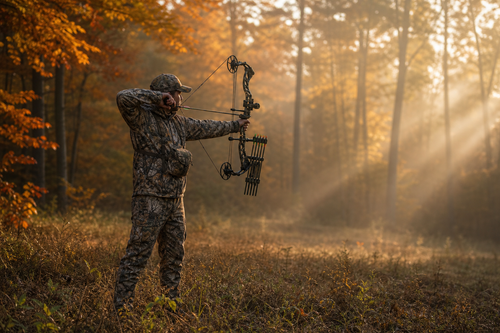
Traditional bowhunters — those shooting longbows, recurves, and self-bows — have historically been the primary users. The design aligns with a traditional hunting philosophy that emphasizes penetration and clean kills over speed. That said, compound hunters shooting heavy arrows for large or dangerous game have also adopted the design, particularly those pursuing elk, moose, bear, or wild boar where bone contact is more likely.
Target archers and 3D competitors almost never use single bevel heads because those disciplines prioritize controlled, consistent flight over penetration mechanics. The design is squarely a hunting tool.
Common Mistakes Archers Make with Single Bevel Broadheads
- Ignoring fletching direction: Shooting a right-hand bevel on an arrow with left-hand helical fletching creates opposing forces and can destabilize flight. Always confirm your bevel direction matches your fletch twist.
- Sharpening on both faces: Even a small amount of material removed from the flat face of a single bevel head starts converting it to a double bevel and defeats the design. Use a flat stone on the flat face only to remove the wire edge, and do your sharpening work exclusively on the bevel face.
- Mixing bevel directions in a quiver: Running a left-hand bevel on one arrow and a right-hand bevel on another means your arrows will not perform consistently. Pick one direction and stick with it across your entire hunting setup.
- Using them on under-weight arrows: These heads are designed to work with momentum. Pairing them with ultra-light arrows optimized for speed often wastes the design's strengths and can produce erratic flight.
- Skipping a broadhead flight check: Any fixed-blade head needs to be tuned and flight-tested before a hunt. Single bevel heads, because of their rotation characteristic, need particular attention during this process to confirm they are flying true from your specific bow and arrow combination.
Sharpening and Maintenance
Maintaining a single bevel edge correctly is a skill worth developing before the season. The goal is to hold the existing bevel angle consistently — typically somewhere between 25 and 35 degrees, though this varies by manufacturer — and work only the bevel face with your sharpening stone. After removing the wire edge on the flat face, strop the bevel face on leather to align the edge. A well-maintained single bevel head should shave arm hair cleanly without snagging.
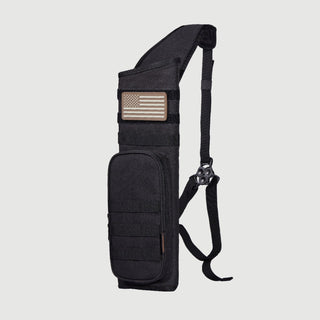
Inspect blades for nicks or rolled edges before each hunt. Even a small nick on the leading edge significantly reduces penetration performance. Many hunters carry a small ceramic rod in the field for touch-ups. If you are shopping for archery accessories to support your hunting setup, browsing new archery products can help you find supporting gear like quivers and arrow protection to keep your broadhead setup field-ready.
Frequently Asked Questions
What exactly makes a broadhead a single bevel?
The bevel — the angled grind that creates the cutting edge — is applied to only one face of the blade. The opposite face remains flat. This is in contrast to a double bevel, where both faces are ground to meet at the center of the edge.
Does bevel direction actually matter for flight?
Yes, particularly when the arrow has a pronounced helical fletch. Matching the bevel rotation to the fletch's natural spin direction helps both forces work together rather than against each other. It becomes more critical as draw weight, arrow weight, and helical angle increase.
Are single bevel broadheads harder to sharpen than standard heads?
They require more precision. The challenge is maintaining the asymmetric geometry — sharpening only the bevel face and using the flat face only to remove the burr. Once you understand the technique, it becomes straightforward, but it is less forgiving than sharpening a symmetrical double bevel edge.
Can beginners start with single bevel broadheads?
It is possible, but the learning curve is real. Beginners need to understand fletching direction, arrow weight philosophy, and proper sharpening technique before this design performs as intended. Many experienced bowhunters recommend starting with double bevel heads to build foundational tuning skills first.
Putting It Together
Single bevel broadhead geometry is rooted in sound mechanical principles — rotational penetration, bone-splitting force, and asymmetric edge cutting — but it demands a matched, well-tuned setup to deliver those benefits. Get the bevel direction, fletching twist, arrow weight, and sharpening technique right, and the design can be a genuinely effective tool for big game hunting. Cut corners on any of those variables and you are unlikely to see the advantage over a well-tuned double bevel head.
If you are building out a hunting archery system and want to find retailers with knowledgeable staff who can help you select and tune broadheads for your specific bow, the archery retailers page at Legend Archery is a good starting point for locating expert local support.