Skip to content
 cust@legendarchery.com
 302 503 5767
 Westfield IN 46074



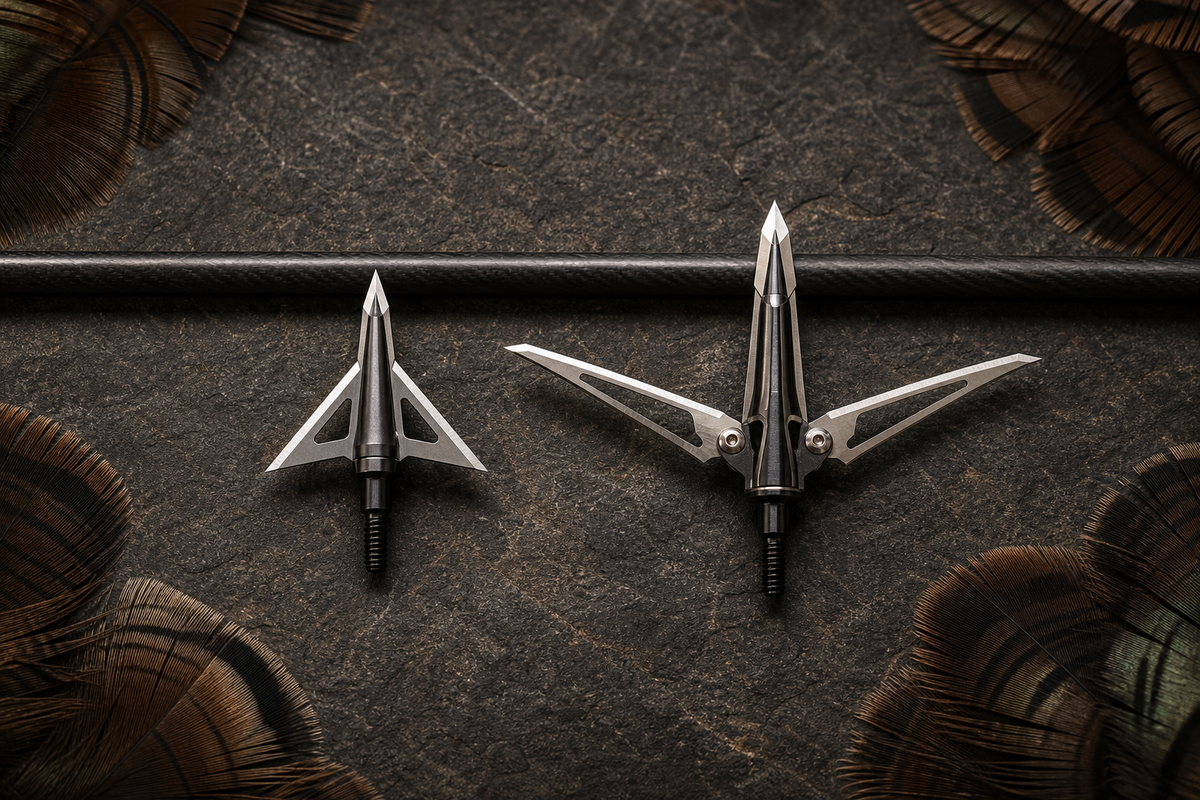
Turkey hunting with a bow is one of the most challenging and rewarding pursuits in archery. The bird's anatomy, tight shot windows, and unpredictable behavior all raise the stakes — and the broadhead you choose plays a bigger role in success or failure than most hunters initially expect. Getting this decision right starts with understanding the biology, not just the gear.
Why Turkey Anatomy Demands a Specific Approach
Turkeys are not built like whitetail deer. Their vital zone is small, their feathers are dense, and their bone structure — particularly the shoulder and spine — can deflect or stop a poorly designed head. Unlike big game, a turkey's lung and heart area is compact, which means your margin for error is tighter. A broadhead that performs well on deer may not transfer cleanly to a turkey hunt, especially if shot angle or penetration depth changes the equation.
Understanding this anatomy shapes every choice that follows: blade count, cut diameter, mechanical versus fixed, and how the head will behave on contact. Bowhunters who treat turkey as a scaled-down deer hunt often run into problems that could have been avoided with a better-matched setup.
Fixed Blade vs. Mechanical Broadheads for Turkey
This is the first decision most hunters face, and both designs have genuine trade-offs in a turkey context.
Fixed Blade Broadheads
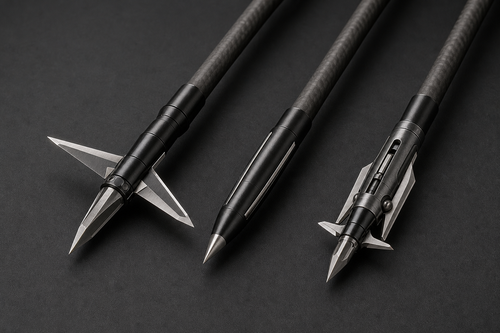
Fixed blade heads are simple, reliable, and penetrate deeply because they open no energy on deployment. For turkeys shot at close range through dense feathering, a sharp fixed blade with a wide cutting diameter can create devastating wound channels. They are also easier to tune to your arrow and bow combination, which matters for accuracy.
The downside is that a narrow fixed blade — common in traditional three-blade designs — may produce a smaller wound channel than some hunters prefer when targeting the small vital zone of a turkey.
Mechanical (Expandable) Broadheads
Expandable heads have become popular for turkey because they typically open to a much wider cutting diameter than a fixed blade of the same head weight. A larger cut means more tissue damage in a small target zone, which can compensate for slight variations in shot placement. When deployed properly, they are extremely effective at the relatively short distances of most turkey shots. For a closer look at how these heads are built, see our guide to mechanical broadheads.
The key concern with mechanicals is reliability of deployment. Dense feathers can sometimes interfere with blade opening, and underpowered setups may not generate enough kinetic energy for the blades to fully expand on contact. For this reason, many experienced turkey hunters prefer mechanicals only with compound bows generating sufficient draw weight and arrow speed.
Cut Diameter: Why Bigger Often Wins on Turkeys
Most experienced bowhunters recommend a minimum cut diameter of around 1.5 inches for turkey, with many preferring 2 inches or more. This preference exists because the turkey's vital zone — heart, lungs, and major vessels — is small enough that extra cutting width meaningfully increases the probability of a lethal hit, even when the arrow placement is slightly off.
Wide-cut mechanicals dominate at the top end, but some fixed blade designs also achieve generous diameters. When comparing options, prioritize total cutting diameter and blade sharpness over head weight alone. A razor-sharp 1.75-inch fixed blade will outperform a dull 2-inch mechanical on any day.
If you want to deepen your understanding of how broadhead geometry affects performance, the arrow broadhead overview covers the fundamentals of blade design, grain weights, and cutting styles in plain language.
Shot Placement and How It Should Influence Your Choice
The most common turkey shot presentations are the strutting tom facing away, the broadside bird, and the head-on display. Each changes what the broadhead needs to do.
- Broadside: The classic wing butt or behind-the-wing shot accesses the lung zone. A wide-cut mechanical shines here, creating a large channel through feathers and into vitals.
- Facing away: The vent-to-vitals shot requires deep penetration along the body cavity. A fixed blade with excellent penetration is often preferred for this angle.
- Head-on: Many hunters avoid this shot. If taken, the head and neck are the target zone, where a specialized turkey-specific head — designed to sever the spinal column or major vessels in the neck — performs best.
- Neck and head shots: Some hunters use large-diameter specialty heads designed to maximize tissue disruption at close range for this presentation. These are not general-purpose broadheads and perform poorly at longer ranges or on other game.
Your expected shot presentation should directly influence which head type you prioritize. Hunters who consistently call birds to close range with predictable angles can optimize differently than those hunting field edges where presentation varies.
Grain Weight and Arrow Momentum
Head weight affects both trajectory and penetration. For turkeys at typical bowhunting distances — often under 30 yards — the trajectory penalty of a heavier head is minimal. A 100-grain head is a common choice, and 125-grain is not unusual. What matters more than the exact grain weight is that your total arrow setup is properly tuned and flying straight, because even the best broadhead will not group tightly on a poorly tuned bow. See our grain weight glossary entry for how this measurement is defined and used in arrow and head selection.
Arrow momentum (often described as the arrow's ability to carry through dense material) matters more with mechanicals, since part of the arrow's energy is spent opening the blades. Heavier, faster arrows generate more momentum and give mechanicals a better chance of fully deploying against heavy feathering and hide.
Common Mistakes When Choosing a Turkey Broadhead
- Using the same head you use for deer without adjustment: A narrow fixed blade that works well on deer may be too small for the turkey vital zone. Consider the target anatomy, not just what worked last fall.
- Choosing mechanicals without checking your bow's power: Expandable heads need sufficient kinetic energy to open reliably. Underpowered setups — particularly lower draw weight recurves or youth compounds — may not consistently deploy wide-open blades on contact.
- Neglecting blade sharpness: Factory edges vary significantly between brands and even between batches. Always check and strop or replace blades before the season, not during it.
- Not practicing with the actual broadhead: Field points fly differently than broadheads. Always confirm your groups and point of impact with the exact head you plan to hunt with, at realistic hunting distances.
- Ignoring arrow flight before the hunt: A broadhead that does not match your arrow's spine or is screwed on off-center will plane erratically. Spin-test every head and paper tune if you see inconsistency.
- Overcomplicating the shot distance: Using a rangefinder to confirm your distance before shooting is a basic step that many hunters skip, leading to poor shot placement that no broadhead can compensate for.
Frequently Asked Questions
Do you really need a different broadhead for turkey, or can you use what you already have for deer?
You can use the same head, but it may not be optimal. Turkey anatomy — a small vital zone, dense feathers, and light bone — rewards wider cut diameters more than deer hunting does. If your deer head has a cut diameter under 1.25 inches, consider whether a wider option would better serve a tight target zone.
Are mechanical broadheads better than fixed for turkey?
Neither is universally better. Mechanicals offer larger cut diameters and perform well at typical close turkey ranges with sufficient bow power. Fixed blades penetrate more reliably and are less affected by feathering or underpowered setups. The right answer depends on your bow, your typical shot angle, and your confidence in each design.
What mistakes do beginners make when picking a broadhead for turkey hunting?
The most common are choosing based on packaging or price rather than anatomy-matched performance, skipping broadhead-specific practice before the hunt, and not accounting for whether their bow generates enough power to reliably deploy mechanicals.
How close do most bowhunters get to turkeys before shooting?
Most ethical shots on turkey with a bow happen inside 30 yards, with many hunters preferring under 20. This is well within the effective range of both fixed and mechanical designs, but it reinforces why shot placement and cut diameter matter more than raw range or speed at these distances.
Putting It All Together
Selecting a broadhead for turkey hunting is ultimately a decision shaped by your bow setup, your likely shot angle, and how well you understand the bird's anatomy. Wide-cut mechanicals suit hunters with powerful compound setups and broadside shot opportunities. Fixed blades suit those who prioritize penetration, reliability, or hunt with lower draw weights. Regardless of which direction you go, sharp blades, a tuned arrow, and honest practice with your chosen head will do more for your success than any single product claim.
If you're building or refining your turkey hunting kit, browsing a range of new archery products can help you identify accessories that support accurate, well-prepared bowhunting.